













Understanding methane/carbon dioxide partitioning in clay nano- and meso-pores with constant reservoir composition molecular dynamics modeling
Literature Information
Publication Date
2019-03-07
DOI
10.1039/C9CP00851A
Impact Factor
3.676
Authors
Narasimhan Loganathan, Geoffrey M. Bowers, Brice F. Ngouana Wakou, Andrey G. Kalinichev
View Original
Abstract
The interactions among fluid species such as H2O, CO2, and CH4 confined in nano- and meso-pores in shales and other rocks is of central concern to understanding the chemical behavior and transport properties of these species in the earth's subsurface and is of special concern to geological C-sequestration and enhanced production of oil and natural gas. The behavior of CO2, and CH4 is less well understood than that of H2O. This paper presents the results of a computational modeling study of the partitioning of CO2 and CH4 between bulk fluid and nano- and meso-pores bounded by the common clay mineral montmorillonite. The calculations were done at 323 K and a total fluid pressure of 124 bars using a novel approach (constant reservoir composition molecular dynamics, CRC-MD) that uses bias forces to maintain a constant composition in the fluid external to the pore. This purely MD approach overcomes the difficulties in making stochastic particle insertion–deletion moves in dense fluids encountered in grand canonical Monte Carlo and related hybrid approaches. The results show that both the basal siloxane surfaces and protonated broken edge surfaces of montmorillonite both prefer CO2 relative to CH4 suggesting that methods of enhanced oil and gas production using CO2 will readily displace CH4 from such pores. This preference for CO2 is due to its preferred interaction with the surfaces and extends to approximately 20 Å from them.
Related Literature
Towards technomimetic spoked wheels: dynamic hexakis-heteroleptic coordination at a hexakis-terpyridine scaffold
Michael Schmittel, Prasenjit Mal
2008-01-09
Communication
DOI: 10.1039/B718185J
Controlled self-assembly of squaraines to 1D supramolecular architectures with high molar absorptivity‡
Ayyappanpillai Ajayaghosh, Parayalil Chithra, Reji Varghese, Kizhumuri P. Divya
2008-01-07
Communication
DOI: 10.1039/B718054C
Active peroxo titanium complexes: syntheses, characterization and their potential in the photooxidation of 2-propanol
Markus Rohe, Klaus Merz
2007-12-19
Communication
DOI: 10.1039/B716199A
[Zn(H2O)4][Zn2Sn3Se9(MeNH2)]: a robust open framework chalcogenide with a large nonlinear optical response
Manolis J. Manos, Joon I. Jang, John B. Ketterson, Mercouri G. Kanatzidis
2007-12-18
Communication
DOI: 10.1039/B712732D
Ionic liquids enable electrospray ionisation mass spectrometry in hexane
Matthew A. Henderson, J. Scott McIndoe
2006-06-16
Communication
DOI: 10.1039/B606938J
Balancing framework densification with charged, halogen-bonded-π-conjugated linkages: [PPh4]2{[E-TTF–I2][Re6Se8(CN)6]} versus [PPh4]2[EDT-TTF–I]2{[EDT-TTF–I][Re6Se8(CN)6]}
Anupama Ranganathan, Abdelkrim El-Ghayoury, Cécile Mézière, Etienne Harté, Rodolphe Clérac, Patrick Batail
2006-06-08
Communication
DOI: 10.1039/B600159A
Direct synthesis of the 1,2,3-[C6H4PPP]− anion, isoelectronic with the indenyl anion [C6H4CHCHCH]−
Felipe García, Robert J. Less, Vesal Naseri, Mary McPartlin, Jeremy M. Rawson, Maria Sancho Tomas, Dominic S. Wright
2008-01-15
Communication
DOI: 10.1039/B718425E
Asymmetric aldol reactions catalyzed by tryptophan in water
Zhian Liang, Xiaoyu Wu
2006-05-26
Communication
DOI: 10.1039/B606154K
An imidazole-functionalized polyacetylene: convenient synthesis and selective chemosensor for metal ions and cyanide
Qi Zeng, Ping Cai, Zhen Li, Jingui Qin, Ben Zhong Tang
2008-01-29
Communication
DOI: 10.1039/B717764J
One-step coating of fluoro-containing silicananoparticles for universal generation of surface superhydrophobicity
Hongxia Wang, Jian Fang, Tong Cheng, Jie Ding, Liangti Qu, Liming Dai, Xungai Wang, Tong Lin
2007-12-18
Communication
DOI: 10.1039/B714352D
You might also like
Compound Q&A
Are there alternatives to 1-(4-Chlorophenyl)-N-hydroxymethanimine (CAS: 3848-36-0) in synthesis?
When considering alternatives to 1-(4-Chlorophenyl)-N-hydroxymethanimine (CAS: 3...
3848-36-01-(4-Chlorophenyl)-N...
Compound Q&A
How should (1R,9S,10S,12S,14E,16S,19R,20R,21S,22R)-3,9,21-Trihydroxy-5,10,12,14,16,20,22-heptamethyl-23,24-dioxatetracyclo[17.3.1.1~6,9~.0~2,7~]tetracosa-2,5,7,14-tetraen-4-one (CAS: 183202-73-5) be stored?
This compound should be stored in a cool, dry place away from direct sunlight. I...
183202-73-5(1R,9S,10S,12S,14E,1...
Compound Q&A
How is 3-(4-Bromophenyl)-5-(2-fluorophenyl)-1,2,4-oxadiazole (CAS: 419553-16-5) typically synthesized?
3-(4-Bromophenyl)-5-(2-fluorophenyl)-1,2,4-oxadiazole is synthesized through a m...
419553-16-53-(4-Bromophenyl)-5-...
Compound Q&A
How is 5-Chloro-2-(4-chlorophenyl)-4-methyl-6-[3-(1-piperidinyl)propoxy]pyrimidine (CAS: 1639220-19-1) typically synthesized?
5-Chloro-2-(4-chlorophenyl)-4-methyl-6-[3-(1-piperidinyl)propoxy]pyrimidine (CAS...
1639220-19-15-Chloro-2-(4-chloro...
Compound Q&A
What industries use 2-Chloro-4-(difluoromethoxy)pyridine (CAS: 1206978-15-5)?
2-Chloro-4-(difluoromethoxy)pyridine is used in the pharmaceutical industry for ...
1206978-15-52-Chloro-4-(difluoro...
Compound Q&A
What regulatory guidelines apply to 3-Chloro-6-methylpyridazine (CAS: 1121-79-5)?
3-Chloro-6-methylpyridazine (CAS: 1121-79-5) is classified under the Globally Ha...
1121-79-53-Chloro-6-methylpyr...
Compound Q&A
Are there alternatives to Methyl 4,5-dimethyl-2-nitrobenzoate in synthesis?
Several alternatives can be used in the synthesis of Methyl 4,5-dimethyl-2-nitro...
90922-74-0Methyl 4,5-dimethyl-...
Compound Q&A
Are there alternatives to (2E,2'E)-3,3'-(1,4-Phenylene)bisacrylaldehyde in synthesis?
Alternatives to (2E,2'E)-3,3'-(1,4-Phenylene)bisacrylaldehyde include other acry...
63405-68-5(2E,2'E)-3,3'-(1,4-P...
Compound Q&A
What is 3-Amino-5-chloropyridin-2-ol hydrochloride (CAS: 1261906-29-9)?
3-Amino-5-chloropyridin-2-ol hydrochloride is an organic compound with the CAS n...
1261906-29-93-Amino-5-chloropyri...
Compound Q&A
What precautions should be taken when handling 6,7-Difluoro-2,3-dihydro-4H-chromen-4-one (CAS: 1092349-93-3)?
When handling 6,7-Difluoro-2,3-dihydro-4H-chromen-4-one, it is essential to wear...
1092349-93-36,7-Difluoro-2,3-dih...
Source Journal
Physical Chemistry Chemical Physics

CiteScore:
5.5
Self-citation Rate:
10.3%
Articles per Year:
3036
Physical Chemistry Chemical Physics (PCCP) is an international journal co-owned by 19 physical chemistry and physics societies from around the world. This journal publishes original, cutting-edge research in physical chemistry, chemical physics and biophysical chemistry. To be suitable for publication in PCCP, articles must include significant innovation and/or insight into physical chemistry; this is the most important criterion that reviewers and Editors will judge against when evaluating submissions. The journal has a broad scope and welcomes contributions spanning experiment, theory, computation and data science. Topical coverage includes spectroscopy, dynamics, kinetics, statistical mechanics, thermodynamics, electrochemistry, catalysis, surface science, quantum mechanics, quantum computing and machine learning. Interdisciplinary research areas such as polymers and soft matter, materials, nanoscience, energy, surfaces/interfaces, and biophysical chemistry are welcomed if they demonstrate significant innovation and/or insight into physical chemistry. Joined experimental/theoretical studies are particularly appreciated when complementary and based on up-to-date approaches.
Recommended Compounds
![2-{[(1R,2S)-2-Aminocyclohexyl]amino}-4-{[3-(2H-1,2,3-triazol-2-yl)phenyl]amino}-5-pyrimidinecarboxamide structure](https://static.chemtradehub.com/structs/137/1370261-96-3-40df.webp "2-{[(1R,2S)-2-Aminocyclohexyl]amino}-4-{[3-(2H-1,2,3-triazol-2-yl)phenyl]amino}-5-pyrimidinecarboxamide structure")
2-{[(1R,2S)-2-Aminocyclohexyl]amino}-4-{[3-(2H-1,2,3-triazol-2-yl)phenyl]amino}-5-pyrimidinecarboxamide
CAS Number:
1370261-96-3
Molecular Formula:
C19H23N9O
![[4-(Isobutyrylamino)phenyl]boronic acid structure](https://static.chemtradehub.com/structs/874/874219-50-8-6ab5.webp "[4-(Isobutyrylamino)phenyl]boronic acid structure")
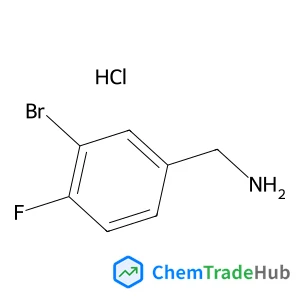
1-(3-Bromo-4-fluorophenyl)methanamine hydrochloride (1:1)
CAS Number:
202865-68-7
Molecular Formula:
C7H8BrClFN
Recommended Suppliers




Disclaimer
This page provides academic journal information for reference and research purposes only. We are not affiliated with any journal publishers and do not handle publication submissions. For publication-related inquiries, please contact the respective journal publishers directly.
If you notice any inaccuracies in the information displayed, please contact us at support@chemtradehub.com. We will promptly review and address your concerns.