












Glucose transport via the pseudomonad porin OprB: implications for the design of Trojan Horse anti-infectives
Literature Information
Publication Date
2019-03-25
DOI
10.1039/C9CP00778D
Impact Factor
3.676
Authors
Joan Coines, Silvia Acosta-Gutierrez, Igor Bodrenko
View Original
Abstract
Deciphering the transport through outer-membrane porins is crucial to understand how anti-infectives enter Gram-negative bacteria and perform their function. Here we elucidated the transport mechanism of substrates through the Pseudomonads sugar-specific porin OprB by means of multiscale modeling. We used molecular dynamics simulations to quantify the energetics of transport and thus a diffusion model to quantify the macroscopic flux of molecules through OprB. Our results show that Trp171 and several glutamate residues in the constriction region are key for the transport of glucose, the preferred natural substrate, through OprB. The unveiled transport mechanism suggests that 2-acetamido-1,2-dideoxynojirimycin (DNJ-NAc), an anti-infective structurally similar to glucose, can enter the cell via OprB. We quantified its energetics and macroscopic flux through OprB providing a comparative analysis with the natural substrate. Thus this pore can be considered as a promising gateway for exploiting the Trojan Horse strategy in pathogenic bacteria.
Related Literature
Sulfonated poly(arylene ether phosphine oxide)s with various distributions and contents of pendant sulfonic acid groups synthesized by direct polycondensation
Huiying Liao, Ke Zhang, Gangsheng Tong, Guyu Xiao, Deyue Yan
2013-09-16
Paper
DOI: 10.1039/C3PY00821E
Anomalous high photovoltages observed in shish kebab-like organic p–n junction nanostructures
Daniel L. Jacobs, Benjamin R. Bunes, Helin Huang, Xiaomei Yang, Ling Zang
2013-08-30
Communication
DOI: 10.1039/C3PY01026K
Use of a switchable hydrophobic associative polymer to create an aqueous solution of CO2-switchable viscosity
Xin Su, Philip G. Jessop
2013-10-08
Paper
DOI: 10.1039/C3PY01382K
Click chemistry as a powerful and chemoselective tool for the attachment of targeting ligands to polymer drug carriers
Robert Pola, Alena Braunová, Richard Laga, Michal Pechar, Karel Ulbrich
2013-10-29
Paper
DOI: 10.1039/C3PY01376F
Salt-induced reentrant hydrogel of poly(ethylene glycol)–poly(lactide-co-glycolide) block copolymers
Ting Li, Tianyuan Ci, Liang Chen, Lin Yu, Jiandong Ding
2013-09-26
Paper
DOI: 10.1039/C3PY01107K
Versatile injectable supramolecular hydrogels containing drug loaded micelles for delivery of various drugs
Zhijia Liu, Ping Yao
2013-10-14
Paper
DOI: 10.1039/C3PY01083J
Synthesis of biomimetic co-polypeptides with tunable degrees of phosphorylation
2013-10-29
Paper
DOI: 10.1039/C3PY01118F
Growing polymers from peptides and proteins: a biomedical perspective
Yizhi Qi
2013-10-11
Review Article
DOI: 10.1039/C3PY01089A
Polymerization-Induced Self-Assembly (PISA) – control over the morphology of nanoparticles for drug delivery applications
Bunyamin Karagoz, Hien T. Duong, Johan S. Basuki, Cyrille Boyer
2013-10-22
Communication
DOI: 10.1039/C3PY01306E
You might also like
Compound Q&A
What are the main uses of 1H-Indazole-6-carbonitrile (CAS: 141290-59-7)?
1H-Indazole-6-carbonitrile finds applications in pharmaceuticals, where it serve...
141290-59-71H-Indazole-6-carbon...
Compound Q&A
How should waste containing Dioctyl (2E)-2-butenedioate (CAS: 2997-85-5) be handled?
Waste containing Dioctyl (2E)-2-butenedioate (CAS: 2997-85-5) should be collecte...
2997-85-5Dioctyl (2E)-2-buten...
Compound Q&A
What industries use Sodium [(1,2-benzoxazol-3-ylmethyl)sulfonyl]azanide (CAS: 68291-98-5)?
Sodium [(1,2-benzoxazol-3-ylmethyl)sulfonyl]azanide is primarily used in pharmac...
68291-98-5Sodium [(1,2-benzoxa...
Compound Q&A
Are there alternatives to Dimethyl 4-(4,4,5,5-tetramethyl-1,3,2-dioxaborolan-2-yl)-2,6-pyridinedicarboxylate (CAS: 741709-66-0) in synthesis?
Dimethyl 4-(4,4,5,5-tetramethyl-1,3,2-dioxaborolan-2-yl)-2,6-pyridinedicarboxyla...
741709-66-0Dimethyl 4-(4,4,5,5-...
Compound Q&A
How should waste containing 2-Fluoro-6-hydrazinopyridine (CAS: 80714-39-2) be handled?
Waste containing 2-Fluoro-6-hydrazinopyridine (CAS: 80714-39-2) should be manage...
80714-39-22-Fluoro-6-hydrazino...
Compound Q&A
What is 6-Formyl-2-pyridinecarboxylic acid (CAS: 499214-11-8)?
6-Formyl-2-pyridinecarboxylic acid is an organic compound with the molecular for...
499214-11-86-Formyl-2-pyridinec...
Compound Q&A
What is the market or research trend for 3-(3,4-dimethoxyphenyl)-2,5-dimethyl-N-(2-morpholin-4-ylethyl)pyrazolo[1,5-a]pyrimidin-7-amine (CAS: 900874-91-1)?
Research trends for this compound indicate a focus on its potential applications...
900874-91-13-(3,4-dimethoxyphen...
Compound Q&A
How is 9H-Tribenzo[b,d,f]azepine (CAS: 29875-73-8) typically synthesized?
9H-Tribenzo[b,d,f]azepine is typically synthesized via a multi-step process invo...
29875-73-89H-Tribenzo[b,d,f]az...
Compound Q&A
How is 1-Cyclopropyl-7-ethoxy-6-fluoro-8-methoxy-4-oxo-1,4-dihydro-3-quinolinecarboxylic acid (CAS: 1797982-51-4) typically synthesized?
1-Cyclopropyl-7-ethoxy-6-fluoro-8-methoxy-4-oxo-1,4-dihydro-3-quinolinecarboxyli...
1797982-51-41-Cyclopropyl-7-etho...
Compound Q&A
How should waste containing Methyl 3-oxo-1,2,3,4-tetrahydro-6-quinoxalinecarboxylate (CAS: 671820-52-3) be handled?
Waste containing Methyl 3-oxo-1,2,3,4-tetrahydro-6-quinoxalinecarboxylate (CAS: ...
671820-52-3Methyl 3-oxo-1,2,3,4...
Source Journal
Physical Chemistry Chemical Physics

CiteScore:
5.5
Self-citation Rate:
10.3%
Articles per Year:
3036
Physical Chemistry Chemical Physics (PCCP) is an international journal co-owned by 19 physical chemistry and physics societies from around the world. This journal publishes original, cutting-edge research in physical chemistry, chemical physics and biophysical chemistry. To be suitable for publication in PCCP, articles must include significant innovation and/or insight into physical chemistry; this is the most important criterion that reviewers and Editors will judge against when evaluating submissions. The journal has a broad scope and welcomes contributions spanning experiment, theory, computation and data science. Topical coverage includes spectroscopy, dynamics, kinetics, statistical mechanics, thermodynamics, electrochemistry, catalysis, surface science, quantum mechanics, quantum computing and machine learning. Interdisciplinary research areas such as polymers and soft matter, materials, nanoscience, energy, surfaces/interfaces, and biophysical chemistry are welcomed if they demonstrate significant innovation and/or insight into physical chemistry. Joined experimental/theoretical studies are particularly appreciated when complementary and based on up-to-date approaches.
Recommended Compounds
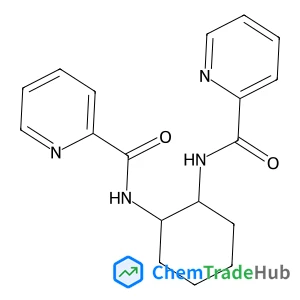
N,N'-(1R,2R)-1,2-Cyclohexanediyldi(2-pyridinecarboxamide)
CAS Number:
218290-24-5
Molecular Formula:
C18H20N4O2
![(3R)-4-(4-Chlorophenyl)-3-({[(2-methyl-2-propanyl)oxy]carbonyl}amino)butanoic acid structure](https://static.chemtradehub.com/structs/218/218608-96-9-f871.webp "(3R)-4-(4-Chlorophenyl)-3-({[(2-methyl-2-propanyl)oxy]carbonyl}amino)butanoic acid structure")
(3R)-4-(4-Chlorophenyl)-3-({[(2-methyl-2-propanyl)oxy]carbonyl}amino)butanoic acid
CAS Number:
218608-96-9
Molecular Formula:
C15H20ClNO4
Recommended Suppliers






Disclaimer
This page provides academic journal information for reference and research purposes only. We are not affiliated with any journal publishers and do not handle publication submissions. For publication-related inquiries, please contact the respective journal publishers directly.
If you notice any inaccuracies in the information displayed, please contact us at support@chemtradehub.com. We will promptly review and address your concerns.