



Growing polymers from peptides and proteins: a biomedical perspective
Literature Information
Publication Date
2013-10-11
DOI
10.1039/C3PY01089A
Impact Factor
5.582
Authors
Yizhi Qi
View Original
Abstract
This review covers the development of the in situ growth of polymers from biomolecules, also termed the “grafting from” conjugation methodology. We trace the evolution of this field of research, with an emphasis on recently developed methods to synthesize polymer conjugates of peptides and proteins with control over the site of conjugation, the stoichiometry of the conjugate, and the chain length and polydispersity of the polymer. We highlight the functional properties and potential biomedical applications of the peptide/protein–polymer conjugates, including conjugates with more advanced architecture and self-assembly behaviour.
Recommended Journals

Saudi Pharmaceutical Journal

Nature Medicine

Russian Journal of Bioorganic Chemistry

Chemical Communications

Current Opinion in Solid State & Materials Science

Journal of Natural Medicines

Acta Materialia

Organic Process Research & Development

Current Opinion in Colloid & Interface Science

Chemistry Education Research and Practice
Related Literature
Crown ethers in hydrogenated graphene
Kai Guo, Sitong Liu, Haoming Tu, Zhikun Wang, Liang Chen, Haiqing Lin, Maosheng Miao, Jing Xu, Wei Liu
2021-08-12
Paper
DOI: 10.1039/D1CP03069H
Improving the theoretical description of Ln(iii)/An(iii) separation with phosphinic acid ligands: a benchmarking study of structure and selectivity‡
Robert C. Chapleski, Jr., Alexander S. Ivanov, Kirk A. Peterson, Vyacheslav S. Bryantsev
2021-08-17
Paper
DOI: 10.1039/D1CP02466C
Effects of strain and electric fields on the electronic transport properties of single-layer β12-borophene nanoribbons
M. Davoudiniya, K. Mirabbaszadeh
2021-08-06
Paper
DOI: 10.1039/D1CP00340B
Fluorescence band exchange narrowing in a series of squaraine oligomers: energetic vs. structural disorder
Arthur Turkin, Pavel Malý
2021-08-12
Paper
DOI: 10.1039/D1CP02136B
Novel Janus diamane C4FCl: a stable and moderate bandgap semiconductor with a huge excitonic effect
2021-08-09
Paper
DOI: 10.1039/D1CP02632A
Exploration on the drug solubility enhancement in aqueous medium with the help of endo-functionalized molecular tubes: a computational approach
Rabindranath Paul, Sandip Paul
2021-08-09
Paper
DOI: 10.1039/D1CP01187A
Experimental and computational investigation of the bond energy of thorium dicarbonyl cation and theoretical elucidation of its isomerization mechanism to the thermodynamically most stable isomer, thorium oxide ketenylidene cation, OTh+CCO
Arjun Kafle, P. B. Armentrout
2021-12-07
Paper
DOI: 10.1039/D1CP04263G
Universal features in the lifetime distribution of clusters in hydrogen-bonding liquids
Martina Požar, Bernarda Lovrinčević, Aurélien Perera
2021-08-10
Paper
DOI: 10.1039/D1CP02027G
Catalyzed reaction of isocyanates (RNCO) with water
Mark E. Wolf, Henry F. Schaefer, III
2021-08-19
Paper
DOI: 10.1039/D1CP03302F
The extrinsic nature of double broadband photoluminescence from the BaTiO3 perovskite: generation of white light emitters
J. L. Clabel H., G. Nicolodelli, G. Lozano C., V. A. G. Rivera, S. O. Ferreira, Alexandre H. Pinto, M. Siu Li, E. Marega, Jr.
2021-07-26
Paper
DOI: 10.1039/D1CP01765A
You might also like
Compound Q&A
What are the main uses of 4-Nitrophenyl phosphate disodium salt hexahydrate (CAS: 333338-18-4)?
4-Nitrophenyl phosphate disodium salt hexahydrate is primarily used as a substra...
333338-18-44-Nitrophenyl phosph...
Compound Q&A
What are the main uses of 2-(Trifluoromethyl)-1,3-oxazole-4-carboxylic Acid (CAS: 1060816-01-4)?
2-(Trifluoromethyl)-1,3-oxazole-4-carboxylic Acid (CAS: 1060816-01-4) is widely ...
1060816-01-42-(Trifluoromethyl)-...
Compound Q&A
How should 2-Fluoro-4-biphenylcarboxylic acid (CAS: 137045-30-8) be stored?
2-Fluoro-4-biphenylcarboxylic acid should be stored in a cool, dry place at room...
137045-30-82-Fluoro-4-biphenylc...
Compound Q&A
What industries use Prednisolone-21-Carboxylic Acid (CAS: 61549-70-0)?
Prednisolone-21-Carboxylic Acid is primarily used in the pharmaceutical industry...
61549-70-0Prednisolone-21-Carb...
Compound Q&A
How should 4-(Hydrazinomethyl)-1,2,3-benzenetriol (CAS: 3614-72-0) be stored?
4-(Hydrazinomethyl)-1,2,3-benzenetriol (CAS: 3614-72-0) should be stored in a co...
3614-72-04-(Hydrazinomethyl)-...
Compound Q&A
What industries use 4-Amino-1-methyl-1H-pyrazole-5-carboxylic acid hydrochloride (CAS: 92534-70-8)?
4-Amino-1-methyl-1H-pyrazole-5-carboxylic acid hydrochloride (CAS: 92534-70-8) i...
92534-70-84-Amino-1-methyl-1H-...
Compound Q&A
What regulatory guidelines apply to dehydropachymic acid (CAS: 77012-31-8)?
Dehydropachymic acid (CAS: 77012-31-8) is regulated by various agencies. It fall...
77012-31-8Dehydropachymic acid
Compound Q&A
What is the market or research trend for 6-[(2,2-Dimethylpropanoyl)amino]nicotinic acid (CAS: 898561-66-5)?
The market and research trends for 6-[(2,2-Dimethylpropanoyl)amino]nicotinic aci...
898561-66-56-[(2,2-Dimethylprop...
Compound Q&A
How should 1,10-Phenanthroline-2,9-dicarbaldehyde (CAS: 57709-62-3) be stored?
1,10-Phenanthroline-2,9-dicarbaldehyde should be stored in a cool, dry place awa...
57709-62-31,10-Phenanthroline-...
Compound Q&A
How is 5-Carbamoyl-11-oxo-10,11-dihydro-5H-dibenzo[b,f]azepin-10-yl acetate (CAS: 113952-21-9) typically synthesized?
5-Carbamoyl-11-oxo-10,11-dihydro-5H-dibenzo[b,f]azepin-10-yl acetate can be synt...
113952-21-95-Carbamoyl-11-oxo-1...
Source Journal
Polymer Chemistry

CiteScore:
8.6
Self-citation Rate:
7.3%
Articles per Year:
457
Polymer Chemistry welcomes submissions in all areas of polymer science that have a strong focus on macromolecular chemistry. Manuscripts may cover a broad range of fields, yet no direct application focus is required.
Recommended Compounds
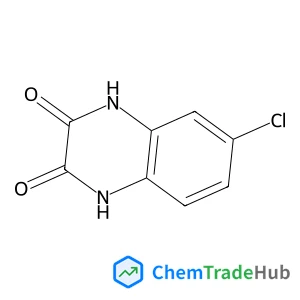
6-CHLORO-2,3-DIOXO-1,2,3,4-TETRAHYDROQUINOXALINE, 97
CAS Number:
169-14-2
Molecular Formula:
C8H5ClN2O2
![(3R,5R)-1-[(Benzyloxy)carbonyl]-5-methyl-3-piperidinecarboxylic acid structure](https://static.chemtradehub.com/structs/126/1269757-29-0-c552.webp "(3R,5R)-1-[(Benzyloxy)carbonyl]-5-methyl-3-piperidinecarboxylic acid structure")
(3R,5R)-1-[(Benzyloxy)carbonyl]-5-methyl-3-piperidinecarboxylic acid
CAS Number:
1269757-29-0
Molecular Formula:
C15H19NO4

cis-3-Amino-1-(trifluoromethyl)cyclobutanol hydrochloride (1:1)
CAS Number:
1408075-16-0
Molecular Formula:
C5H9ClF3NO
Recommended Suppliers





Disclaimer
This page provides academic journal information for reference and research purposes only. We are not affiliated with any journal publishers and do not handle publication submissions. For publication-related inquiries, please contact the respective journal publishers directly.
If you notice any inaccuracies in the information displayed, please contact us at support@chemtradehub.com. We will promptly review and address your concerns.