












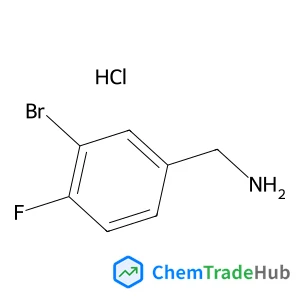
1-(3-Bromo-4-fluorophenyl)methanamine hydrochloride (1:1)
CAS Number:
202865-68-7
Molecular Formula:
C7H8BrClFN
X. Mercier, O. Carrivain, A. Faccinetto, E. Therssen
The soot nucleation process, defined as the transition from molecular precursors to condensed matter, is the less understood step in the whole soot formation process. The possibility that polycyclic aromatic hydrocarbon (PAH) dimers, especially those containing moderate-sized PAHs, can play a major role in soot nucleation is a very controversial issue. Although PAH dimers have often been considered as potential soot precursors, their formation is not thermodynamically favored at a typical flame temperature, their binding energies being considered too weak to allow them to survive in this environment. Hereby, we report experimental evidence supporting the existence of PAH dimers in the proximity of the soot nucleation region of a methane laminar diffusion flame that gives strong evidence for the nucleation process to be kinetically rather than thermodynamically controlled.
Frank J. Devlin, Philip J. Stephens
DOI: 10.1039/B717440C
Karl Fisher, David J. Lowe, Jan Petersen
DOI: 10.1039/B605133B
Ah-Rim Han, Yu Jin Jeong, Yaeun Kang, Jung Yoon Lee, Mi Sook Seo, Wonwoo Nam
DOI: 10.1039/B716558G
Philippe C. Gros, Abdelatif Doudouh, Christopher Woltermann
DOI: 10.1039/B605170G
Yinghua Jin, Robert M. Coates
DOI: 10.1039/B605346G
Dejun Xiong, Mingliang Chen, Haibing Li
DOI: 10.1039/B716270G
James E. D. Kirkham, Victor Lee, Jack E. Baldwin
DOI: 10.1039/B607035C
Yijun Zhong, Mengfei Luo, Yunlong Xie, Weidong Zhu
DOI: 10.1039/B603128E
Markus Rohe, Klaus Merz
DOI: 10.1039/B716199A
When considering alternatives to 1-(4-Chlorophenyl)-N-hydroxymethanimine (CAS: 3...
This compound should be stored in a cool, dry place away from direct sunlight. I...
3-(4-Bromophenyl)-5-(2-fluorophenyl)-1,2,4-oxadiazole is synthesized through a m...
5-Chloro-2-(4-chlorophenyl)-4-methyl-6-[3-(1-piperidinyl)propoxy]pyrimidine (CAS...
2-Chloro-4-(difluoromethoxy)pyridine is used in the pharmaceutical industry for ...
3-Chloro-6-methylpyridazine (CAS: 1121-79-5) is classified under the Globally Ha...
Several alternatives can be used in the synthesis of Methyl 4,5-dimethyl-2-nitro...
Alternatives to (2E,2'E)-3,3'-(1,4-Phenylene)bisacrylaldehyde include other acry...
3-Amino-5-chloropyridin-2-ol hydrochloride is an organic compound with the CAS n...
When handling 6,7-Difluoro-2,3-dihydro-4H-chromen-4-one, it is essential to wear...

Physical Chemistry Chemical Physics (PCCP) is an international journal co-owned by 19 physical chemistry and physics societies from around the world. This journal publishes original, cutting-edge research in physical chemistry, chemical physics and biophysical chemistry. To be suitable for publication in PCCP, articles must include significant innovation and/or insight into physical chemistry; this is the most important criterion that reviewers and Editors will judge against when evaluating submissions. The journal has a broad scope and welcomes contributions spanning experiment, theory, computation and data science. Topical coverage includes spectroscopy, dynamics, kinetics, statistical mechanics, thermodynamics, electrochemistry, catalysis, surface science, quantum mechanics, quantum computing and machine learning. Interdisciplinary research areas such as polymers and soft matter, materials, nanoscience, energy, surfaces/interfaces, and biophysical chemistry are welcomed if they demonstrate significant innovation and/or insight into physical chemistry. Joined experimental/theoretical studies are particularly appreciated when complementary and based on up-to-date approaches.
![(2S)-2-{[(9H-Fluoren-9-ylmethoxy)carbonyl]amino}-4-(methylselanyl)butanoic acid structure](https://static.chemtradehub.com/structs/121/1217852-49-7-f252.webp "(2S)-2-{[(9H-Fluoren-9-ylmethoxy)carbonyl]amino}-4-(methylselanyl)butanoic acid structure")






