













Computational modeling of the catalytic mechanism of hydroxymethylbilane synthase
Literature Information
Publication Date
2019-03-28
DOI
10.1039/C9CP00196D
Impact Factor
3.676
Authors
Arijit Roy, U. Deva Priyakumar
View Original
Abstract
Hydroxymethylbilane synthase (HMBS), the third enzyme in the heme biosynthesis pathway, catalyzes the formation of 1-hydroxymethylbilane (HMB) by a stepwise polymerization of four molecules of porphobilinogen (PBG) using the dipyrromethane (DPM) cofactor. The mechanism by which HMBS polymerizes four units of PBG has not been elucidated to date. In vitro and in silico studies on HMBS have suggested certain residues with catalytic importance, but their specific role in the catalysis is unclear. To understand the catalytic mechanism of HMBS, quantum mechanical (QM) calculations were performed on model systems obtained from the active site of the human HMBS enzyme. The addition of one molecule of PBG to the DPM cofactor is carried out in four steps: (1) protonation of the substrate, PBG; (2) deamination of PBG; (3) electrophilic addition of the deaminated substrate to the terminal pyrrole ring of the enzyme-bound DPM cofactor and (4) deprotonation of the carbon atom at the α-position of the second ring of DPM. Based on the energy profiles from the QM calculations on cluster models, R26 is proposed to be the best suitable proton donor to the PBG moiety, which aids in the deamination of the substrate. During the electrophilic addition step, the intermediate formed is stabilized by the carboxylate side chain of the D99 residue. In the final deprotonation step, an extra proton from the second ring of DPM is transferred to R26 via the carboxylate side chain of D99, thus completing one cycle of the catalytic mechanism. The residues in the cluster model seem to play an important role in obtaining accurate energy barriers. All the stationary points along the reaction pathway have been characterized using QM calculations. The rate limiting step for the complete mechanism is found to be the deamination of the PBG moiety. The results of this study provide a detailed understanding of the catalytic mechanism and would help design future studies aimed at modulating the activity of HMBS.
Related Literature
A three-dimensional cross-linking supramolecular polymer stabilized by the cooperative dimerization of the viologen radical cation
Cen Zhou, Jia Tian, Ji-Liang Wang, Dan-Wei Zhang, Xin Zhao, Yi Liu, Zhan-Ting Li
2013-09-09
Communication
DOI: 10.1039/C3PY01006F
Polymer patchy colloids with sticky patches
Yi Zhao, Rüdiger Berger, Katharina Landfester, Daniel Crespy
2013-09-12
Paper
DOI: 10.1039/C3PY01096A
RAFT/MADIX (co)polymerization of vinyl trifluoroacetate: a means to many ends
Jean-Daniel Marty, Mathias Destarac
2013-10-01
Paper
DOI: 10.1039/C3PY01109G
Effect of chemically modified graphene oxide on the phase separation behaviour and properties of an epoxy/polyetherimide binary system
Guijun Yu, Peiyi Wu
2013-07-31
Paper
DOI: 10.1039/C3PY00878A
Soluble and stable alternating main-chain merocyanine copolymers through quantitative spiropyran–merocyanine conversion
Hartmut Komber, Stefan Müllers, Alexander Held, Michael Walter
2013-08-22
Paper
DOI: 10.1039/C3PY00853C
A novel route for polymerisation of thiophene based conducting polymers using trace-free oxidants
Jimy Hadiono So, David Mayevsky, Orawan Winther-Jensen, Bjorn Winther-Jensen
2013-10-10
Communication
DOI: 10.1039/C3PY01265D
Multi-stimuli responsive polymers – the all-in-one talents
Florian D. Jochum, Patrick Theato
2013-08-07
Review Article
DOI: 10.1039/C3PY00880K
Preparation of a D–A polymer with disilanobithiophene as a new donor component and application to high-voltage bulk heterojunction polymer solar cells
Joji Ohshita, Makoto Nakashima, Daiki Tanaka, Yasushi Morihara, Hiroyuki Fueno, Kazuyoshi Tanaka
2013-10-17
Communication
DOI: 10.1039/C3PY01157G
Sulfonated poly(arylene ether phosphine oxide)s with various distributions and contents of pendant sulfonic acid groups synthesized by direct polycondensation
Huiying Liao, Ke Zhang, Gangsheng Tong, Guyu Xiao, Deyue Yan
2013-09-16
Paper
DOI: 10.1039/C3PY00821E
You might also like
Compound Q&A
What are the main uses of 1H-Indazole-6-carbonitrile (CAS: 141290-59-7)?
1H-Indazole-6-carbonitrile finds applications in pharmaceuticals, where it serve...
141290-59-71H-Indazole-6-carbon...
Compound Q&A
How should waste containing Dioctyl (2E)-2-butenedioate (CAS: 2997-85-5) be handled?
Waste containing Dioctyl (2E)-2-butenedioate (CAS: 2997-85-5) should be collecte...
2997-85-5Dioctyl (2E)-2-buten...
Compound Q&A
What industries use Sodium [(1,2-benzoxazol-3-ylmethyl)sulfonyl]azanide (CAS: 68291-98-5)?
Sodium [(1,2-benzoxazol-3-ylmethyl)sulfonyl]azanide is primarily used in pharmac...
68291-98-5Sodium [(1,2-benzoxa...
Compound Q&A
Are there alternatives to Dimethyl 4-(4,4,5,5-tetramethyl-1,3,2-dioxaborolan-2-yl)-2,6-pyridinedicarboxylate (CAS: 741709-66-0) in synthesis?
Dimethyl 4-(4,4,5,5-tetramethyl-1,3,2-dioxaborolan-2-yl)-2,6-pyridinedicarboxyla...
741709-66-0Dimethyl 4-(4,4,5,5-...
Compound Q&A
How should waste containing 2-Fluoro-6-hydrazinopyridine (CAS: 80714-39-2) be handled?
Waste containing 2-Fluoro-6-hydrazinopyridine (CAS: 80714-39-2) should be manage...
80714-39-22-Fluoro-6-hydrazino...
Compound Q&A
What is 6-Formyl-2-pyridinecarboxylic acid (CAS: 499214-11-8)?
6-Formyl-2-pyridinecarboxylic acid is an organic compound with the molecular for...
499214-11-86-Formyl-2-pyridinec...
Compound Q&A
What is the market or research trend for 3-(3,4-dimethoxyphenyl)-2,5-dimethyl-N-(2-morpholin-4-ylethyl)pyrazolo[1,5-a]pyrimidin-7-amine (CAS: 900874-91-1)?
Research trends for this compound indicate a focus on its potential applications...
900874-91-13-(3,4-dimethoxyphen...
Compound Q&A
How is 9H-Tribenzo[b,d,f]azepine (CAS: 29875-73-8) typically synthesized?
9H-Tribenzo[b,d,f]azepine is typically synthesized via a multi-step process invo...
29875-73-89H-Tribenzo[b,d,f]az...
Compound Q&A
How is 1-Cyclopropyl-7-ethoxy-6-fluoro-8-methoxy-4-oxo-1,4-dihydro-3-quinolinecarboxylic acid (CAS: 1797982-51-4) typically synthesized?
1-Cyclopropyl-7-ethoxy-6-fluoro-8-methoxy-4-oxo-1,4-dihydro-3-quinolinecarboxyli...
1797982-51-41-Cyclopropyl-7-etho...
Compound Q&A
How should waste containing Methyl 3-oxo-1,2,3,4-tetrahydro-6-quinoxalinecarboxylate (CAS: 671820-52-3) be handled?
Waste containing Methyl 3-oxo-1,2,3,4-tetrahydro-6-quinoxalinecarboxylate (CAS: ...
671820-52-3Methyl 3-oxo-1,2,3,4...
Source Journal
Physical Chemistry Chemical Physics

CiteScore:
5.5
Self-citation Rate:
10.3%
Articles per Year:
3036
Physical Chemistry Chemical Physics (PCCP) is an international journal co-owned by 19 physical chemistry and physics societies from around the world. This journal publishes original, cutting-edge research in physical chemistry, chemical physics and biophysical chemistry. To be suitable for publication in PCCP, articles must include significant innovation and/or insight into physical chemistry; this is the most important criterion that reviewers and Editors will judge against when evaluating submissions. The journal has a broad scope and welcomes contributions spanning experiment, theory, computation and data science. Topical coverage includes spectroscopy, dynamics, kinetics, statistical mechanics, thermodynamics, electrochemistry, catalysis, surface science, quantum mechanics, quantum computing and machine learning. Interdisciplinary research areas such as polymers and soft matter, materials, nanoscience, energy, surfaces/interfaces, and biophysical chemistry are welcomed if they demonstrate significant innovation and/or insight into physical chemistry. Joined experimental/theoretical studies are particularly appreciated when complementary and based on up-to-date approaches.
Recommended Compounds
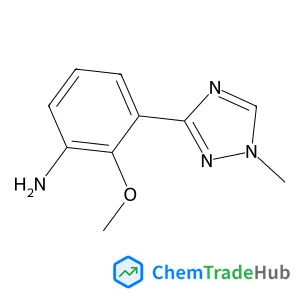
2-Methoxy-3-(1-methyl-1H-1,2,4-triazol-3-yl)aniline
CAS Number:
1609394-10-6
Molecular Formula:
C10H12N4O
![2-Methyl-2-propanyl 4-{2-fluoro-5-[(4-oxo-3,4-dihydro-1-phthalazinyl)methyl]benzoyl}-1-piperazinecarboxylate structure](https://static.chemtradehub.com/structs/763/763114-04-1-65a9.webp "2-Methyl-2-propanyl 4-{2-fluoro-5-[(4-oxo-3,4-dihydro-1-phthalazinyl)methyl]benzoyl}-1-piperazinecarboxylate structure")
2-Methyl-2-propanyl 4-{2-fluoro-5-[(4-oxo-3,4-dihydro-1-phthalazinyl)methyl]benzoyl}-1-piperazinecarboxylate
CAS Number:
763114-04-1
Molecular Formula:
C25H27FN4O4

Recommended Suppliers






Disclaimer
This page provides academic journal information for reference and research purposes only. We are not affiliated with any journal publishers and do not handle publication submissions. For publication-related inquiries, please contact the respective journal publishers directly.
If you notice any inaccuracies in the information displayed, please contact us at support@chemtradehub.com. We will promptly review and address your concerns.