


Multi-stimuli responsive polymers – the all-in-one talents
Literature Information
Publication Date
2013-08-07
DOI
10.1039/C3PY00880K
Impact Factor
5.582
Authors
Florian D. Jochum, Patrick Theato
View Original
Abstract
Stimuli-responsive polymers have gained increasing attention, which is attributed to the manifold applications they can be used for. Several years' intensive research was invested in stimuli-responsive polymers. Their stimuli-responsiveness led not only to novel responsive groups, which enabled the translation of an external physical impact into a change of a material property, but also to polymers that are equipped with more than one responsive group. The integration of several responsive moieties within one polymer yields smart polymers exhibiting complex responsive behaviour of the polymers. This review summarises recent developments in the area of multi-stimuli responsive polymers, laying the focus on the improved, multifaceted response of polymer materials depending on the impact of several external stimuli.
Recommended Journals

Journal of Saudi Chemical Society

Chemical Communications

Organic Process Research & Development

Russian Journal of General Chemistry

Chemistry Education Research and Practice

Nature Medicine

Current Opinion in Solid State & Materials Science

Current Opinion in Colloid & Interface Science

Russian Journal of Bioorganic Chemistry

New Journal of Chemistry
Related Literature
The key role of the central cavity in sodium transport through ligand-gated two-pore channels
Stefan Milenkovic, Igor V. Bodrenko, Armando Carpaneto
2021-08-11
Paper
DOI: 10.1039/D1CP02947A
Microscale pH inhomogeneity in frozen NaCl solutions
Shun Kataoka, Makoto Harada, Tetsuo Okada
2021-08-11
Paper
DOI: 10.1039/D1CP01655E
Electronic structures and properties of dianionic pentacarbonyls [TM(CO)5]2− (TM = Cr, Mo, W)
Gerui Pei, Cong-Cong Shu, Mengyang Li, Zhong-Ming Sun, Tao Yang
2021-08-03
Paper
DOI: 10.1039/D1CP01592C
The electronic temperature and the effective chemical potential parameters of an atom in a molecule. A Fermi–Dirac semi-local variational approach
2021-12-08
Paper
DOI: 10.1039/D1CP04071E
Progress in phase-sensitive sum frequency generation spectroscopy
Shoichi Yamaguchi, Takuhiro Otosu
2021-06-25
Perspective
DOI: 10.1039/D1CP01994E
Characterization of the deformation behaviors under uniaxial stress for bicontinuous nanoporous amorphous alloys
Yuhang Zhang, Yiqun Hu, Suhang Ding, Fuying Du
2021-12-20
Paper
DOI: 10.1039/D1CP04970D
A theoretical study on the intercalation and diffusion of AlF3 in graphite: its application in rechargeable batteries
Adriana E. Candia, Eduardo A. Albanesi, Gustavo D. Ruano
2021-08-26
Paper
DOI: 10.1039/D1CP01855H
Mechanistic insight into the roles of anions and cations in the degradation of poly(ethylene terephthalate) catalyzed by ionic liquids
Lei Zhou, Xingmei Lu, Yao Li, Xiaoqian Yao, Shenyu Cheng, Gangwei Chen, Chengsheng Ge
2021-08-16
Paper
DOI: 10.1039/D1CP02038B
Kinetic Monte Carlo simulations of self-organization of Ge islands on Si(001)
Paramita Ghosh, Nidhi Gupta, Monika Dhankhar, Madhav Ranganathan
2021-08-09
Paper
DOI: 10.1039/D1CP00069A
You might also like
Compound Q&A
What are the main uses of 4-Nitrophenyl phosphate disodium salt hexahydrate (CAS: 333338-18-4)?
4-Nitrophenyl phosphate disodium salt hexahydrate is primarily used as a substra...
333338-18-44-Nitrophenyl phosph...
Compound Q&A
What are the main uses of 2-(Trifluoromethyl)-1,3-oxazole-4-carboxylic Acid (CAS: 1060816-01-4)?
2-(Trifluoromethyl)-1,3-oxazole-4-carboxylic Acid (CAS: 1060816-01-4) is widely ...
1060816-01-42-(Trifluoromethyl)-...
Compound Q&A
How should 2-Fluoro-4-biphenylcarboxylic acid (CAS: 137045-30-8) be stored?
2-Fluoro-4-biphenylcarboxylic acid should be stored in a cool, dry place at room...
137045-30-82-Fluoro-4-biphenylc...
Compound Q&A
What industries use Prednisolone-21-Carboxylic Acid (CAS: 61549-70-0)?
Prednisolone-21-Carboxylic Acid is primarily used in the pharmaceutical industry...
61549-70-0Prednisolone-21-Carb...
Compound Q&A
How should 4-(Hydrazinomethyl)-1,2,3-benzenetriol (CAS: 3614-72-0) be stored?
4-(Hydrazinomethyl)-1,2,3-benzenetriol (CAS: 3614-72-0) should be stored in a co...
3614-72-04-(Hydrazinomethyl)-...
Compound Q&A
What industries use 4-Amino-1-methyl-1H-pyrazole-5-carboxylic acid hydrochloride (CAS: 92534-70-8)?
4-Amino-1-methyl-1H-pyrazole-5-carboxylic acid hydrochloride (CAS: 92534-70-8) i...
92534-70-84-Amino-1-methyl-1H-...
Compound Q&A
What regulatory guidelines apply to dehydropachymic acid (CAS: 77012-31-8)?
Dehydropachymic acid (CAS: 77012-31-8) is regulated by various agencies. It fall...
77012-31-8Dehydropachymic acid
Compound Q&A
What is the market or research trend for 6-[(2,2-Dimethylpropanoyl)amino]nicotinic acid (CAS: 898561-66-5)?
The market and research trends for 6-[(2,2-Dimethylpropanoyl)amino]nicotinic aci...
898561-66-56-[(2,2-Dimethylprop...
Compound Q&A
How should 1,10-Phenanthroline-2,9-dicarbaldehyde (CAS: 57709-62-3) be stored?
1,10-Phenanthroline-2,9-dicarbaldehyde should be stored in a cool, dry place awa...
57709-62-31,10-Phenanthroline-...
Compound Q&A
How is 5-Carbamoyl-11-oxo-10,11-dihydro-5H-dibenzo[b,f]azepin-10-yl acetate (CAS: 113952-21-9) typically synthesized?
5-Carbamoyl-11-oxo-10,11-dihydro-5H-dibenzo[b,f]azepin-10-yl acetate can be synt...
113952-21-95-Carbamoyl-11-oxo-1...
Source Journal
Polymer Chemistry

CiteScore:
8.6
Self-citation Rate:
7.3%
Articles per Year:
457
Polymer Chemistry welcomes submissions in all areas of polymer science that have a strong focus on macromolecular chemistry. Manuscripts may cover a broad range of fields, yet no direct application focus is required.
Recommended Compounds
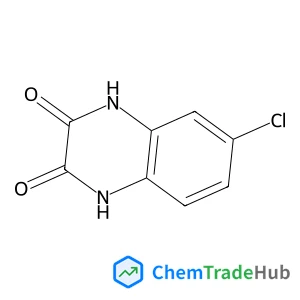
6-CHLORO-2,3-DIOXO-1,2,3,4-TETRAHYDROQUINOXALINE, 97
CAS Number:
169-14-2
Molecular Formula:
C8H5ClN2O2
![S-[2,3-Bis(palmitoyloxy)propyl]-N-[(9H-fluoren-9-ylmethoxy)(hydroxy)methylene]cysteine structure](https://static.chemtradehub.com/structs/210/210532-98-2-f6a7.webp "S-[2,3-Bis(palmitoyloxy)propyl]-N-[(9H-fluoren-9-ylmethoxy)(hydroxy)methylene]cysteine structure")
S-[2,3-Bis(palmitoyloxy)propyl]-N-[(9H-fluoren-9-ylmethoxy)(hydroxy)methylene]cysteine
CAS Number:
210532-98-2
Molecular Formula:
C53H83NO8S
![[(1S,2S,3R,4S,7R,9S,10S,12R,15S)-4,12-Diacetyloxy-15-[(2R,3S)-3-benzamido-3-phenyl-2-(2,2,2-trichloroethoxycarbonyloxy)propanoyl]oxy-1,9-dihydroxy-10,14,17,17-tetramethyl-11-oxo-6-oxatetracyclo[11.3.1.03,10.04,7]heptadec-13-en-2-yl] benzoate structure](https://static.chemtradehub.com/structs/100/100431-55-8-7104.webp "[(1S,2S,3R,4S,7R,9S,10S,12R,15S)-4,12-Diacetyloxy-15-[(2R,3S)-3-benzamido-3-phenyl-2-(2,2,2-trichloroethoxycarbonyloxy)propanoyl]oxy-1,9-dihydroxy-10,14,17,17-tetramethyl-11-oxo-6-oxatetracyclo[11.3.1.03,10.04,7]heptadec-13-en-2-yl] benzoate structure")
Recommended Suppliers





Disclaimer
This page provides academic journal information for reference and research purposes only. We are not affiliated with any journal publishers and do not handle publication submissions. For publication-related inquiries, please contact the respective journal publishers directly.
If you notice any inaccuracies in the information displayed, please contact us at support@chemtradehub.com. We will promptly review and address your concerns.