












Effect of chemically modified graphene oxide on the phase separation behaviour and properties of an epoxy/polyetherimide binary system
Literature Information
Publication Date
2013-07-31
DOI
10.1039/C3PY00878A
Impact Factor
5.582
Authors
Guijun Yu, Peiyi Wu
View Original
Abstract
In this study, methylenedianiline-modified graphene oxide (GO-MDA) was incorporated into the diglycidyl ether of a bisphenol A/polyetherimide (DGEBA/PEI) binary system to regulate the Cure-Reaction Induced Phase Separation (CRIPS) behaviour. After the cure-reaction was completed, the fractured surfaces of DGEBA/PEI/GO-MDA composites were etched and observed by SEM measurement to determine the final morphology. Rheological and DSC measurements were used to analyze the effect of GO-MDA on the CRIPS behaviour of the composites. It was found that the CRIPS behaviour of the DGEBA/PEI system, with or without GO-MDA, all followed a spinodal decomposition mechanism. The introduction of GO-MDA increased the complex viscosity and cure-reaction rate of the DGEBA/PEI/GO-MDA composites, which significantly suppressed the development of phase separation and helped freeze the final morphology of the composites at an earlier stage of co-continuous structure. The toughness and modulus of the composites were improved by adding GO-MDA according to DMA measurement and tensile tests, while TGA results showed little decrease in the thermal stability of the composites.
Recommended Journals
Related Literature
Catalyzed reaction of isocyanates (RNCO) with water
Mark E. Wolf, Henry F. Schaefer, III
2021-08-19
Paper
DOI: 10.1039/D1CP03302F
Characterization of the deformation behaviors under uniaxial stress for bicontinuous nanoporous amorphous alloys
Yuhang Zhang, Yiqun Hu, Suhang Ding, Fuying Du
2021-12-20
Paper
DOI: 10.1039/D1CP04970D
Ultrafast vibrational wave packet dynamics of the aqueous tyrosyl radical anion induced by photodetachment
Muhammad Shafiq Bin Mohd Yusof, Yong Liang Lim, Zhi-Heng Loh
2021-08-16
Paper
DOI: 10.1039/D1CP02975D
Fitting potential energy and induced dipole surfaces of the van der Waals complex CH4–N2 using non-product quadrature grids
Yulia N. Kalugina, Iouli E. Gordon
2021-08-04
Paper
DOI: 10.1039/D1CP02161C
Theoretical study and application of 2-phenyl-1,3,4-thiadiazole derivatives with optical and inhibitory activity against SHP1
Chun Zhang, Yi-Tao Sun, Xue Yan, Xue-Hui Guo, Ai-Min Ren, Wen-Long Wang
2021-12-02
Paper
DOI: 10.1039/D1CP04268H
Kinetics of photon upconversion by triplet–triplet annihilation: a comprehensive tutorial
Yoichi Murakami, Kenji Kamada
2021-08-02
Perspective
DOI: 10.1039/D1CP02654B
Effect of solvent motions on the dynamics of the Diels–Alder reaction
Xiaoyong Zhang, Jeremy N. Harvey
2021-12-13
Paper
DOI: 10.1039/D1CP05272A
Crucial impact of exchange between layers on temperature programmed desorption
Tobias Dickbreder, Ralf Bechstein, Angelika Kühnle
2021-08-06
Paper
DOI: 10.1039/D1CP01924D
Impact of fluorination and chlorination on the electronic structure, topology and in-plane ring normal modes of pyridines
Enrico Benassi, Tamara Vaganova, Evgenij Malykhin, Haiyan Fan
2021-07-29
Paper
DOI: 10.1039/D1CP02342J
Crown ethers in hydrogenated graphene
Kai Guo, Sitong Liu, Haoming Tu, Zhikun Wang, Liang Chen, Haiqing Lin, Maosheng Miao, Jing Xu, Wei Liu
2021-08-12
Paper
DOI: 10.1039/D1CP03069H
You might also like
Compound Q&A
What are the main uses of 4-Nitrophenyl phosphate disodium salt hexahydrate (CAS: 333338-18-4)?
4-Nitrophenyl phosphate disodium salt hexahydrate is primarily used as a substra...
333338-18-44-Nitrophenyl phosph...
Compound Q&A
What are the main uses of 2-(Trifluoromethyl)-1,3-oxazole-4-carboxylic Acid (CAS: 1060816-01-4)?
2-(Trifluoromethyl)-1,3-oxazole-4-carboxylic Acid (CAS: 1060816-01-4) is widely ...
1060816-01-42-(Trifluoromethyl)-...
Compound Q&A
How should 2-Fluoro-4-biphenylcarboxylic acid (CAS: 137045-30-8) be stored?
2-Fluoro-4-biphenylcarboxylic acid should be stored in a cool, dry place at room...
137045-30-82-Fluoro-4-biphenylc...
Compound Q&A
What industries use Prednisolone-21-Carboxylic Acid (CAS: 61549-70-0)?
Prednisolone-21-Carboxylic Acid is primarily used in the pharmaceutical industry...
61549-70-0Prednisolone-21-Carb...
Compound Q&A
How should 4-(Hydrazinomethyl)-1,2,3-benzenetriol (CAS: 3614-72-0) be stored?
4-(Hydrazinomethyl)-1,2,3-benzenetriol (CAS: 3614-72-0) should be stored in a co...
3614-72-04-(Hydrazinomethyl)-...
Compound Q&A
What industries use 4-Amino-1-methyl-1H-pyrazole-5-carboxylic acid hydrochloride (CAS: 92534-70-8)?
4-Amino-1-methyl-1H-pyrazole-5-carboxylic acid hydrochloride (CAS: 92534-70-8) i...
92534-70-84-Amino-1-methyl-1H-...
Compound Q&A
What regulatory guidelines apply to dehydropachymic acid (CAS: 77012-31-8)?
Dehydropachymic acid (CAS: 77012-31-8) is regulated by various agencies. It fall...
77012-31-8Dehydropachymic acid
Compound Q&A
What is the market or research trend for 6-[(2,2-Dimethylpropanoyl)amino]nicotinic acid (CAS: 898561-66-5)?
The market and research trends for 6-[(2,2-Dimethylpropanoyl)amino]nicotinic aci...
898561-66-56-[(2,2-Dimethylprop...
Compound Q&A
How should 1,10-Phenanthroline-2,9-dicarbaldehyde (CAS: 57709-62-3) be stored?
1,10-Phenanthroline-2,9-dicarbaldehyde should be stored in a cool, dry place awa...
57709-62-31,10-Phenanthroline-...
Compound Q&A
How is 5-Carbamoyl-11-oxo-10,11-dihydro-5H-dibenzo[b,f]azepin-10-yl acetate (CAS: 113952-21-9) typically synthesized?
5-Carbamoyl-11-oxo-10,11-dihydro-5H-dibenzo[b,f]azepin-10-yl acetate can be synt...
113952-21-95-Carbamoyl-11-oxo-1...
Source Journal
Polymer Chemistry

CiteScore:
8.6
Self-citation Rate:
7.3%
Articles per Year:
457
Polymer Chemistry welcomes submissions in all areas of polymer science that have a strong focus on macromolecular chemistry. Manuscripts may cover a broad range of fields, yet no direct application focus is required.
Recommended Compounds
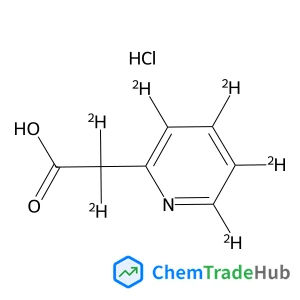
2,2-dideuterio-2-(3,4,5,6-tetradeuterio-2-pyridyl)acetic acid;hydrochloride
CAS Number:
1329799-67-8
Molecular Formula:
C7H2ClD6NO2
![(2E)-3-(3-Chlorophenyl)-N-{2-[4-(methylsulfonyl)-1-piperazinyl]-2-oxoethyl}acrylamide structure](https://static.chemtradehub.com/structs/250/2505001-54-5-c1e9.webp "(2E)-3-(3-Chlorophenyl)-N-{2-[4-(methylsulfonyl)-1-piperazinyl]-2-oxoethyl}acrylamide structure")
(2E)-3-(3-Chlorophenyl)-N-{2-[4-(methylsulfonyl)-1-piperazinyl]-2-oxoethyl}acrylamide
CAS Number:
2505001-54-5
Molecular Formula:
C16H20ClN3O4S
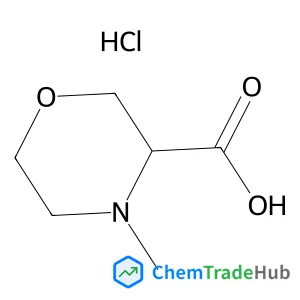
4-Methyl-3-morpholinecarboxylic acid hydrochloride (1:1)
CAS Number:
1240518-90-4
Molecular Formula:
C6H12ClNO3
Recommended Suppliers





Disclaimer
This page provides academic journal information for reference and research purposes only. We are not affiliated with any journal publishers and do not handle publication submissions. For publication-related inquiries, please contact the respective journal publishers directly.
If you notice any inaccuracies in the information displayed, please contact us at support@chemtradehub.com. We will promptly review and address your concerns.