












Soluble and stable alternating main-chain merocyanine copolymers through quantitative spiropyran–merocyanine conversion
Literature Information
Publication Date
2013-08-22
DOI
10.1039/C3PY00853C
Impact Factor
5.582
Authors
Hartmut Komber, Stefan Müllers, Alexander Held, Michael Walter
View Original
Abstract
A combined experimental and theoretical study on the synthesis and solution isomerization behavior of main chain copolymers with multiple spiropyran incorporation is presented. A series of alternating copolymers P(SP-alt-Cx) of spiropyran (SP) and flexible linkers (Cx, x = 6,8,10) is synthesized by Suzuki polycondensation (SPC). Careful 1H NMR polymer end group analysis is carried out to reveal termination reactions that limit molecular weight. Although methylene indoline and salicyl aldehyde end groups are found arising from SP cleavage during polymerization, acceptable Mn,SEC up to 34 kg mol−1 is achieved. P(SP-alt-Cx) can be transformed into the corresponding protonated form of the red alternating merocyanine (MC) polymer, P(MCH+-alt-Cx), in quantitative yield by direct acidification or pulsed ultrasound. The origin of the latter method lies in the sonochemical degradation of chloroform, which provides a continuous source of hydrochloric acid. Deprotonation of P(MCH+-alt-Cx) occurs upon the addition of a base resulting in the blue form P(MC-alt-Cx), as characterized by UV-vis spectroscopy and confirmed by density functional theory (DFT) calculations of model compounds. DFT further reveals P(MCH+-alt-Cx) to be the thermodynamically most stable form. It is proposed that the para-linkage to the phenyl-based comonomer Cx decreases acidity of protonated merocyanine and hence increases stability of P(MCH+-alt-Cx), which poses a marked difference compared to the commonly employed 6-nitro-substituted analogs.
Related Literature
TEMPO catalyzed oxidative dehydrogenation of hydrazobenzenes to azobenzenes
Ronibala Devi Laishram, Yong Yang, Jiayan Li, Dandan Xu, Yong Zhan, Yang Luo, Zhimin Su, Sagar More
2020-04-15
Communication
DOI: 10.1039/D0OB00103A
The visible-light-triggered regioselective alkylation of quinoxalin-2(1H)-ones via decarboxylation coupling
Hongdou Zhang, Jun Xu, Min Zhou, Jianming Zhao, Pengfei Zhang, Wanmei Li
2019-11-14
Paper
DOI: 10.1039/C9OB02203A
Branched lipid chains to prepare cationic amphiphiles producing hexagonal aggregates: supramolecular behavior and application to gene delivery
Amal Bouraoui, Rosy Ghanem, Mathieu Berchel, Laure Deschamps, Véronique Vié, Gilles Paboeuf, Tony Le Gall, Tristan Montier, Paul-Alain Jaffrès
2019-12-04
Paper
DOI: 10.1039/C9OB02381J
Synthetic and mechanistic aspects of sulfonyl migrations
Aaran J. Flynn, Alan Ford, Anita R. Maguire
2020-02-03
Review Article
DOI: 10.1039/C9OB02587A
Direct synthesis of cyclic lipopeptides using intramolecular native chemical ligation and thiol–ene CLipPA chemistry
2020-02-05
Paper
DOI: 10.1039/D0OB00203H
Effect of n-alkyl substitution on Cu(ii)-selective chemosensing of rhodamine B derivatives
Santosh Kumar Mishra
2019-12-04
Paper
DOI: 10.1039/C9OB02439E
Iron-catalyzed regioselective alkylation of 1,4-quinones and coumarins with functionalized alkyl bromides
Dengke Li, Xianfu Shen
2019-12-23
Paper
DOI: 10.1039/C9OB02289A
Exploring the relationship between structure and activity in BODIPYs designed for antimicrobial phototherapy
Burkhard Gitter, Keith J. Flanagan, Christopher J. Kingsbury, Mathias O. Senge
2020-03-06
Paper
DOI: 10.1039/D0OB00188K
Chemoselective photocatalytic oxidation of alcohols to aldehydes and ketones by nitromethane on titanium dioxide under violet 400 nm LED light irradiation
Azam Rahimi Niaraki, Mohammad Reza Saraee, Babak Kaboudin
2020-03-07
Paper
DOI: 10.1039/C9OB02183C
You might also like
Compound Q&A
What regulatory guidelines apply to 6-Bromo-2-methylimidazo[1,2-a]pyrimidine (CAS: 1111638-05-1)?
6-Bromo-2-methylimidazo[1,2-a]pyrimidine (CAS: 1111638-05-1) falls under various...
1111638-05-16-Bromo-2-methylimid...
Compound Q&A
Are there alternatives to 1-Pyrrolidineethanol, β-methyl-α-phenyl-, (αS,βR) (CAS: 123620-80-4) in synthesis?
While there are no direct alternatives, similar compounds like 1-Pyrrolidineetha...
123620-80-41-Pyrrolidineethanol...
Compound Q&A
Is 4-Methyl-2,6-bis(2-methyl-2-propanyl)phenyl methylcarbamate (CAS: 1918-11-2) safe?
4-Methyl-2,6-bis(2-methyl-2-propanyl)phenyl methylcarbamate (CAS: 1918-11-2) is ...
1918-11-24-Methyl-2,6-bis(2-m...
Compound Q&A
How should 2-(3-Bromo-4-fluorophenyl)-1,3-dioxolane (CAS: 77771-04-1) be stored?
2-(3-Bromo-4-fluorophenyl)-1,3-dioxolane (CAS: 77771-04-1) should be stored in a...
77771-04-12-(3-Bromo-4-fluorop...
Compound Q&A
What are the physical and chemical properties of 4,5,6,7-Tetrahydro-1H-indazole hydrochloride (CAS: 18161-11-0)?
4,5,6,7-Tetrahydro-1H-indazole hydrochloride is a white crystalline solid with a...
18161-11-04,5,6,7-Tetrahydro-1...
Compound Q&A
What is (2R)-1-Methoxy-3-phenyl-2-propanamine (CAS: 59919-07-2)?
(2R)-1-Methoxy-3-phenyl-2-propanamine is a chiral organic compound with the CAS ...
59919-07-2(2R)-1-Methoxy-3-phe...
Compound Q&A
What industries use Ethyl 1-(1-phenylethyl)-1H-imidazole-5-carboxylate (CAS: 56649-47-9)?
Ethyl 1-(1-phenylethyl)-1H-imidazole-5-carboxylate is used in various industries...
56649-47-9Ethyl 1-(1-phenyleth...
Compound Q&A
What regulatory guidelines apply to 4-[(1E,3S)-1-(4-Hydroxyphenyl)-1,4-pentadien-3-yl]phenol (CAS: 17676-24-3)?
4-[(1E,3S)-1-(4-Hydroxyphenyl)-1,4-pentadien-3-yl]phenol (CAS: 17676-24-3) falls...
17676-24-34-[(1E,3S)-1-(4-Hydr...
Compound Q&A
What industries use (S)-3-Amino-5-phenylpentanoic acid hydrochloride (CAS: 331846-97-0)?
(S)-3-Amino-5-phenylpentanoic acid hydrochloride is primarily used in the pharma...
331846-97-0(S)-3-Amino-5-phenyl...
Compound Q&A
How is 7-methoxy-1-benzothiophene-2-carboxylic acid (CAS: 88791-07-5) typically synthesized?
7-Methoxy-1-benzothiophene-2-carboxylic acid is typically synthesized by reactin...
88791-07-57-methoxy-1-benzothi...
Source Journal
Polymer Chemistry

CiteScore:
8.6
Self-citation Rate:
7.3%
Articles per Year:
457
Polymer Chemistry welcomes submissions in all areas of polymer science that have a strong focus on macromolecular chemistry. Manuscripts may cover a broad range of fields, yet no direct application focus is required.
Recommended Compounds
![(3aS,6aS)-1-Methyloctahydropyrrolo[3,4-b]pyrrole structure](https://static.chemtradehub.com/structs/877/877212-98-1-9157.webp "(3aS,6aS)-1-Methyloctahydropyrrolo[3,4-b]pyrrole structure")
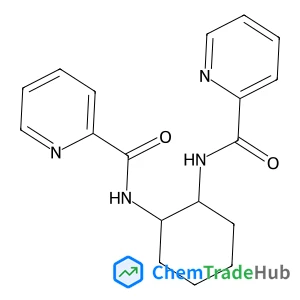
N,N'-(1R,2R)-1,2-Cyclohexanediyldi(2-pyridinecarboxamide)
CAS Number:
218290-24-5
Molecular Formula:
C18H20N4O2
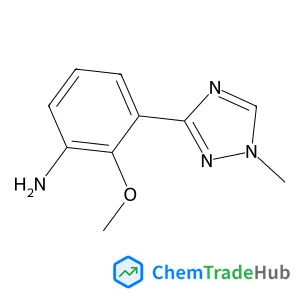
2-Methoxy-3-(1-methyl-1H-1,2,4-triazol-3-yl)aniline
CAS Number:
1609394-10-6
Molecular Formula:
C10H12N4O
Recommended Suppliers



Disclaimer
This page provides academic journal information for reference and research purposes only. We are not affiliated with any journal publishers and do not handle publication submissions. For publication-related inquiries, please contact the respective journal publishers directly.
If you notice any inaccuracies in the information displayed, please contact us at support@chemtradehub.com. We will promptly review and address your concerns.