













Preparation and application of molecularly imprinted polymers for the selective extraction of naringin and genistein from herbal medicines
Literature Information
Publication Date
2019-08-28
DOI
10.1039/C9AY01503E
Impact Factor
2.896
Authors
Zhimin Luo, Aiping Xiao, Guoning Chen, Qi Guo, Chun Chang, Aiguo Zeng, Qiang Fu
View Original
Abstract
Flavonoids are a class of important bioactive chemical constituents in herbal medicines and the simple, fast and selective extraction of flavonoids from herbal samples is quite meaningful. In this study, a simple and selective sample pretreatment procedure coupling molecularly imprinted polymers and solid-phase extraction (MIPs-SPE) was developed for the extraction and purification of flavonoids from herbal medicine samples. MIPs for flavonoids were synthesized through a multi-step swelling and polymerization method, using 4-vinylpyridine as the functional monomer and ethylene glycol dimethacrylate as the cross-linker. Scanning electron microscopy, Fourier transform infrared spectroscopy and elemental analysis were used to characterize the structural features of the obtained MIPs. The recognition performance of the polymers was investigated and several parameters affecting the recognition performance were also studied including the pH value of the mobile phase, the ratio of acetonitrile, the column temperature, the injection volume and the flow-rate of the mobile phase. The results revealed that a relatively good mono-dispersity of MIPs was obtained, and the average size of the obtained polymers was about 3–5 μm. Under the optimum recognition conditions, the obtained MIPs were successfully employed as selective adsorbents for SPE for the specific recognition and purification of flavonoids from herbal medicine samples.
Recommended Journals
Related Literature
Adsorption and photochemistry of CH3CN and CH3CONH2 on powdered TiO2
Chih-Chung Chuang, Wen-Chun Wu, Ming-Xi Lee, Jong-Liang Lin
2000-08-01
Paper
DOI: 10.1039/B003227L
Joint experimental and theoretical study of the poly(styryl sodium) and poly(α-methylstyryl sodium) polymerization/depolymerization
2001-09-20
Paper
DOI: 10.1039/B105389M
Highly conducting states in metal–ammonia solutions
Rainer Burkart, Ulrich Schindewolf
2000-06-14
Paper
DOI: 10.1039/B002598O
Investigation of guanine-rich DNA telomeric structure by a covalently linked BODIPY dye
Paper
DOI: 10.1039/A901361J
Photodissociation of DOBr—Time-dependent wavepacket calculations
Alex Brown, Gabriel G. Balint-Kurti, László Füsti-Molnár
2001-08-30
Paper
DOI: 10.1039/B102542M
Structure and torsional potential of p-phenylthiophene: a theoretical comparative study
2000-07-10
Paper
DOI: 10.1039/B003806G
Solvation of alkane and alcohol molecules. Energy contributions
A. A. C. C. Pais, A. Sousa, M. E. Eusébio, J. S. Redinha
2001-08-31
Paper
DOI: 10.1039/B104981J
The electronic spectra of symmetric cyanine dyes: A CASPT2 study
2001-08-22
Paper
DOI: 10.1039/B103417K
You might also like
Compound Q&A
What are the main uses of 1H-Indazole-6-carbonitrile (CAS: 141290-59-7)?
1H-Indazole-6-carbonitrile finds applications in pharmaceuticals, where it serve...
141290-59-71H-Indazole-6-carbon...
Compound Q&A
How should waste containing Dioctyl (2E)-2-butenedioate (CAS: 2997-85-5) be handled?
Waste containing Dioctyl (2E)-2-butenedioate (CAS: 2997-85-5) should be collecte...
2997-85-5Dioctyl (2E)-2-buten...
Compound Q&A
What industries use Sodium [(1,2-benzoxazol-3-ylmethyl)sulfonyl]azanide (CAS: 68291-98-5)?
Sodium [(1,2-benzoxazol-3-ylmethyl)sulfonyl]azanide is primarily used in pharmac...
68291-98-5Sodium [(1,2-benzoxa...
Compound Q&A
Are there alternatives to Dimethyl 4-(4,4,5,5-tetramethyl-1,3,2-dioxaborolan-2-yl)-2,6-pyridinedicarboxylate (CAS: 741709-66-0) in synthesis?
Dimethyl 4-(4,4,5,5-tetramethyl-1,3,2-dioxaborolan-2-yl)-2,6-pyridinedicarboxyla...
741709-66-0Dimethyl 4-(4,4,5,5-...
Compound Q&A
How should waste containing 2-Fluoro-6-hydrazinopyridine (CAS: 80714-39-2) be handled?
Waste containing 2-Fluoro-6-hydrazinopyridine (CAS: 80714-39-2) should be manage...
80714-39-22-Fluoro-6-hydrazino...
Compound Q&A
What is 6-Formyl-2-pyridinecarboxylic acid (CAS: 499214-11-8)?
6-Formyl-2-pyridinecarboxylic acid is an organic compound with the molecular for...
499214-11-86-Formyl-2-pyridinec...
Compound Q&A
What is the market or research trend for 3-(3,4-dimethoxyphenyl)-2,5-dimethyl-N-(2-morpholin-4-ylethyl)pyrazolo[1,5-a]pyrimidin-7-amine (CAS: 900874-91-1)?
Research trends for this compound indicate a focus on its potential applications...
900874-91-13-(3,4-dimethoxyphen...
Compound Q&A
How is 9H-Tribenzo[b,d,f]azepine (CAS: 29875-73-8) typically synthesized?
9H-Tribenzo[b,d,f]azepine is typically synthesized via a multi-step process invo...
29875-73-89H-Tribenzo[b,d,f]az...
Compound Q&A
How is 1-Cyclopropyl-7-ethoxy-6-fluoro-8-methoxy-4-oxo-1,4-dihydro-3-quinolinecarboxylic acid (CAS: 1797982-51-4) typically synthesized?
1-Cyclopropyl-7-ethoxy-6-fluoro-8-methoxy-4-oxo-1,4-dihydro-3-quinolinecarboxyli...
1797982-51-41-Cyclopropyl-7-etho...
Compound Q&A
How should waste containing Methyl 3-oxo-1,2,3,4-tetrahydro-6-quinoxalinecarboxylate (CAS: 671820-52-3) be handled?
Waste containing Methyl 3-oxo-1,2,3,4-tetrahydro-6-quinoxalinecarboxylate (CAS: ...
671820-52-3Methyl 3-oxo-1,2,3,4...
Source Journal
Analytical Methods

CiteScore:
5.1
Self-citation Rate:
3.7%
Articles per Year:
655
Analytical Methods welcomes early applications of new analytical and bioanalytical methods and technology demonstrating the potential for societal impact. We require that methods and technology reported in the journal are sufficiently innovative, robust, accurate, and compared to other available methods for the intended application. Developments with interdisciplinary approaches are particularly welcome. Systems should be proven with suitably complex and analytically challenging samples. We encourage developments within, but not limited to, the following technologies and applications: global health, point-of-care and molecular diagnostics biosensors and bioengineering drug development and pharmaceutical analysis applied microfluidics and nanotechnology omics studies, such as proteomics, metabolomics or glycomics environmental, agricultural and food science neuroscience biochemical and clinical analysis forensic analysis industrial process and method development
Recommended Compounds

Trichloro(3,3,4,4,5,5,6,6,7,7,8,8,8-tridecafluorooctyl)silane
CAS Number:
78560-45-9
Molecular Formula:
C8H4Cl3F13Si
![N-[(9H-Fluoren-9-ylmethoxy)carbonyl]serine structure](https://static.chemtradehub.com/structs/737/73724-45-5-b0dc.webp "N-[(9H-Fluoren-9-ylmethoxy)carbonyl]serine structure")
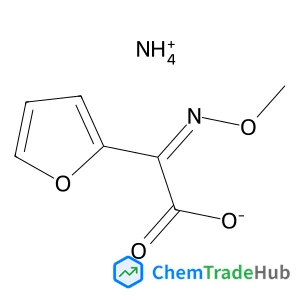
Ammonium (Z)-2-(furan-2-yl)-2-(methoxyimino)acetate
CAS Number:
97148-39-5
Molecular Formula:
C7H10N2O4
Recommended Suppliers







Disclaimer
This page provides academic journal information for reference and research purposes only. We are not affiliated with any journal publishers and do not handle publication submissions. For publication-related inquiries, please contact the respective journal publishers directly.
If you notice any inaccuracies in the information displayed, please contact us at support@chemtradehub.com. We will promptly review and address your concerns.