












Equivalency calculation of unknown enzyme inhibitors in situ the adsorbent of effect-directed autograms
Literature Information
Publication Date
2019-09-07
DOI
10.1039/C9AY01465A
Impact Factor
2.896
Authors
Ebrahim Azadniya, Gertrud E. Morlock
View Original
Abstract
Reliable biochemical quantification of the enzymatically produced signals of enzyme inhibitors has recently been achieved in situ an assay-containing chromatographic bed, i.e. the adsorbent of an effect-directed autogram. As most of the enzyme inhibitors discovered in a complex sample are unknown or unidentified, external standard calibration cannot be performed, and their inhibition potency needs to be estimated by alternative means. Thus, herein, two different modes of equivalency calculation, referring to a potent inhibitor that was either applied or developed, were investigated, validated and compared, exemplarily for acetyl- and butyrylcholinesterase (AChE/BChE) inhibition zones in the Peganum harmala (P. h.) seed extract. Moreover, three potent inhibitors, i.e. physostigmine (PHY), rivastigmine and piperine, were considered for equivalency calculation. With regard to their hRF value, band shape and inhibition brightness against the plate background, the properties of PHY were most similar to those of the unidentified inhibitors in the P. h. seed extract, and thus, it was selected as a reference. The HPTLC-AChE assay with 1-naphthyl acetate as a substrate and Fast Blue B salt as a chromogenic reagent was suitable to reveal the potential differences between the two modes of equivalency calculation due to its low limits of detection. Quantification was studied via PHY zones that were applied versus developed on a high-performance thin-layer chromatography (HPTLC) plate. Both intraday precision and reproducibility showed the same trend, i.e. the equivalency calculation via the developed PHY bands was more repeatable than that via the applied PHY bands. The steeper slope of the calibration curve of the developed PHY bands offered a more sensitive quantification. The resulting equivalent inhibition of the ChE inhibitors in 1 μg per band of P. h. seed extract showed a bias of ca. 30% when calculated via the applied versus developed PHY bands, whereby the total AChE-to-BChE inhibition ratio (ca. 2.4) of the ChE inhibitors in 1 μg per band of P. h. seed extract remained almost the same. As a result, the enzyme inhibition equivalency calculated via the developed reference bands was more reliable and sensitive than that calculated via the applied reference bands. When a faster procedure (applied band pattern) is selected for routine equivalency calculation as a compromise, a potential bias has to be taken into account.
Related Literature
A new method for the measurement of trace amounts of HONO in the atmosphere using an air-dragged aqua-membrane-type denuder and fluorescence detection
2004-10-01
Paper
DOI: 10.1039/B407726A
The application of a SERS fiber probe for the investigation of sensitive biological samples
R. Geßner, P. Rösch, R. Petry, M. Schmitt, M. A. Strehle, W. Kiefer, J. Popp
2004-11-10
Paper
DOI: 10.1039/B411690A
Analytical chemistry of synthetic routes to psychoactive tryptamines Part I. Characterisation of the Speeter and Anthony synthetic route to 5-methoxy-N,N-diisopropyltryptamine using ESI-MS-MS and ESI-TOF-MS
Simon D. Brandt, Sally Freeman, Ian A. Fleet, Peter McGagh, John F. Alder
2004-10-01
Paper
DOI: 10.1039/B407239C
Paraquat enzyme-immunoassays in biological samples: assessment of the effects of hapten–protein bridge structures on assay sensitivity
Ramadan A. Abuknesha, Connie Luk
2005-04-25
Paper
DOI: 10.1039/B418087A
Electric-field frictional effects in confined zwitterionic molecules
Melisa M. Gianetti, Roberto Guerra, Andrea Vanossi, Michael Urbakh, Nicola Manini
2023-07-06
Paper
DOI: 10.1039/D3CP00914A
Diagnosis of used engine oil based on gas phase analysis
Kelly Sepcic, Mira Josowicz, Jiri Janata, Ted Selby
2004-08-26
Paper
DOI: 10.1039/B406619G
Immobilization of individual cells by local photo-polymerization on a chip
Hisataka Maruyama, Fumihito Arai, Toshio Fukuda, Tohoru Katsuragi
2005-01-31
Paper
DOI: 10.1039/B415400M
Encapsulation of multi-walled carbon nanotubes (MWCNTs) in Ba2+-alginate to form coated micro-beads and their application to the pre-concentration/elimination of dibenzo-p-dioxin, dibenzofuran, and biphenyl from contaminated water
Bunshi Fugetsu, Shuya Satoh, Alexander Iles, Kazuhiko Tanaka, Norio Nishi, Fumio Watari
2004-06-11
Communication
DOI: 10.1039/B405325G
Determination of alkaloids in capsules, milk and ethanolic extracts of poppy (Papaver somniferum L.) by ATR-FT-IR and FT-Raman spectroscopy
Hartwig Schulz, Rolf Quilitzsch, Wolfgang Schütze
2004-09-13
Paper
DOI: 10.1039/B408930H
Measurement of nitric oxide by 4,5-diaminofluorescein without interferences
Xiaoying Ye, Won-Suk Kim, Stanislav S. Rubakhin, Jonathan V. Sweedler
2004-11-09
Paper
DOI: 10.1039/B409394A
You might also like
Compound Q&A
What are the main uses of 1H-Indazole-6-carbonitrile (CAS: 141290-59-7)?
1H-Indazole-6-carbonitrile finds applications in pharmaceuticals, where it serve...
141290-59-71H-Indazole-6-carbon...
Compound Q&A
How should waste containing Dioctyl (2E)-2-butenedioate (CAS: 2997-85-5) be handled?
Waste containing Dioctyl (2E)-2-butenedioate (CAS: 2997-85-5) should be collecte...
2997-85-5Dioctyl (2E)-2-buten...
Compound Q&A
What industries use Sodium [(1,2-benzoxazol-3-ylmethyl)sulfonyl]azanide (CAS: 68291-98-5)?
Sodium [(1,2-benzoxazol-3-ylmethyl)sulfonyl]azanide is primarily used in pharmac...
68291-98-5Sodium [(1,2-benzoxa...
Compound Q&A
Are there alternatives to Dimethyl 4-(4,4,5,5-tetramethyl-1,3,2-dioxaborolan-2-yl)-2,6-pyridinedicarboxylate (CAS: 741709-66-0) in synthesis?
Dimethyl 4-(4,4,5,5-tetramethyl-1,3,2-dioxaborolan-2-yl)-2,6-pyridinedicarboxyla...
741709-66-0Dimethyl 4-(4,4,5,5-...
Compound Q&A
How should waste containing 2-Fluoro-6-hydrazinopyridine (CAS: 80714-39-2) be handled?
Waste containing 2-Fluoro-6-hydrazinopyridine (CAS: 80714-39-2) should be manage...
80714-39-22-Fluoro-6-hydrazino...
Compound Q&A
What is 6-Formyl-2-pyridinecarboxylic acid (CAS: 499214-11-8)?
6-Formyl-2-pyridinecarboxylic acid is an organic compound with the molecular for...
499214-11-86-Formyl-2-pyridinec...
Compound Q&A
What is the market or research trend for 3-(3,4-dimethoxyphenyl)-2,5-dimethyl-N-(2-morpholin-4-ylethyl)pyrazolo[1,5-a]pyrimidin-7-amine (CAS: 900874-91-1)?
Research trends for this compound indicate a focus on its potential applications...
900874-91-13-(3,4-dimethoxyphen...
Compound Q&A
How is 9H-Tribenzo[b,d,f]azepine (CAS: 29875-73-8) typically synthesized?
9H-Tribenzo[b,d,f]azepine is typically synthesized via a multi-step process invo...
29875-73-89H-Tribenzo[b,d,f]az...
Compound Q&A
How is 1-Cyclopropyl-7-ethoxy-6-fluoro-8-methoxy-4-oxo-1,4-dihydro-3-quinolinecarboxylic acid (CAS: 1797982-51-4) typically synthesized?
1-Cyclopropyl-7-ethoxy-6-fluoro-8-methoxy-4-oxo-1,4-dihydro-3-quinolinecarboxyli...
1797982-51-41-Cyclopropyl-7-etho...
Compound Q&A
How should waste containing Methyl 3-oxo-1,2,3,4-tetrahydro-6-quinoxalinecarboxylate (CAS: 671820-52-3) be handled?
Waste containing Methyl 3-oxo-1,2,3,4-tetrahydro-6-quinoxalinecarboxylate (CAS: ...
671820-52-3Methyl 3-oxo-1,2,3,4...
Source Journal
Analytical Methods

CiteScore:
5.1
Self-citation Rate:
3.7%
Articles per Year:
655
Analytical Methods welcomes early applications of new analytical and bioanalytical methods and technology demonstrating the potential for societal impact. We require that methods and technology reported in the journal are sufficiently innovative, robust, accurate, and compared to other available methods for the intended application. Developments with interdisciplinary approaches are particularly welcome. Systems should be proven with suitably complex and analytically challenging samples. We encourage developments within, but not limited to, the following technologies and applications: global health, point-of-care and molecular diagnostics biosensors and bioengineering drug development and pharmaceutical analysis applied microfluidics and nanotechnology omics studies, such as proteomics, metabolomics or glycomics environmental, agricultural and food science neuroscience biochemical and clinical analysis forensic analysis industrial process and method development
Recommended Compounds

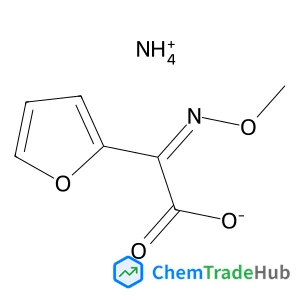
Ammonium (Z)-2-(furan-2-yl)-2-(methoxyimino)acetate
CAS Number:
97148-39-5
Molecular Formula:
C7H10N2O4
Recommended Suppliers





Disclaimer
This page provides academic journal information for reference and research purposes only. We are not affiliated with any journal publishers and do not handle publication submissions. For publication-related inquiries, please contact the respective journal publishers directly.
If you notice any inaccuracies in the information displayed, please contact us at support@chemtradehub.com. We will promptly review and address your concerns.