












The application of a SERS fiber probe for the investigation of sensitive biological samples
Literature Information
Publication Date
2004-11-10
DOI
10.1039/B411690A
Impact Factor
4.616
Authors
R. Geßner, P. Rösch, R. Petry, M. Schmitt, M. A. Strehle, W. Kiefer, J. Popp
View Original
Abstract
The applicability of an etched and silver or gold coated SERS fiber probe in combination with a commercially available laboratory micro-Raman setup or a home built mobile micro-Raman setup to perform on-site field measurements was evaluated and successfully tested on different biological samples. The SERS fiber probe allows one to perform measurements with high spatial resolution. Simultaneously, the laser power used for Raman spectroscopy on biological samples as compared with conventional Raman experiments can be reduced by more than two orders of magnitude. This experimental arrangement was tested to investigate sensitive biological samples like mint plants (Bergamot mint, spear mint) and citrus fruits (kumquat). Furthermore, traces of fungicides on wine leaves were detected by means of such a SERS fiber probe setup.
Related Literature
Evidence for localized moment picture in Mn-based Heusler compounds
J. Karel, F. Bernardi, C. Wang, R. Stinshoff, N.-O. Born, S. Ouardi, U. Burkhardt, G. H. Fecher, C. Felser
2015-11-11
Paper
DOI: 10.1039/C5CP04944J
Solvent transport through hard–soft segmented polymer nanocomposites
Sangram K. Rath, Saji S. Edatholath, T. Umasankar Patro, Kathi Sudarshan, P. U. Sastry, Pradeep K. Pujari, G. Harikrishnan
2015-12-16
Paper
DOI: 10.1039/C5CP04432D
Tensor numerical methods in quantum chemistry: from Hartree–Fock to excitation energies
Boris N. Khoromskij
2015-05-28
Paper
DOI: 10.1039/C5CP01215E
From cellulose fibrils to single chains: understanding cellulose dissolution in ionic liquids
Xueming Yuan, Gang Cheng
2015-11-05
Perspective
DOI: 10.1039/C5CP05744B
Revealing photofragmentation dynamics through interactions between Rydberg states: REMPI of HI as a case study
Helgi Rafn Hróðmarsson, Ágúst Kvaran
2015-11-11
Paper
DOI: 10.1039/C5CP06185G
Multipole-preserving quadratures for the discretization of functions in real-space electronic structure calculations
2015-09-03
Paper
DOI: 10.1039/C5CP01236H
Real-space numerical grid methods in quantum chemistry
Luca Frediani, Dage Sundholm
2015-11-03
Editorial
DOI: 10.1039/C5CP90198G
Effects of Ga–Te interface layer on the potential barrier height of CdTe/GaAs heterointerface
Yanyan Yuan, Wenhua Zhang, Junfa Zhu, Jie Su, Jiawei Li
2015-11-10
Paper
DOI: 10.1039/C5CP04802H
Photodissociation of medium-sized argon cluster cations in the visible region‡
Martin Stachoň, Aleš Vítek, René Kalus
2015-11-12
Paper
DOI: 10.1039/C5CP05257B
Wavelet formulation of the polarizable continuum model. II. Use of piecewise bilinear boundary elements
Monica Bugeanu, Roberto Di Remigio, Krzysztof Mozgawa, Simen Sommerfelt Reine, Helmut Harbrecht, Luca Frediani
2015-07-27
Paper
DOI: 10.1039/C5CP03410H
You might also like
Compound Q&A
What are the main uses of 1H-Indazole-6-carbonitrile (CAS: 141290-59-7)?
1H-Indazole-6-carbonitrile finds applications in pharmaceuticals, where it serve...
141290-59-71H-Indazole-6-carbon...
Compound Q&A
How should waste containing Dioctyl (2E)-2-butenedioate (CAS: 2997-85-5) be handled?
Waste containing Dioctyl (2E)-2-butenedioate (CAS: 2997-85-5) should be collecte...
2997-85-5Dioctyl (2E)-2-buten...
Compound Q&A
What industries use Sodium [(1,2-benzoxazol-3-ylmethyl)sulfonyl]azanide (CAS: 68291-98-5)?
Sodium [(1,2-benzoxazol-3-ylmethyl)sulfonyl]azanide is primarily used in pharmac...
68291-98-5Sodium [(1,2-benzoxa...
Compound Q&A
Are there alternatives to Dimethyl 4-(4,4,5,5-tetramethyl-1,3,2-dioxaborolan-2-yl)-2,6-pyridinedicarboxylate (CAS: 741709-66-0) in synthesis?
Dimethyl 4-(4,4,5,5-tetramethyl-1,3,2-dioxaborolan-2-yl)-2,6-pyridinedicarboxyla...
741709-66-0Dimethyl 4-(4,4,5,5-...
Compound Q&A
How should waste containing 2-Fluoro-6-hydrazinopyridine (CAS: 80714-39-2) be handled?
Waste containing 2-Fluoro-6-hydrazinopyridine (CAS: 80714-39-2) should be manage...
80714-39-22-Fluoro-6-hydrazino...
Compound Q&A
What is 6-Formyl-2-pyridinecarboxylic acid (CAS: 499214-11-8)?
6-Formyl-2-pyridinecarboxylic acid is an organic compound with the molecular for...
499214-11-86-Formyl-2-pyridinec...
Compound Q&A
What is the market or research trend for 3-(3,4-dimethoxyphenyl)-2,5-dimethyl-N-(2-morpholin-4-ylethyl)pyrazolo[1,5-a]pyrimidin-7-amine (CAS: 900874-91-1)?
Research trends for this compound indicate a focus on its potential applications...
900874-91-13-(3,4-dimethoxyphen...
Compound Q&A
How is 9H-Tribenzo[b,d,f]azepine (CAS: 29875-73-8) typically synthesized?
9H-Tribenzo[b,d,f]azepine is typically synthesized via a multi-step process invo...
29875-73-89H-Tribenzo[b,d,f]az...
Compound Q&A
How is 1-Cyclopropyl-7-ethoxy-6-fluoro-8-methoxy-4-oxo-1,4-dihydro-3-quinolinecarboxylic acid (CAS: 1797982-51-4) typically synthesized?
1-Cyclopropyl-7-ethoxy-6-fluoro-8-methoxy-4-oxo-1,4-dihydro-3-quinolinecarboxyli...
1797982-51-41-Cyclopropyl-7-etho...
Compound Q&A
How should waste containing Methyl 3-oxo-1,2,3,4-tetrahydro-6-quinoxalinecarboxylate (CAS: 671820-52-3) be handled?
Waste containing Methyl 3-oxo-1,2,3,4-tetrahydro-6-quinoxalinecarboxylate (CAS: ...
671820-52-3Methyl 3-oxo-1,2,3,4...
Source Journal
Analyst

CiteScore:
7.8
Self-citation Rate:
5.6%
Articles per Year:
653
Analyst publishes analytical and bioanalytical research that reports premier fundamental discoveries and inventions, and the applications of those discoveries, unconfined by traditional discipline barriers.
Recommended Compounds

Trichloro(3,3,4,4,5,5,6,6,7,7,8,8,8-tridecafluorooctyl)silane
CAS Number:
78560-45-9
Molecular Formula:
C8H4Cl3F13Si
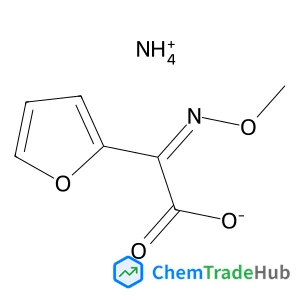
Ammonium (Z)-2-(furan-2-yl)-2-(methoxyimino)acetate
CAS Number:
97148-39-5
Molecular Formula:
C7H10N2O4
Recommended Suppliers






Disclaimer
This page provides academic journal information for reference and research purposes only. We are not affiliated with any journal publishers and do not handle publication submissions. For publication-related inquiries, please contact the respective journal publishers directly.
If you notice any inaccuracies in the information displayed, please contact us at support@chemtradehub.com. We will promptly review and address your concerns.