












Incorporation of thermal gels for facile microfluidic transient isotachophoresis
Literature Information
Publication Date
2019-09-09
DOI
10.1039/C9AY01384A
Impact Factor
2.896
Authors
Jordan B. Burton, Cassandra L. Ward, David M. Klemet, Thomas H. Linz
View Original
Abstract
Transient isotachophoresis (tITP) is a robust analytical technique that integrates sample preconcentration with electrophoretic separation. Despite the benefits afforded by tITP, its implementation poses a significant technical challenge because discontinuous electrolytes must remain spatially segregated for analysis. Here, we present a unique strategy to simplify tITP execution by using thermally reversible gels. Gels with distinct electrolyte compositions were introduced into separate microchannels in a cross-channel PDMS device while in their liquid states. Temperature was then altered to solidify the gels, which limited electrolyte diffusion and enabled reliable tITP analyses of both small molecule dyes and DNA. System performance was characterized using model fluorescent dyes. Separation efficiencies of >106 plates m−1 were achieved with detection limits of 5 pM. This strategy was then expanded to the analysis of DNA where distinct stacking and sieving gels were incorporated into the device for analyte preconcentration and separation. This proof-of-concept experiment demonstrated that a DNA ladder could be focused and separated in <1 min. These results illustrate the suitability of thermal gel tITP for rapid analyses of biological macromolecules. This user-friendly tITP system provides low detection limits and high efficiency separations for diverse analytes using low-complexity, inexpensive microfluidic devices.
Related Literature
Single Pt atom supported on penta-graphene as an efficient catalyst for CO oxidation
Ranganathan Krishnan, Shiuan-Yau Wu, Hsin-Tsung Chen
2019-05-20
Paper
DOI: 10.1039/C9CP02306B
Depletion of atmospheric organic trace gases due to their uptake by an ensemble of aqueous aerosols evolving via concurrent condensation and chemical aging
Yuri S. Djikaev, Eli Ruckenstein
2019-05-28
Paper
DOI: 10.1039/C9CP01386E
Dynamical fluxionality, multiplicity of structural forms, and electronic properties of the B3Si11 cluster: anion photoelectron spectroscopy and theoretical calculations
Sheng-Jie Lu, Li-Shun Wu, Bao-Hua Yin, Feng Lin, Ming-Yong Chao
2019-05-10
Paper
DOI: 10.1039/C9CP01752F
Atomic-level crystallization in selective laser melting fabricated Zr-based metallic glasses
Yue Zhang, Haishun Liu, Jinyong Mo, Mingzi Wang, Zhe Chen, Yezeng He, Chunguang Tang
2019-05-15
Paper
DOI: 10.1039/C9CP02181G
Equations of the state of hard sphere fluids based on recent accurate virial coefficients B5–B12
Hua Jiang, A. Mulero
2019-05-20
Paper
DOI: 10.1039/C9CP02116G
Wetting properties of porous high temperature polymer electrolyte fuel cells materials with phosphoric acid
J. Halter, T. Gloor, B. Amoroso, F. N. Büchi
2019-06-06
Paper
DOI: 10.1039/C9CP02149C
On-surface synthesis of 2D COFs on Cu(111) via the formation of thermodynamically stable organometallic networks as the template
Cheng-Xin Wang, Jian-Le Chen, Chen-Hui Shu, Ke-Ji Shi, Pei-Nian Liu
2019-05-31
Paper
DOI: 10.1039/C9CP01843C
Judging the feasibility of TiO2 as photocatalyst for chemical energy conversion by quantitative reactivity determinants
Martin Dilla, Nikolaos G. Moustakas, Ahmet E. Becerikli, Tim Peppel, Armin Springer, Jennifer Strunk, Simon Ristig
2019-06-03
Paper
DOI: 10.1039/C9CP00981G
Diverging surface reactions at TiO2- or ZnO-based photoanodes in dye-sensitized solar cells
Raffael Ruess, Sabina Scarabino, Andreas Ringleb, Kazuteru Nonomura, Nick Vlachopoulos, Anders Hagfeldt, Gunther Wittstock, Derck Schlettwein
2019-05-27
Paper
DOI: 10.1039/C9CP01215J
Atomistic simulations to study the effect of grain boundaries and hydrogen functionalization on the fracture toughness of bi-crystalline h-BN nanosheets
Bharat Bhushan Sharma, Avinash Parashar
2019-05-30
Paper
DOI: 10.1039/C9CP01661A
You might also like
Compound Q&A
What are the main uses of 1H-Indazole-6-carbonitrile (CAS: 141290-59-7)?
1H-Indazole-6-carbonitrile finds applications in pharmaceuticals, where it serve...
141290-59-71H-Indazole-6-carbon...
Compound Q&A
How should waste containing Dioctyl (2E)-2-butenedioate (CAS: 2997-85-5) be handled?
Waste containing Dioctyl (2E)-2-butenedioate (CAS: 2997-85-5) should be collecte...
2997-85-5Dioctyl (2E)-2-buten...
Compound Q&A
What industries use Sodium [(1,2-benzoxazol-3-ylmethyl)sulfonyl]azanide (CAS: 68291-98-5)?
Sodium [(1,2-benzoxazol-3-ylmethyl)sulfonyl]azanide is primarily used in pharmac...
68291-98-5Sodium [(1,2-benzoxa...
Compound Q&A
Are there alternatives to Dimethyl 4-(4,4,5,5-tetramethyl-1,3,2-dioxaborolan-2-yl)-2,6-pyridinedicarboxylate (CAS: 741709-66-0) in synthesis?
Dimethyl 4-(4,4,5,5-tetramethyl-1,3,2-dioxaborolan-2-yl)-2,6-pyridinedicarboxyla...
741709-66-0Dimethyl 4-(4,4,5,5-...
Compound Q&A
How should waste containing 2-Fluoro-6-hydrazinopyridine (CAS: 80714-39-2) be handled?
Waste containing 2-Fluoro-6-hydrazinopyridine (CAS: 80714-39-2) should be manage...
80714-39-22-Fluoro-6-hydrazino...
Compound Q&A
What is 6-Formyl-2-pyridinecarboxylic acid (CAS: 499214-11-8)?
6-Formyl-2-pyridinecarboxylic acid is an organic compound with the molecular for...
499214-11-86-Formyl-2-pyridinec...
Compound Q&A
What is the market or research trend for 3-(3,4-dimethoxyphenyl)-2,5-dimethyl-N-(2-morpholin-4-ylethyl)pyrazolo[1,5-a]pyrimidin-7-amine (CAS: 900874-91-1)?
Research trends for this compound indicate a focus on its potential applications...
900874-91-13-(3,4-dimethoxyphen...
Compound Q&A
How is 9H-Tribenzo[b,d,f]azepine (CAS: 29875-73-8) typically synthesized?
9H-Tribenzo[b,d,f]azepine is typically synthesized via a multi-step process invo...
29875-73-89H-Tribenzo[b,d,f]az...
Compound Q&A
How is 1-Cyclopropyl-7-ethoxy-6-fluoro-8-methoxy-4-oxo-1,4-dihydro-3-quinolinecarboxylic acid (CAS: 1797982-51-4) typically synthesized?
1-Cyclopropyl-7-ethoxy-6-fluoro-8-methoxy-4-oxo-1,4-dihydro-3-quinolinecarboxyli...
1797982-51-41-Cyclopropyl-7-etho...
Compound Q&A
How should waste containing Methyl 3-oxo-1,2,3,4-tetrahydro-6-quinoxalinecarboxylate (CAS: 671820-52-3) be handled?
Waste containing Methyl 3-oxo-1,2,3,4-tetrahydro-6-quinoxalinecarboxylate (CAS: ...
671820-52-3Methyl 3-oxo-1,2,3,4...
Source Journal
Analytical Methods

CiteScore:
5.1
Self-citation Rate:
3.7%
Articles per Year:
655
Analytical Methods welcomes early applications of new analytical and bioanalytical methods and technology demonstrating the potential for societal impact. We require that methods and technology reported in the journal are sufficiently innovative, robust, accurate, and compared to other available methods for the intended application. Developments with interdisciplinary approaches are particularly welcome. Systems should be proven with suitably complex and analytically challenging samples. We encourage developments within, but not limited to, the following technologies and applications: global health, point-of-care and molecular diagnostics biosensors and bioengineering drug development and pharmaceutical analysis applied microfluidics and nanotechnology omics studies, such as proteomics, metabolomics or glycomics environmental, agricultural and food science neuroscience biochemical and clinical analysis forensic analysis industrial process and method development
Recommended Compounds

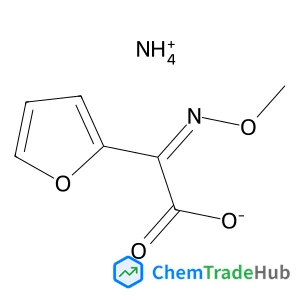
Ammonium (Z)-2-(furan-2-yl)-2-(methoxyimino)acetate
CAS Number:
97148-39-5
Molecular Formula:
C7H10N2O4

Recommended Suppliers





Disclaimer
This page provides academic journal information for reference and research purposes only. We are not affiliated with any journal publishers and do not handle publication submissions. For publication-related inquiries, please contact the respective journal publishers directly.
If you notice any inaccuracies in the information displayed, please contact us at support@chemtradehub.com. We will promptly review and address your concerns.