












Depletion of atmospheric organic trace gases due to their uptake by an ensemble of aqueous aerosols evolving via concurrent condensation and chemical aging
Literature Information
Publication Date
2019-05-28
DOI
10.1039/C9CP01386E
Impact Factor
3.676
Authors
Yuri S. Djikaev, Eli Ruckenstein
View Original
Abstract
In the framework of classical nucleation theory (CNT), we demonstrate that an ensemble of aqueous hydrophilic–hydrophobic organic droplets, containing both soluble and insoluble surfactants and evolving via concurrent condensation and chemical aging, may deplete the surrounding air of low-volatility organic trace gases and thus noticeably decrease their saturation ratios. At a given liquid water content in the air, this depletion becomes stronger with increasing dispersion of the liquid phase, i.e., with increasing collective surface-to-volume ratio of droplets; this dependence becomes particularly sharp for droplets of submicron to micron radii R ≲ 1 μm. One can thus suggest that the adsorption of organic molecules on the surface of droplets may play an important (if not crucial) role in this phenomenon. As a result of such depletion, the height of the nucleation barrier and the size of a critical droplet (nucleus) will sharply increase; with a decrease of ∼0.01% of a saturation ratio, the barrier height and number of molecules in the nucleus both increase by a factor of ∼102. This may trigger the redistribution of condensable matter in the system. Some smaller supercritical, previously growing droplets will become subcritical, evaporating ones, with the newly available condensable matter enhancing the growth of larger droplets. Thus, the uptake of organic trace gases by an ensemble of aqueous organic aerosols may drastically affect their distribution with respect to size and chemical composition. Therefore, a CNT-based theoretical model, taking this effect into account and implemented in atmospheric aerosol models, would allow one to improve the forecasting accuracy of climate models.
Related Literature
Identifying and mapping chemical bonding within phenolic resin using secondary electron hyperspectral imaging
Sameer F. Hamad, Euan Gray, Christopher M. Magazzeni, Fodio Longman, David E. J. Armstrong, Joel P. Foreman, Frederik Claeyssens, Cornelia Rodenburg
2020-12-15
Communication
DOI: 10.1039/D0PY01220C
Body temperature polymerization and in situ drug encapsulation in supercritical carbon dioxide
Zi-Kun Rao, Tian-Qiang Wang, Yang Li, Hong-Yu Zhu, Yu Liu, Jian-Yuan Hao
2020-10-07
Paper
DOI: 10.1039/D0PY01131B
One-step synthesis of well-dispersed polypyrrole copolymers under gamma-ray irradiation
Yuqing Qiao, Yusen Meng, Ming Yu, Bowu Zhang
2021-01-21
Communication
DOI: 10.1039/D0PY01566K
Suzuki–Miyaura catalyst-transfer polycondensation of triolborate-type fluorene monomer: toward rapid access to polyfluorene-containing block and graft copolymers from various macroinitiators
Saburo Kobayashi, Kaiyu Fujiwara, Takuya Yamamoto, Kenji Tajima, Yasunori Yamamoto, Takuya Isono, Toshifumi Satoh
2020-10-09
Paper
DOI: 10.1039/D0PY01127D
An ε-caprolactone-derived 2-oxazoline inimer for the synthesis of graft copolymers
Jungyeon Kim, Christopher Waldron, Beatrice Cattoz, C. Remzi Becer
2020-10-08
Paper
DOI: 10.1039/D0PY01092H
Semifluorinated, kinked polyarylenes via direct arylation polycondensation
Fabian Kempe, Felix Riehle, Hartmut Komber, Rukiya Matsidik, Michael Walter, Michael Sommer
2020-10-07
Paper
DOI: 10.1039/D0PY00973C
Topologically controlled phase transitions and nanoscale film self-assemblies of cage poly(ε-caprolactone) and its counterparts
Brian J. Ree, Yoshinobu Mato, Li Xiang, Jehan Kim, Takuya Isono, Toshifumi Satoh
2021-01-11
Paper
DOI: 10.1039/D0PY01567A
Organocatalytic ring-opening polymerization of cyclotrisiloxanes using silanols as initiators for the precise synthesis of asymmetric linear polysiloxanes
Keita Fuchise, Toshiaki Kobayashi, Kazuhiko Sato, Masayasu Igarashi
2020-11-17
Paper
DOI: 10.1039/D0PY01251C
Synthesis of CO2-responsive gradient copolymers by switchable RAFT polymerization and their controlled self-assembly
Xiaofeng Guo, Tianren Zhang, Yuetong Wu, Wencheng Shi, Bonnie Choi, Anchao Feng, San H. Thang
2020-10-02
Paper
DOI: 10.1039/D0PY01109F
You might also like
Compound Q&A
What are the main uses of 1H-Indazole-6-carbonitrile (CAS: 141290-59-7)?
1H-Indazole-6-carbonitrile finds applications in pharmaceuticals, where it serve...
141290-59-71H-Indazole-6-carbon...
Compound Q&A
How should waste containing Dioctyl (2E)-2-butenedioate (CAS: 2997-85-5) be handled?
Waste containing Dioctyl (2E)-2-butenedioate (CAS: 2997-85-5) should be collecte...
2997-85-5Dioctyl (2E)-2-buten...
Compound Q&A
What industries use Sodium [(1,2-benzoxazol-3-ylmethyl)sulfonyl]azanide (CAS: 68291-98-5)?
Sodium [(1,2-benzoxazol-3-ylmethyl)sulfonyl]azanide is primarily used in pharmac...
68291-98-5Sodium [(1,2-benzoxa...
Compound Q&A
Are there alternatives to Dimethyl 4-(4,4,5,5-tetramethyl-1,3,2-dioxaborolan-2-yl)-2,6-pyridinedicarboxylate (CAS: 741709-66-0) in synthesis?
Dimethyl 4-(4,4,5,5-tetramethyl-1,3,2-dioxaborolan-2-yl)-2,6-pyridinedicarboxyla...
741709-66-0Dimethyl 4-(4,4,5,5-...
Compound Q&A
How should waste containing 2-Fluoro-6-hydrazinopyridine (CAS: 80714-39-2) be handled?
Waste containing 2-Fluoro-6-hydrazinopyridine (CAS: 80714-39-2) should be manage...
80714-39-22-Fluoro-6-hydrazino...
Compound Q&A
What is 6-Formyl-2-pyridinecarboxylic acid (CAS: 499214-11-8)?
6-Formyl-2-pyridinecarboxylic acid is an organic compound with the molecular for...
499214-11-86-Formyl-2-pyridinec...
Compound Q&A
What is the market or research trend for 3-(3,4-dimethoxyphenyl)-2,5-dimethyl-N-(2-morpholin-4-ylethyl)pyrazolo[1,5-a]pyrimidin-7-amine (CAS: 900874-91-1)?
Research trends for this compound indicate a focus on its potential applications...
900874-91-13-(3,4-dimethoxyphen...
Compound Q&A
How is 9H-Tribenzo[b,d,f]azepine (CAS: 29875-73-8) typically synthesized?
9H-Tribenzo[b,d,f]azepine is typically synthesized via a multi-step process invo...
29875-73-89H-Tribenzo[b,d,f]az...
Compound Q&A
How is 1-Cyclopropyl-7-ethoxy-6-fluoro-8-methoxy-4-oxo-1,4-dihydro-3-quinolinecarboxylic acid (CAS: 1797982-51-4) typically synthesized?
1-Cyclopropyl-7-ethoxy-6-fluoro-8-methoxy-4-oxo-1,4-dihydro-3-quinolinecarboxyli...
1797982-51-41-Cyclopropyl-7-etho...
Compound Q&A
How should waste containing Methyl 3-oxo-1,2,3,4-tetrahydro-6-quinoxalinecarboxylate (CAS: 671820-52-3) be handled?
Waste containing Methyl 3-oxo-1,2,3,4-tetrahydro-6-quinoxalinecarboxylate (CAS: ...
671820-52-3Methyl 3-oxo-1,2,3,4...
Source Journal
Physical Chemistry Chemical Physics

CiteScore:
5.5
Self-citation Rate:
10.3%
Articles per Year:
3036
Physical Chemistry Chemical Physics (PCCP) is an international journal co-owned by 19 physical chemistry and physics societies from around the world. This journal publishes original, cutting-edge research in physical chemistry, chemical physics and biophysical chemistry. To be suitable for publication in PCCP, articles must include significant innovation and/or insight into physical chemistry; this is the most important criterion that reviewers and Editors will judge against when evaluating submissions. The journal has a broad scope and welcomes contributions spanning experiment, theory, computation and data science. Topical coverage includes spectroscopy, dynamics, kinetics, statistical mechanics, thermodynamics, electrochemistry, catalysis, surface science, quantum mechanics, quantum computing and machine learning. Interdisciplinary research areas such as polymers and soft matter, materials, nanoscience, energy, surfaces/interfaces, and biophysical chemistry are welcomed if they demonstrate significant innovation and/or insight into physical chemistry. Joined experimental/theoretical studies are particularly appreciated when complementary and based on up-to-date approaches.
Recommended Compounds


Trichloro(3,3,4,4,5,5,6,6,7,7,8,8,8-tridecafluorooctyl)silane
CAS Number:
78560-45-9
Molecular Formula:
C8H4Cl3F13Si
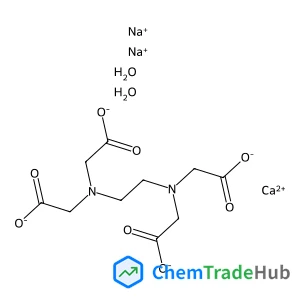
EthylenediaminetetraaceticacidcalciumDisodiumsalthydrate
CAS Number:
23411-34-9
Molecular Formula:
C10H16CaN2Na2O10
Recommended Suppliers






Disclaimer
This page provides academic journal information for reference and research purposes only. We are not affiliated with any journal publishers and do not handle publication submissions. For publication-related inquiries, please contact the respective journal publishers directly.
If you notice any inaccuracies in the information displayed, please contact us at support@chemtradehub.com. We will promptly review and address your concerns.