












An investigation of new electrochemical sensors for curcumin detection: a mini review
Literature Information
Publication Date
2019-08-06
DOI
10.1039/C9AY01352K
Impact Factor
2.896
Authors
Rosan Zokhtareh, Mostafa Rahimnejad
View Original
Abstract
Curcumin (CM) is a natural pigment with a crystalline structure and is the most important curcuminoid in turmeric. CM is effective in treating a wide range of diseases, especially cancers, owing to its antioxidant, anti-proliferative, antibacterial and anti-inflammatory properties. Electrochemical techniques are powerful and widely used analytical methods that provide valuable information about electrochemical systems. Their dedicated performance, as well as their ability to provide very low detection limits, are the most important benefits of these methods. Electrochemical sensors have been used as good tools for the detection of CM owing to their simplicity, accuracy, high sensitivity and selectivity, and reasonable price. However, owing to the poor response of this compound, it is difficult to detect it directly at the surfaces of bare electrodes. Various modifiers have been used to overcome this problem and to increase the sensitivity and selectivity of CM detection sensors. In this research, various types of bare and modified electrodes used in the detection of CM are briefly investigated and their performance is compared scrupulously.
Related Literature
The effect of anionic, cationic and neutral surfactants on the photophysics and isomerization of 3,3′-diethylthiacarbocyanine
Sílvia M. B. Costa
2001-09-05
Paper
DOI: 10.1039/B104807B
Hydrogen effects in hexane reactions over Al2O3 supported Pt, Ir and Pt–Ir catalysts
Paper
DOI: 10.1039/A902976A
Joint experimental and theoretical study of the poly(styryl sodium) and poly(α-methylstyryl sodium) polymerization/depolymerization
2001-09-20
Paper
DOI: 10.1039/B105389M
Active site and mechanism of the selective catalytic reduction of NO by NH3 over V2O5: A periodic first-principles study
Xilin Yin, Huanmei Han, Akira Miyamoto
2000-08-15
Paper
DOI: 10.1039/B003838P
Thermal diffusivities and sound velocities of supercritical methanol and ethanol measured by the transient grating method
T. Ohmori, Y. Kimura, N. Hirota, M. Terazima
2001-08-24
Paper
DOI: 10.1039/B101773J
Adsorption and photochemistry of CH3CN and CH3CONH2 on powdered TiO2
Chih-Chung Chuang, Wen-Chun Wu, Ming-Xi Lee, Jong-Liang Lin
2000-08-01
Paper
DOI: 10.1039/B003227L
Effect of DNA on the rate of electron transfer reactions between non-intercalated reactants: kinetic study of the reactions [Ru(NH3)5pz]2+ + [Co(C2O4)3]3− and [Ru(NH3)5py]2+ + [Co(NH3)4pzCO2]2+ in aqueous solutions in the presence of DNA
F. Secco, M. Venturini, M. López, P. Pérez, R. Prado, F. Sánchez
2001-09-11
Paper
DOI: 10.1039/B103549P
You might also like
Compound Q&A
What are the main uses of 1H-Indazole-6-carbonitrile (CAS: 141290-59-7)?
1H-Indazole-6-carbonitrile finds applications in pharmaceuticals, where it serve...
141290-59-71H-Indazole-6-carbon...
Compound Q&A
How should waste containing Dioctyl (2E)-2-butenedioate (CAS: 2997-85-5) be handled?
Waste containing Dioctyl (2E)-2-butenedioate (CAS: 2997-85-5) should be collecte...
2997-85-5Dioctyl (2E)-2-buten...
Compound Q&A
What industries use Sodium [(1,2-benzoxazol-3-ylmethyl)sulfonyl]azanide (CAS: 68291-98-5)?
Sodium [(1,2-benzoxazol-3-ylmethyl)sulfonyl]azanide is primarily used in pharmac...
68291-98-5Sodium [(1,2-benzoxa...
Compound Q&A
Are there alternatives to Dimethyl 4-(4,4,5,5-tetramethyl-1,3,2-dioxaborolan-2-yl)-2,6-pyridinedicarboxylate (CAS: 741709-66-0) in synthesis?
Dimethyl 4-(4,4,5,5-tetramethyl-1,3,2-dioxaborolan-2-yl)-2,6-pyridinedicarboxyla...
741709-66-0Dimethyl 4-(4,4,5,5-...
Compound Q&A
How should waste containing 2-Fluoro-6-hydrazinopyridine (CAS: 80714-39-2) be handled?
Waste containing 2-Fluoro-6-hydrazinopyridine (CAS: 80714-39-2) should be manage...
80714-39-22-Fluoro-6-hydrazino...
Compound Q&A
What is 6-Formyl-2-pyridinecarboxylic acid (CAS: 499214-11-8)?
6-Formyl-2-pyridinecarboxylic acid is an organic compound with the molecular for...
499214-11-86-Formyl-2-pyridinec...
Compound Q&A
What is the market or research trend for 3-(3,4-dimethoxyphenyl)-2,5-dimethyl-N-(2-morpholin-4-ylethyl)pyrazolo[1,5-a]pyrimidin-7-amine (CAS: 900874-91-1)?
Research trends for this compound indicate a focus on its potential applications...
900874-91-13-(3,4-dimethoxyphen...
Compound Q&A
How is 9H-Tribenzo[b,d,f]azepine (CAS: 29875-73-8) typically synthesized?
9H-Tribenzo[b,d,f]azepine is typically synthesized via a multi-step process invo...
29875-73-89H-Tribenzo[b,d,f]az...
Compound Q&A
How is 1-Cyclopropyl-7-ethoxy-6-fluoro-8-methoxy-4-oxo-1,4-dihydro-3-quinolinecarboxylic acid (CAS: 1797982-51-4) typically synthesized?
1-Cyclopropyl-7-ethoxy-6-fluoro-8-methoxy-4-oxo-1,4-dihydro-3-quinolinecarboxyli...
1797982-51-41-Cyclopropyl-7-etho...
Compound Q&A
How should waste containing Methyl 3-oxo-1,2,3,4-tetrahydro-6-quinoxalinecarboxylate (CAS: 671820-52-3) be handled?
Waste containing Methyl 3-oxo-1,2,3,4-tetrahydro-6-quinoxalinecarboxylate (CAS: ...
671820-52-3Methyl 3-oxo-1,2,3,4...
Source Journal
Analytical Methods

CiteScore:
5.1
Self-citation Rate:
3.7%
Articles per Year:
655
Analytical Methods welcomes early applications of new analytical and bioanalytical methods and technology demonstrating the potential for societal impact. We require that methods and technology reported in the journal are sufficiently innovative, robust, accurate, and compared to other available methods for the intended application. Developments with interdisciplinary approaches are particularly welcome. Systems should be proven with suitably complex and analytically challenging samples. We encourage developments within, but not limited to, the following technologies and applications: global health, point-of-care and molecular diagnostics biosensors and bioengineering drug development and pharmaceutical analysis applied microfluidics and nanotechnology omics studies, such as proteomics, metabolomics or glycomics environmental, agricultural and food science neuroscience biochemical and clinical analysis forensic analysis industrial process and method development
Recommended Compounds
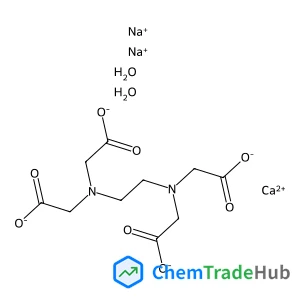
EthylenediaminetetraaceticacidcalciumDisodiumsalthydrate
CAS Number:
23411-34-9
Molecular Formula:
C10H16CaN2Na2O10


Trichloro(3,3,4,4,5,5,6,6,7,7,8,8,8-tridecafluorooctyl)silane
CAS Number:
78560-45-9
Molecular Formula:
C8H4Cl3F13Si
Recommended Suppliers




Disclaimer
This page provides academic journal information for reference and research purposes only. We are not affiliated with any journal publishers and do not handle publication submissions. For publication-related inquiries, please contact the respective journal publishers directly.
If you notice any inaccuracies in the information displayed, please contact us at support@chemtradehub.com. We will promptly review and address your concerns.