













On the partial structure factors of molten zinc chloride
Literature Information
Publication Date
2001-08-21
DOI
10.1039/B100101I
Impact Factor
3.676
Authors
View Original
Abstract
The partial structure factors (PSF) of molten ZnCl2 at 600 K have been known since 1981 due to the neutron diffraction experiments by Biggin and Enderby (S. Biggin and J. E. Enderby, J. Phys. C, 1981, 14, 3129). It is shown in this article that the set of PSF derived from this experiment is not consistent with new X-ray diffraction data with much better statistical accuracy. A new set of PSF is derived, which corrects this deficiency. The first diffraction peak is not dominated by the cation–cation-PSF and the set of PSF shows similarities to the PSF of glassy GeO2 and SiO2 determined recently. The derived PSF are shown to be insensitive to whether ionic or atomic form-factors are used.
Related Literature
Atmospheric chemistry of C2F5CH2OCH3 (HFE-365mcf)
D. L. Thomsen, V. F. Andersen, O. J. Nielsen, T. J. Wallington
2010-12-10
Paper
DOI: 10.1039/C0CP01609H
Enhanced photocatalytic activity of mesoporous TiO2 aggregates by embedding carbon nanotubes as electron-transfer channel
Jiaguo Yu, Tingting Ma, Shengwei Liu
2010-12-21
Paper
DOI: 10.1039/C0CP01139H
Activity and stability of α-chymotrypsin in biocompatible ionic liquids: enzyme refolding by triethyl ammonium acetate
Pankaj Attri, Pannuru Venkatesu, Anil Kumar
2010-12-13
Paper
DOI: 10.1039/C0CP01291B
Structure and binding of the H4 histone tail and the effects of lysine 16 acetylation
Darren Yang, Gaurav Arya
2010-12-15
Paper
DOI: 10.1039/C0CP01487G
Vesicle growth and deformation in a surfactant solution below the Krafft temperature
Youhei Kawabata, Tomoaki Shinoda, Tadashi Kato
2011-01-18
Paper
DOI: 10.1039/C0CP01132K
Stepwise vs. concerted pathways in scandium ion-coupled electron transfer from superoxide ion to p-benzoquinone derivatives
Tomonori Kawashima, Kei Ohkubo
2011-01-06
Paper
DOI: 10.1039/C0CP00916D
CO2adsorption by nitrogen-doped carbon nanotubes predicted by density-functional theory with dispersion-correcting potentials
Iain D. Mackie, Gino A. DiLabio
2010-12-14
Paper
DOI: 10.1039/C0CP01537G
Constructing hybrid films of conjugated oligomers and gold nanoparticles for efficient photoelectronic properties
Xiaofeng Liu, Ji'en Yang, Chunjie Zhou, Xiaodong Yin, Huibiao Liu, Yongjun Li, Yuliang Li
2010-10-26
Paper
DOI: 10.1039/C0CP01116A
Beryllium and boron decoration forms planar tetracoordinate carbon strips at the edge of graphene nanoribbons
Bo Xiao, Yi-hong Ding, Chia-chung Sun
2010-12-09
Paper
DOI: 10.1039/C0CP01498B
You might also like
Compound Q&A
What are the main uses of 1H-Indazole-6-carbonitrile (CAS: 141290-59-7)?
1H-Indazole-6-carbonitrile finds applications in pharmaceuticals, where it serve...
141290-59-71H-Indazole-6-carbon...
Compound Q&A
How should waste containing Dioctyl (2E)-2-butenedioate (CAS: 2997-85-5) be handled?
Waste containing Dioctyl (2E)-2-butenedioate (CAS: 2997-85-5) should be collecte...
2997-85-5Dioctyl (2E)-2-buten...
Compound Q&A
What industries use Sodium [(1,2-benzoxazol-3-ylmethyl)sulfonyl]azanide (CAS: 68291-98-5)?
Sodium [(1,2-benzoxazol-3-ylmethyl)sulfonyl]azanide is primarily used in pharmac...
68291-98-5Sodium [(1,2-benzoxa...
Compound Q&A
Are there alternatives to Dimethyl 4-(4,4,5,5-tetramethyl-1,3,2-dioxaborolan-2-yl)-2,6-pyridinedicarboxylate (CAS: 741709-66-0) in synthesis?
Dimethyl 4-(4,4,5,5-tetramethyl-1,3,2-dioxaborolan-2-yl)-2,6-pyridinedicarboxyla...
741709-66-0Dimethyl 4-(4,4,5,5-...
Compound Q&A
How should waste containing 2-Fluoro-6-hydrazinopyridine (CAS: 80714-39-2) be handled?
Waste containing 2-Fluoro-6-hydrazinopyridine (CAS: 80714-39-2) should be manage...
80714-39-22-Fluoro-6-hydrazino...
Compound Q&A
What is 6-Formyl-2-pyridinecarboxylic acid (CAS: 499214-11-8)?
6-Formyl-2-pyridinecarboxylic acid is an organic compound with the molecular for...
499214-11-86-Formyl-2-pyridinec...
Compound Q&A
What is the market or research trend for 3-(3,4-dimethoxyphenyl)-2,5-dimethyl-N-(2-morpholin-4-ylethyl)pyrazolo[1,5-a]pyrimidin-7-amine (CAS: 900874-91-1)?
Research trends for this compound indicate a focus on its potential applications...
900874-91-13-(3,4-dimethoxyphen...
Compound Q&A
How is 9H-Tribenzo[b,d,f]azepine (CAS: 29875-73-8) typically synthesized?
9H-Tribenzo[b,d,f]azepine is typically synthesized via a multi-step process invo...
29875-73-89H-Tribenzo[b,d,f]az...
Compound Q&A
How is 1-Cyclopropyl-7-ethoxy-6-fluoro-8-methoxy-4-oxo-1,4-dihydro-3-quinolinecarboxylic acid (CAS: 1797982-51-4) typically synthesized?
1-Cyclopropyl-7-ethoxy-6-fluoro-8-methoxy-4-oxo-1,4-dihydro-3-quinolinecarboxyli...
1797982-51-41-Cyclopropyl-7-etho...
Compound Q&A
How should waste containing Methyl 3-oxo-1,2,3,4-tetrahydro-6-quinoxalinecarboxylate (CAS: 671820-52-3) be handled?
Waste containing Methyl 3-oxo-1,2,3,4-tetrahydro-6-quinoxalinecarboxylate (CAS: ...
671820-52-3Methyl 3-oxo-1,2,3,4...
Source Journal
Physical Chemistry Chemical Physics

CiteScore:
5.5
Self-citation Rate:
10.3%
Articles per Year:
3036
Physical Chemistry Chemical Physics (PCCP) is an international journal co-owned by 19 physical chemistry and physics societies from around the world. This journal publishes original, cutting-edge research in physical chemistry, chemical physics and biophysical chemistry. To be suitable for publication in PCCP, articles must include significant innovation and/or insight into physical chemistry; this is the most important criterion that reviewers and Editors will judge against when evaluating submissions. The journal has a broad scope and welcomes contributions spanning experiment, theory, computation and data science. Topical coverage includes spectroscopy, dynamics, kinetics, statistical mechanics, thermodynamics, electrochemistry, catalysis, surface science, quantum mechanics, quantum computing and machine learning. Interdisciplinary research areas such as polymers and soft matter, materials, nanoscience, energy, surfaces/interfaces, and biophysical chemistry are welcomed if they demonstrate significant innovation and/or insight into physical chemistry. Joined experimental/theoretical studies are particularly appreciated when complementary and based on up-to-date approaches.
Recommended Compounds

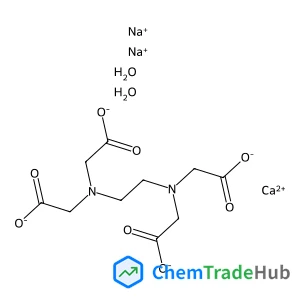
EthylenediaminetetraaceticacidcalciumDisodiumsalthydrate
CAS Number:
23411-34-9
Molecular Formula:
C10H16CaN2Na2O10

Recommended Suppliers





Disclaimer
This page provides academic journal information for reference and research purposes only. We are not affiliated with any journal publishers and do not handle publication submissions. For publication-related inquiries, please contact the respective journal publishers directly.
If you notice any inaccuracies in the information displayed, please contact us at support@chemtradehub.com. We will promptly review and address your concerns.