












The effect of anionic, cationic and neutral surfactants on the photophysics and isomerization of 3,3′-diethylthiacarbocyanine
Literature Information
Publication Date
2001-09-05
DOI
10.1039/B104807B
Impact Factor
3.676
Authors
Sílvia M. B. Costa
View Original
Abstract
The photophysical properties and isomerization of 3,3′-diethylthiacarbocyanine (DTC) were studied in isooctane/sodium bis(2-ethylhexyl)sulfosuccinate (AOT)/water reverse micelles and in aqueous solutions containing sodium dodecylsulfate (SDS), cetyltrimethylammonium bromide (CTAB) and chloride (CTAC) and Triton X-100 (TX100) at concentrations below and above the critical micelle concentrations (c.m.c.). The absorption and fluorescence spectra of DTC in AOT reverse micelles are red-shifted and the nonradiative deactivation rate constant decreases strongly relative to that in water, leading to higher fluorescence quantum yields (Φf) and lifetimes. The DTC fluorescence decay in AOT reverse micelles and TX100 normal micelles is biexponential. SDS induces aggregation of DTC in water at concentrations well below the c.m.c. (10−5–10−3 mol l−1). Addition of SDS and TX100 at concentrations just above the c.m.c. increases Φf steeply, while CTAB (or CTAC) exerts such an effect only at concentrations much higher than the c.m.c. A rise in the isomerization activation energy and the pre-exponent is observed in the reverse micelles with small w0 (w0 = [water]/[AOT]); the isomerization rate constant decreases in SDS, TX100 and CTAC micelles.
Related Literature
Ammonia IRMS-TPD measurements on Brønsted acidity of proton-formed SAPO-34
Katsuki Suzuki, Takuma Nishio, Naonobu Katada, German Sastre, Miki Niwa
2010-12-20
Paper
DOI: 10.1039/C0CP00961J
Encapsulation of chiral Fe(salan) in nanocages with different microenvironments for asymmetric sulfide oxidation
Bo Li, Shiyang Bai, Peng Wang, Hengquan Yang, Qihua Yang, Can Li
2010-12-09
Paper
DOI: 10.1039/C0CP01828G
The aqueous phase behavior of polyion–surfactant ion complex salts mixed with nonionic surfactants‡
John Janiak, Lennart Piculell, Gerd Olofsson, Karin Schillén
2010-10-11
Paper
DOI: 10.1039/C0CP01031F
Synthesis of silica supported AuCu nanoparticlecatalysts and the effects of pretreatment conditions for the CO oxidation reaction
J. Chris Bauer, David Mullins, Meijun Li, E. Andrew Payzant
2011-01-18
Paper
DOI: 10.1039/C0CP01859G
The role of hydrogen bonding in water–metal interactions
Adrien Poissier, Sriram Ganeshan, M. V. Fernández-Serra
2010-12-22
Paper
DOI: 10.1039/C0CP00994F
A novel lyotropic liquid crystal formed by triphilic star-polyphiles: hydrophilic/oleophilic/fluorophilic rods arranged in a 12.6.4. tiling‡
Liliana de Campo, Trond Varslot, Minoo J. Moghaddam, Jacob J. K. Kirkensgaard, Kell Mortensen, Stephen T. Hyde
2010-11-22
Paper
DOI: 10.1039/C0CP01201G
Improved light olefin yield from methyl bromide coupling over modified SAPO-34 molecular sieves
Aihua Zhang, Shouli Sun, Zachary J. A. Komon, Neil Osterwalder, Sagar Gadewar, Peter Stoimenov, Daniel J. Auerbach, Galen D. Stucky, Eric W. McFarland
2011-01-04
Paper
DOI: 10.1039/C0CP01985B
Which mechanism operates in the electron-transfer process at liquid/liquid interfaces?
Min Zhou, Shiyu Gan, Lijie Zhong, Xiandui Dong, Li Niu
2010-12-13
Paper
DOI: 10.1039/C0CP01692F
You might also like
Compound Q&A
What are the main uses of 1H-Indazole-6-carbonitrile (CAS: 141290-59-7)?
1H-Indazole-6-carbonitrile finds applications in pharmaceuticals, where it serve...
141290-59-71H-Indazole-6-carbon...
Compound Q&A
How should waste containing Dioctyl (2E)-2-butenedioate (CAS: 2997-85-5) be handled?
Waste containing Dioctyl (2E)-2-butenedioate (CAS: 2997-85-5) should be collecte...
2997-85-5Dioctyl (2E)-2-buten...
Compound Q&A
What industries use Sodium [(1,2-benzoxazol-3-ylmethyl)sulfonyl]azanide (CAS: 68291-98-5)?
Sodium [(1,2-benzoxazol-3-ylmethyl)sulfonyl]azanide is primarily used in pharmac...
68291-98-5Sodium [(1,2-benzoxa...
Compound Q&A
Are there alternatives to Dimethyl 4-(4,4,5,5-tetramethyl-1,3,2-dioxaborolan-2-yl)-2,6-pyridinedicarboxylate (CAS: 741709-66-0) in synthesis?
Dimethyl 4-(4,4,5,5-tetramethyl-1,3,2-dioxaborolan-2-yl)-2,6-pyridinedicarboxyla...
741709-66-0Dimethyl 4-(4,4,5,5-...
Compound Q&A
How should waste containing 2-Fluoro-6-hydrazinopyridine (CAS: 80714-39-2) be handled?
Waste containing 2-Fluoro-6-hydrazinopyridine (CAS: 80714-39-2) should be manage...
80714-39-22-Fluoro-6-hydrazino...
Compound Q&A
What is 6-Formyl-2-pyridinecarboxylic acid (CAS: 499214-11-8)?
6-Formyl-2-pyridinecarboxylic acid is an organic compound with the molecular for...
499214-11-86-Formyl-2-pyridinec...
Compound Q&A
What is the market or research trend for 3-(3,4-dimethoxyphenyl)-2,5-dimethyl-N-(2-morpholin-4-ylethyl)pyrazolo[1,5-a]pyrimidin-7-amine (CAS: 900874-91-1)?
Research trends for this compound indicate a focus on its potential applications...
900874-91-13-(3,4-dimethoxyphen...
Compound Q&A
How is 9H-Tribenzo[b,d,f]azepine (CAS: 29875-73-8) typically synthesized?
9H-Tribenzo[b,d,f]azepine is typically synthesized via a multi-step process invo...
29875-73-89H-Tribenzo[b,d,f]az...
Compound Q&A
How is 1-Cyclopropyl-7-ethoxy-6-fluoro-8-methoxy-4-oxo-1,4-dihydro-3-quinolinecarboxylic acid (CAS: 1797982-51-4) typically synthesized?
1-Cyclopropyl-7-ethoxy-6-fluoro-8-methoxy-4-oxo-1,4-dihydro-3-quinolinecarboxyli...
1797982-51-41-Cyclopropyl-7-etho...
Compound Q&A
How should waste containing Methyl 3-oxo-1,2,3,4-tetrahydro-6-quinoxalinecarboxylate (CAS: 671820-52-3) be handled?
Waste containing Methyl 3-oxo-1,2,3,4-tetrahydro-6-quinoxalinecarboxylate (CAS: ...
671820-52-3Methyl 3-oxo-1,2,3,4...
Source Journal
Physical Chemistry Chemical Physics

CiteScore:
5.5
Self-citation Rate:
10.3%
Articles per Year:
3036
Physical Chemistry Chemical Physics (PCCP) is an international journal co-owned by 19 physical chemistry and physics societies from around the world. This journal publishes original, cutting-edge research in physical chemistry, chemical physics and biophysical chemistry. To be suitable for publication in PCCP, articles must include significant innovation and/or insight into physical chemistry; this is the most important criterion that reviewers and Editors will judge against when evaluating submissions. The journal has a broad scope and welcomes contributions spanning experiment, theory, computation and data science. Topical coverage includes spectroscopy, dynamics, kinetics, statistical mechanics, thermodynamics, electrochemistry, catalysis, surface science, quantum mechanics, quantum computing and machine learning. Interdisciplinary research areas such as polymers and soft matter, materials, nanoscience, energy, surfaces/interfaces, and biophysical chemistry are welcomed if they demonstrate significant innovation and/or insight into physical chemistry. Joined experimental/theoretical studies are particularly appreciated when complementary and based on up-to-date approaches.
Recommended Compounds
![N-[(9H-Fluoren-9-ylmethoxy)carbonyl]serine structure](https://static.chemtradehub.com/structs/737/73724-45-5-b0dc.webp "N-[(9H-Fluoren-9-ylmethoxy)carbonyl]serine structure")
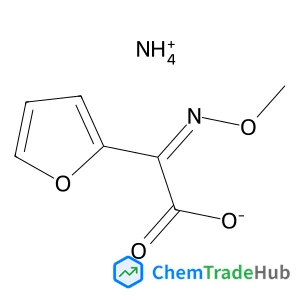
Ammonium (Z)-2-(furan-2-yl)-2-(methoxyimino)acetate
CAS Number:
97148-39-5
Molecular Formula:
C7H10N2O4

Recommended Suppliers






Disclaimer
This page provides academic journal information for reference and research purposes only. We are not affiliated with any journal publishers and do not handle publication submissions. For publication-related inquiries, please contact the respective journal publishers directly.
If you notice any inaccuracies in the information displayed, please contact us at support@chemtradehub.com. We will promptly review and address your concerns.