













An efficient method for high-pH peptide fractionation based on C18 StageTips for in-depth proteome profiling
Literature Information
Publication Date
2019-08-20
DOI
10.1039/C9AY01269A
Impact Factor
2.896
Authors
Kisoon Dan, Hyunsuk Shin, Junghun Lee, Joseph Injae Wang, Dohyun Han
View Original
Abstract
In-depth proteome profiling still relies widely on extensive off-line peptide fractionation to reduce the complexity of the proteome. However, the fractionation of protein samples in the sub-microgram range can be limited owing to sample loss during the fractionation process. Thus, it is essential to develop efficient microscale fractionation strategies. Here, we describe a modified method for high-pH peptide fractionation using C18-StageTips. Compared to a conventional strategy, our method generates improved peptide and protein identification rates under the same LC-MS/MS conditions. Finally, proteome profiling of sub-regions of the mouse brain suggested that our method can be used to analyze the proteome in-depth with limited amounts of protein samples.
Related Literature
Mechanism of the laser initiated ultrafast intracluster reaction in Ba···FCH3 and Ba···FCD3
V. Stert, H.-H. Ritze, P. Farmanara, W. Radloff
2001-08-23
Paper
DOI: 10.1039/B104528H
The electronic spectrum of C11 in its linear and cyclic conformation
Max Mühlhäuser, George E. Froudakis, Sigrid D. Peyerimhoff
2001-08-17
Paper
DOI: 10.1039/B103528M
C6h-Hexa-azahexaborine, [(CH)BN]6: structure and magnetic properties of a proposed 18-electron aromatic ring
A. Soncini, P. W. Fowler, I. Černušak, E. Steiner
2001-08-23
Paper
DOI: 10.1039/B103929F
Effect of DNA on the rate of electron transfer reactions between non-intercalated reactants: kinetic study of the reactions [Ru(NH3)5pz]2+ + [Co(C2O4)3]3− and [Ru(NH3)5py]2+ + [Co(NH3)4pzCO2]2+ in aqueous solutions in the presence of DNA
F. Secco, M. Venturini, M. López, P. Pérez, R. Prado, F. Sánchez
2001-09-11
Paper
DOI: 10.1039/B103549P
A simple kinetic model to describe the progression of prion disease
V. Vitagliano, G. D'Errico
2001-09-24
Paper
DOI: 10.1039/B104480J
Evaporation after ionization in molecular clusters: application to 1-naphthol–(NH3)n
C. Dedonder-Lardeux, D. Grosswasser, C. Jouvet, S. Martrenchard, A. Teahu
2001-09-18
Paper
DOI: 10.1039/B104836H
Quenching methods for chemical reaction dynamics within mixed quantum/classical approximation
2000-06-19
Paper
DOI: 10.1039/B002326O
Ionic plastic phases in trimethylammonium trifluoroacetate studied by 1H and 19F NMR spectroscopy, X-ray diffraction and thermal measurements
Koji Kuchitsu, Hiroshi Ono, Shin'ichi Ishimaru, Ryuichi Ikeda, Hiroyuki Ishida
2000-08-07
Paper
DOI: 10.1039/B004193I
You might also like
Compound Q&A
What are the main uses of 1H-Indazole-6-carbonitrile (CAS: 141290-59-7)?
1H-Indazole-6-carbonitrile finds applications in pharmaceuticals, where it serve...
141290-59-71H-Indazole-6-carbon...
Compound Q&A
How should waste containing Dioctyl (2E)-2-butenedioate (CAS: 2997-85-5) be handled?
Waste containing Dioctyl (2E)-2-butenedioate (CAS: 2997-85-5) should be collecte...
2997-85-5Dioctyl (2E)-2-buten...
Compound Q&A
What industries use Sodium [(1,2-benzoxazol-3-ylmethyl)sulfonyl]azanide (CAS: 68291-98-5)?
Sodium [(1,2-benzoxazol-3-ylmethyl)sulfonyl]azanide is primarily used in pharmac...
68291-98-5Sodium [(1,2-benzoxa...
Compound Q&A
Are there alternatives to Dimethyl 4-(4,4,5,5-tetramethyl-1,3,2-dioxaborolan-2-yl)-2,6-pyridinedicarboxylate (CAS: 741709-66-0) in synthesis?
Dimethyl 4-(4,4,5,5-tetramethyl-1,3,2-dioxaborolan-2-yl)-2,6-pyridinedicarboxyla...
741709-66-0Dimethyl 4-(4,4,5,5-...
Compound Q&A
How should waste containing 2-Fluoro-6-hydrazinopyridine (CAS: 80714-39-2) be handled?
Waste containing 2-Fluoro-6-hydrazinopyridine (CAS: 80714-39-2) should be manage...
80714-39-22-Fluoro-6-hydrazino...
Compound Q&A
What is 6-Formyl-2-pyridinecarboxylic acid (CAS: 499214-11-8)?
6-Formyl-2-pyridinecarboxylic acid is an organic compound with the molecular for...
499214-11-86-Formyl-2-pyridinec...
Compound Q&A
What is the market or research trend for 3-(3,4-dimethoxyphenyl)-2,5-dimethyl-N-(2-morpholin-4-ylethyl)pyrazolo[1,5-a]pyrimidin-7-amine (CAS: 900874-91-1)?
Research trends for this compound indicate a focus on its potential applications...
900874-91-13-(3,4-dimethoxyphen...
Compound Q&A
How is 9H-Tribenzo[b,d,f]azepine (CAS: 29875-73-8) typically synthesized?
9H-Tribenzo[b,d,f]azepine is typically synthesized via a multi-step process invo...
29875-73-89H-Tribenzo[b,d,f]az...
Compound Q&A
How is 1-Cyclopropyl-7-ethoxy-6-fluoro-8-methoxy-4-oxo-1,4-dihydro-3-quinolinecarboxylic acid (CAS: 1797982-51-4) typically synthesized?
1-Cyclopropyl-7-ethoxy-6-fluoro-8-methoxy-4-oxo-1,4-dihydro-3-quinolinecarboxyli...
1797982-51-41-Cyclopropyl-7-etho...
Compound Q&A
How should waste containing Methyl 3-oxo-1,2,3,4-tetrahydro-6-quinoxalinecarboxylate (CAS: 671820-52-3) be handled?
Waste containing Methyl 3-oxo-1,2,3,4-tetrahydro-6-quinoxalinecarboxylate (CAS: ...
671820-52-3Methyl 3-oxo-1,2,3,4...
Source Journal
Analytical Methods

CiteScore:
5.1
Self-citation Rate:
3.7%
Articles per Year:
655
Analytical Methods welcomes early applications of new analytical and bioanalytical methods and technology demonstrating the potential for societal impact. We require that methods and technology reported in the journal are sufficiently innovative, robust, accurate, and compared to other available methods for the intended application. Developments with interdisciplinary approaches are particularly welcome. Systems should be proven with suitably complex and analytically challenging samples. We encourage developments within, but not limited to, the following technologies and applications: global health, point-of-care and molecular diagnostics biosensors and bioengineering drug development and pharmaceutical analysis applied microfluidics and nanotechnology omics studies, such as proteomics, metabolomics or glycomics environmental, agricultural and food science neuroscience biochemical and clinical analysis forensic analysis industrial process and method development
Recommended Compounds
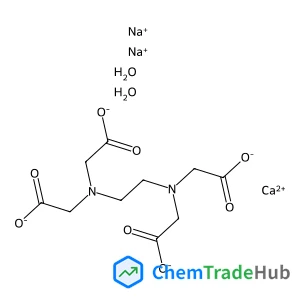
EthylenediaminetetraaceticacidcalciumDisodiumsalthydrate
CAS Number:
23411-34-9
Molecular Formula:
C10H16CaN2Na2O10


Recommended Suppliers






Disclaimer
This page provides academic journal information for reference and research purposes only. We are not affiliated with any journal publishers and do not handle publication submissions. For publication-related inquiries, please contact the respective journal publishers directly.
If you notice any inaccuracies in the information displayed, please contact us at support@chemtradehub.com. We will promptly review and address your concerns.