












Fundamentals of fast-scan cyclic voltammetry for dopamine detection
Literature Information
Publication Date
2019-12-26
DOI
10.1039/C9AN01586H
Impact Factor
4.616
Authors
B. Jill Venton, Qun Cao
View Original
Abstract
Fast-scan cyclic voltammetry (FSCV) is used with carbon-fiber microelectrodes for the real-time detection of neurotransmitters on the subsecond time scale. With FSCV, the potential is ramped up from a holding potential to a switching potential and back, usually at a 400 V s−1 scan rate and a frequency of 10 Hz. The plot of current vs. applied potential, the cyclic voltammogram (CV), has a very different shape for FSCV than for traditional cyclic voltammetry collected at scan rates which are 1000-fold slower. Here, we explore the theory of FSCV, with a focus on dopamine detection. First, we examine the shape of the CVs. Background currents, which are 100-fold higher than faradaic currents, are subtracted out. Peak separation is primarily due to slow electron transfer kinetics, while the symmetrical peak shape is due to exhaustive electrolysis of all the adsorbed neurotransmitters. Second, we explain the origins of the dopamine waveform, and the factors that limit the holding potential (oxygen reduction), switching potential (water oxidation), scan rate (electrode instability), and repetition rate (adsorption). Third, we discuss data analysis, from data visualization with color plots, to the automated algorithms like principal components regression that distinguish dopamine from pH changes. Finally, newer applications are discussed, including optimization of waveforms for analyte selectivity, carbon nanomaterial electrodes that trap dopamine, and basal level measurements that facilitate neurotransmitter measurements on a longer time scale. FSCV theory is complex, but understanding it enables better development of new techniques to monitor neurotransmitters in vivo.
Related Literature
Mechanism study on inhibited Ru(bpy)32+ electrochemiluminescence between coreactants
Lingling Xue, Bin Qiu, Zhenyu Lin, Donghwan Kim, Guonan Chen
2010-08-27
Paper
DOI: 10.1039/C004277C
Molecular organization and effective energy transfer in iridium metallosurfactant–porphyrin assemblies embedded in Langmuir–Schaefer films
Cristina Roldán-Carmona, Antonio M. González-Delgado, Andrés Guerrero-Martínez, Luisa De Cola, Marta Pérez-Morales, María T. Martín-Romero, Luis Camacho
2010-12-14
Paper
DOI: 10.1039/C0CP01683G
State- and conformer-selected beams of aligned and oriented molecules for ultrafast diffraction studies
Frank Filsinger, Gerard Meijer, Henrik Stapelfeldt, Jochen Küpper
2010-12-16
Perspective
DOI: 10.1039/C0CP01585G
Impact of surface mechanics on the reactivity of electrodes
R. N. Viswanath, L. A. Kibler, D. M. Kolb
2010-12-06
Communication
DOI: 10.1039/C0CP01742F
Facile approaches to build ordered amphiphilic tris(phthalocyaninato) europium triple-decker complex thin films and their comparative performances in ozone sensing
Yanli Chen, Marcel Bouvet, Thibaut Sizun, Yingning Gao, Cedric Plassard, Eric Lesniewska, Jianzhuang Jiang
2010-08-27
Paper
DOI: 10.1039/C0CP00381F
Understanding the aggregation induced emission enhancement for a compound with excited state intramolecular proton transfer character
Rui Hu, Shayu Li, Yi Zeng, Jinping Chen, Shuangqing Wang, Yi Li, Guoqiang Yang
2010-12-20
Paper
DOI: 10.1039/C0CP01181A
Should negative electron affinities be used for evaluating the chemical hardness?
Carlos Cárdenas, Paul Ayers, Frank De Proft, David J. Tozer, Paul Geerlings
2010-11-26
Paper
DOI: 10.1039/C0CP01785J
The role of aromatic interactions in the structure and energetics of benzyl ketones
Carlos F. R. A. C. Lima, Carlos A. D. Sousa, José E. Rodriguez-Borges, André Melo, John N. Low, Luís M. N. B. F. Santos
2010-07-28
Paper
DOI: 10.1039/C003941A
Room-temperature metal-activator-free phosphorescence from mesoporous silica
Lei Zhao, Tian Ming, Huanjun Chen, Li Gong, Jian Chen, Jianfang Wang
2010-11-26
Paper
DOI: 10.1039/C0CP01981J
You might also like
Compound Q&A
What precautions should be taken when handling lithium chloride hydrate (1:1:1) (CAS: 16712-20-2)?
When handling lithium chloride hydrate (1:1:1) (CAS: 16712-20-2), it is importan...
16712-20-2Lithium chloride hyd...
Compound Q&A
Is 4-(4H-1,2,4-Triazol-4-yl)piperidine (CAS: 690261-92-8) safe?
4-(4H-1,2,4-Triazol-4-yl)piperidine is generally considered safe for use in phar...
690261-92-84-(4H-1,2,4-Triazol-...
Compound Q&A
How should waste containing 1,3-Thiazole-2-carboxamide (CAS: 16733-85-0) be handled?
Waste containing 1,3-Thiazole-2-carboxamide (CAS: 16733-85-0) should be collecte...
16733-85-01,3-Thiazole-2-carbo...
Compound Q&A
What regulatory guidelines apply to 5-(Difluoromethyl)-2-fluorobenzonitrile (CAS: 934175-58-3)?
5-(Difluoromethyl)-2-fluorobenzonitrile (CAS: 934175-58-3) is subject to regulat...
934175-58-35-(Difluoromethyl)-2...
Compound Q&A
How is Methyl 3-acetamido-2-thiophenecarboxylate (CAS: 22288-79-5) typically synthesized?
Methyl 3-acetamido-2-thiophenecarboxylate can be synthesized by the reaction of ...
22288-79-5Methyl 3-acetamido-2...
Compound Q&A
What is 4-Isoquinolinecarbonitrile (CAS: 34846-65-6)?
4-Isoquinolinecarbonitrile is a chemical compound with the CAS number 34846-65-6...
34846-65-64-Isoquinolinecarbon...
Compound Q&A
How should Methyl 1H-1,2,3-triazole-4-carboxylate (CAS: 877309-59-6) be stored?
Store Methyl 1H-1,2,3-triazole-4-carboxylate (CAS: 877309-59-6) in a cool, dry p...
877309-59-6Methyl 1H-1,2,3-tria...
Compound Q&A
What regulatory guidelines apply to 6-Bromo[1,3]thiazolo[5,4-b]pyridin-2-amine (CAS: 1160791-13-8)?
6-Bromo[1,3]thiazolo[5,4-b]pyridin-2-amine (CAS: 1160791-13-8) is subject to the...
1160791-13-86-Bromo[1,3]thiazolo...
Compound Q&A
Is (2S,3S)-2-Ammonio-3-(3,4-dihydroxyphenyl)-3-hydroxypropanoate (CAS: 23651-95-8) safe?
(2S,3S)-2-Ammonio-3-(3,4-dihydroxyphenyl)-3-hydroxypropanoate (CAS: 23651-95-8) ...
23651-95-8(2S,3S)-2-Ammonio-3-...
Compound Q&A
What are the physical and chemical properties of 7-bromo-3-methyl-3,4-dihydroquinazolin-4-one (CAS: 1293987-84-4)?
7-Bromo-3-methyl-3,4-dihydroquinazolin-4-one is a solid with a crystalline form....
1293987-84-47-bromo-3-methyl-3,4...
Source Journal
Analyst

CiteScore:
7.8
Self-citation Rate:
5.6%
Articles per Year:
653
Analyst publishes analytical and bioanalytical research that reports premier fundamental discoveries and inventions, and the applications of those discoveries, unconfined by traditional discipline barriers.
Recommended Compounds
![[(2R)-6,6-Dimethyl-2-morpholinyl]methanol hydrochloride (1:1) structure](https://static.chemtradehub.com/structs/141/1416444-88-6-e06a.webp "[(2R)-6,6-Dimethyl-2-morpholinyl]methanol hydrochloride (1:1) structure")
[(2R)-6,6-Dimethyl-2-morpholinyl]methanol hydrochloride (1:1)
CAS Number:
1416444-88-6
Molecular Formula:
C7H16ClNO2
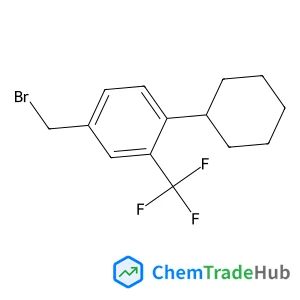
4-(Bromomethyl)-1-cyclohexyl-2-(trifluoromethyl)benzene
CAS Number:
800381-60-6
Molecular Formula:
C14H16BrF3
Recommended Suppliers





Disclaimer
This page provides academic journal information for reference and research purposes only. We are not affiliated with any journal publishers and do not handle publication submissions. For publication-related inquiries, please contact the respective journal publishers directly.
If you notice any inaccuracies in the information displayed, please contact us at support@chemtradehub.com. We will promptly review and address your concerns.