












Fluorescence enhancement novel green analytical method for paraquat herbicide quantification based on immobilization on clay
Literature Information
Publication Date
2019-04-09
DOI
10.1039/C9AN00387H
Impact Factor
4.616
Authors
Marina A. Dominguez, Matías Insausti, Romina Ilari, Graciela P. Zanini
View Original
Abstract
A new green method was developed for the quantification of paraquat (PQ) in water samples based on the fluorescence emission enhancement of the herbicide signal after adsorption on sodium montmorillonite clay (MMT). Radiant emission processes are favored by increasing the molecular rigidity of the PQ since it adopts a planar position between the nano-sheets of the MMT. The advantages of the use of this clay are nontoxic, low cost and found in abundance in natural reserves. The proposed method was successfully used in determining PQ in natural water samples with recoveries of 73% to 95%. The fluorescence emission showed a good linear relationship with PQ concentrations from 2.0 to 8.0 μmol L−1 with a detection limit of 0.37 μmol L−1. The method is simple, inexpensive and does not require the use of reagents or organic solvents; which makes it very promising to achieve the goals of green chemistry. The proposed methodology could be the beginning of the development of future green sensors.
Related Literature
Large scale indium tin oxide (ITO) one dimensional gratings for ultrafast signal modulation in the visible spectral region
Michele Guizzardi, Silvio Bonfadini, Ilka Kriegel, Luigino Criante
2020-03-05
Paper
DOI: 10.1039/C9CP06839B
Biological control of S-nitrosothiol reactivity: potential role of sigma-hole interactions
Niloufar Hendinejad, Qadir K. Timerghazin
2020-03-02
Paper
DOI: 10.1039/C9CP06377C
Water plays a dynamical role in a hydrogen-bonded, hexameric supramolecular assembly
Ankita Katiyar, Julia C. Freire Sovierzoski, Paul B. Calio, Anthony A. Vartia, Ward H. Thompson
2020-02-24
Paper
DOI: 10.1039/C9CP06874K
Computational approaches to studying methylated H4K20 recognition by DNA repair factor 53BP1
Zhendong Li, Jingxiao Bao
2020-02-06
Paper
DOI: 10.1039/C9CP05635A
Statistical molecular fragmentation: which parameters influence the branching ratios?
Nguyen-Thi Van-Oanh
2019-11-27
Paper
DOI: 10.1039/C9CP05095G
A quasi-plane IrB18− cluster with high stability
Donghe Wei, Mengxue Ren, Jie Bi, George Maroulis
2020-02-20
Paper
DOI: 10.1039/C9CP06330G
Electronic structure, ion diffusion and cation doping in the Na4VO(PO4)2 compound as a cathode material for Na-ion batteries
Pablo A. Aparicio
2020-03-03
Paper
DOI: 10.1039/C9CP05559B
Specific ion effects on the enzymatic activity of alcohol dehydrogenase from Saccharomyces cerevisiae
Andrea Salis, Edmond Magner
2020-03-09
Paper
DOI: 10.1039/C9CP06800G
Deterministic control of surface mounted metal–organic framework growth orientation on metallic and insulating surfaces
Mathias Strauss, Carlos Alberto Rodrigues Costa, Cátia Crispilho Corrêa
2020-02-17
Paper
DOI: 10.1039/C9CP05717J
Control of the deprotonation of terephthalic acid assemblies on Ag(111) studied by DFT calculations and low temperature scanning tunneling microscopy
2019-10-18
Paper
DOI: 10.1039/C9CP05151A
You might also like
Compound Q&A
What is the market or research trend for N-(4-Methoxybenzyl)-2-pyridinamine (CAS: 52818-63-0)?
N-(4-Methoxybenzyl)-2-pyridinamine (CAS: 52818-63-0) is increasingly being used ...
52818-63-0N-(4-Methoxybenzyl)-...
Compound Q&A
What precautions should be taken when handling Ethyl 4-(2-chlorophenyl)-1,3-thiazole-2-carboxylate (CAS: 1050507-06-6)?
When handling Ethyl 4-(2-chlorophenyl)-1,3-thiazole-2-carboxylate, appropriate p...
1050507-06-6Ethyl 4-(2-chlorophe...
Compound Q&A
What regulatory guidelines apply to diethyldiselane (CAS: 628-39-7)?
Diethyldiselane (CAS: 628-39-7) is classified under the Globally Harmonized Syst...
628-39-7Diethyldiselane
Compound Q&A
What is the market or research trend for oxocopper (CAS: 12053-18-8)?
The market for oxocopper (CAS: 12053-18-8) is primarily driven by its use in cat...
12053-18-8oxocopper; oxo-(oxoc...
Compound Q&A
What is the market or research trend for 5-{[(2-Methyl-2-propanyl)oxy]carbonyl}-5-azaspiro[2.4]heptane-7-carboxylic acid?
The market for 5-{[(2-Methyl-2-propanyl)oxy]carbonyl}-5-azaspiro[2.4]heptane-7-c...
1268519-54-55-{[(2-Methyl-2-prop...
Compound Q&A
What is 2-(1-Pyrrolidinyl)-4-pyridinamine (CAS: 35981-63-6)?
2-(1-Pyrrolidinyl)-4-pyridinamine is a chemical compound with the CAS number 359...
35981-63-62-(1-Pyrrolidinyl)-4...
Compound Q&A
What are the physical and chemical properties of 2-(3-Pyridinyl)-1-azabicyclo[2.2.2]octane (CAS: 91556-75-1)?
2-(3-Pyridinyl)-1-azabicyclo[2.2.2]octane (CAS: 91556-75-1) is a crystalline sol...
91556-75-12-(3-Pyridinyl)-1-az...
Compound Q&A
How is (S)-Alpha-allyl-proline hydrochloride (CAS: 129704-91-2) typically synthesized?
(S)-Alpha-allyl-proline hydrochloride is usually synthesized via a Wittig reacti...
129704-91-2(S)-Alpha-allyl-prol...
Compound Q&A
What is 3-Methyl-1,2-oxazole-5-carboxylic acid (CAS: 4857-42-5)?
3-Methyl-1,2-oxazole-5-carboxylic acid (CAS: 4857-42-5) is an organic compound w...
4857-42-53-Methyl-1,2-oxazole...
Compound Q&A
How is Lys-SMCC-DM1 (CAS: 1281816-04-3) typically synthesized?
Lys-SMCC-DM1 is synthesized via a multi-step process involving the coupling of S...
1281816-04-3Lys-SMCC-DM1
Source Journal
Analyst

CiteScore:
7.8
Self-citation Rate:
5.6%
Articles per Year:
653
Analyst publishes analytical and bioanalytical research that reports premier fundamental discoveries and inventions, and the applications of those discoveries, unconfined by traditional discipline barriers.
Recommended Compounds
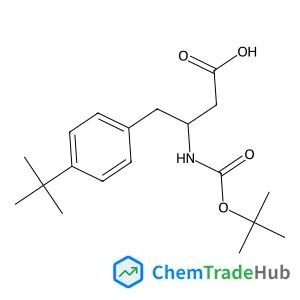
(S)-3-((tert-Butoxycarbonyl)amino)-4-(4-(tert-butyl)phenyl)butanoic acid
CAS Number:
403661-85-8
Molecular Formula:
C19H29NO4
![2,4-Dichloro-6-isopropyl-5H-pyrrolo[3,4-d]pyrimidin-7(6H)-one structure](https://static.chemtradehub.com/structs/107/1079649-94-7-ad4a.webp "2,4-Dichloro-6-isopropyl-5H-pyrrolo[3,4-d]pyrimidin-7(6H)-one structure")
2,4-Dichloro-6-isopropyl-5H-pyrrolo[3,4-d]pyrimidin-7(6H)-one
CAS Number:
1079649-94-7
Molecular Formula:
C9H9Cl2N3O
Recommended Suppliers




Disclaimer
This page provides academic journal information for reference and research purposes only. We are not affiliated with any journal publishers and do not handle publication submissions. For publication-related inquiries, please contact the respective journal publishers directly.
If you notice any inaccuracies in the information displayed, please contact us at support@chemtradehub.com. We will promptly review and address your concerns.