











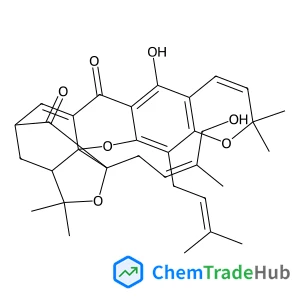
A highly selective and sensitive red-emitting fluorescent probe for visualization of endogenous peroxynitrite in living cells and zebrafish
Literature Information
Publication Date
2019-04-10
DOI
10.1039/C9AN00347A
Impact Factor
4.616
Authors
Zilu Li, Caiyun Liu, Chen Yu, Yanan Chen, Pan Jia, Hanchuang Zhu, Xue Zhang, Yamin Yu, Baocun Zhu, Wenlong Sheng
View Original
Abstract
Peroxynitrite (ONOO−) has been proven to participate in various physiological and pathological processes, and may also be a contributing factor in many diseases. In view of this, there is a need to develop detection tools for unambiguously tracking a small amount of endogenous ONOO− to reveal its exact mechanisms. In this paper, a colorimetric and red-emitting fluorescent probe Red-PN, based on a rhodamine-type fluorophore and hydrazide reactive site is described. The probe Red-PN possesses the advantages of rapid response (within 5 s), visual color change (from colorless to pink), preeminent sensitivity (detection limit = 4.3 nM) and selectivity. Because of these outstanding performances, it was possible to accurately detect endogenous ONOO−. It was encouraging that the probe Red-PN could be used effectively for tracking the relatively low levels of endogenous and exogenous ONOO− in living cells and zebrafish. Thus, it is envisioned that the probe Red-PN would have promising prospects in applications for imaging ONOO− in a variety of biological settings.
Related Literature
Correction: De novo prediction of cross-effect efficiency for magic angle spinning dynamic nuclear polarization
Anne-Laure Barra, Johan van Tol, Sabine Hediger, Daniel Lee, Gaël De Paëpe
2021-06-11
Correction
DOI: 10.1039/D1CP90117F
Thermal conductivity and electrical resistivity of single copper nanowires
Wei-Tsu Peng, Fu-Ren Chen, Ming-Chang Lu
2021-08-26
Paper
DOI: 10.1039/D1CP02774C
The impact of insufficient time resolution on dye regeneration lifetime determined using transient absorption spectroscopy
Inseong Cho, Pawel Wagner, Peter C. Innis, Attila J. Mozer
2021-05-29
Paper
DOI: 10.1039/D1CP01217G
Effects of molecular shape on alcohol aggregation and water hydrogen bond network behavior in butanol isomer solutions
Seungeui Choi, Saravanan Parameswaran, Jun-Ho Choi
2021-05-18
Paper
DOI: 10.1039/D1CP00634G
Quantitative analysis of ACE2 binding to coronavirus spike proteins: SARS-CoV-2 vs. SARS-CoV and RaTG13
Zhendong Li
2021-05-28
Paper
DOI: 10.1039/D1CP01075A
Infrared spectroscopy of CeO2 nanoparticles using Bergman's spectral representation: effects of phonon confinement and lattice strain
Leire del Campo, Domingos De Sousa Meneses
2021-05-25
Paper
DOI: 10.1039/D1CP01259B
Unravelling the microhydration frameworks of prototype PAH by infrared spectroscopy: naphthalene–(water)1–3
Kuntal Chatterjee, Tarun Kumar Roy, Jai Khatri, Gerhard Schwaab, Martina Havenith
2021-05-25
Paper
DOI: 10.1039/D1CP01789F
Computational prediction of the supramolecular self-assembling properties of organic molecules: the role of conformational flexibility of amide moieties
Laura Le Bras, Yves L. Dory, Benoît Champagne
2021-08-31
Paper
DOI: 10.1039/D1CP02675E
Impact of Cu(ii) and Al(iii) on the conformational landscape of amyloidβ1-42
Lorena Roldán-Martín, Francesca Peccati, Mariona Sodupe, Jean-Didier Maréchal
2021-05-10
Paper
DOI: 10.1039/D1CP01561C
Bayesian phase difference estimation: a general quantum algorithm for the direct calculation of energy gaps
Chikako Sakai, Kazuo Toyota, Kazunobu Sato, Daisuke Shiomi
2021-09-02
Paper
DOI: 10.1039/D1CP03156B
You might also like
Compound Q&A
What is the market or research trend for N-(4-Methoxybenzyl)-2-pyridinamine (CAS: 52818-63-0)?
N-(4-Methoxybenzyl)-2-pyridinamine (CAS: 52818-63-0) is increasingly being used ...
52818-63-0N-(4-Methoxybenzyl)-...
Compound Q&A
What precautions should be taken when handling Ethyl 4-(2-chlorophenyl)-1,3-thiazole-2-carboxylate (CAS: 1050507-06-6)?
When handling Ethyl 4-(2-chlorophenyl)-1,3-thiazole-2-carboxylate, appropriate p...
1050507-06-6Ethyl 4-(2-chlorophe...
Compound Q&A
What regulatory guidelines apply to diethyldiselane (CAS: 628-39-7)?
Diethyldiselane (CAS: 628-39-7) is classified under the Globally Harmonized Syst...
628-39-7Diethyldiselane
Compound Q&A
What is the market or research trend for oxocopper (CAS: 12053-18-8)?
The market for oxocopper (CAS: 12053-18-8) is primarily driven by its use in cat...
12053-18-8oxocopper; oxo-(oxoc...
Compound Q&A
What is the market or research trend for 5-{[(2-Methyl-2-propanyl)oxy]carbonyl}-5-azaspiro[2.4]heptane-7-carboxylic acid?
The market for 5-{[(2-Methyl-2-propanyl)oxy]carbonyl}-5-azaspiro[2.4]heptane-7-c...
1268519-54-55-{[(2-Methyl-2-prop...
Compound Q&A
What is 2-(1-Pyrrolidinyl)-4-pyridinamine (CAS: 35981-63-6)?
2-(1-Pyrrolidinyl)-4-pyridinamine is a chemical compound with the CAS number 359...
35981-63-62-(1-Pyrrolidinyl)-4...
Compound Q&A
What are the physical and chemical properties of 2-(3-Pyridinyl)-1-azabicyclo[2.2.2]octane (CAS: 91556-75-1)?
2-(3-Pyridinyl)-1-azabicyclo[2.2.2]octane (CAS: 91556-75-1) is a crystalline sol...
91556-75-12-(3-Pyridinyl)-1-az...
Compound Q&A
How is (S)-Alpha-allyl-proline hydrochloride (CAS: 129704-91-2) typically synthesized?
(S)-Alpha-allyl-proline hydrochloride is usually synthesized via a Wittig reacti...
129704-91-2(S)-Alpha-allyl-prol...
Compound Q&A
What is 3-Methyl-1,2-oxazole-5-carboxylic acid (CAS: 4857-42-5)?
3-Methyl-1,2-oxazole-5-carboxylic acid (CAS: 4857-42-5) is an organic compound w...
4857-42-53-Methyl-1,2-oxazole...
Compound Q&A
How is Lys-SMCC-DM1 (CAS: 1281816-04-3) typically synthesized?
Lys-SMCC-DM1 is synthesized via a multi-step process involving the coupling of S...
1281816-04-3Lys-SMCC-DM1
Source Journal
Analyst

CiteScore:
7.8
Self-citation Rate:
5.6%
Articles per Year:
653
Analyst publishes analytical and bioanalytical research that reports premier fundamental discoveries and inventions, and the applications of those discoveries, unconfined by traditional discipline barriers.
Recommended Compounds

(2R)-2-(3-Bromophenyl)pyrrolidine hydrochloride (1:1)
CAS Number:
1391550-13-2
Molecular Formula:
C10H13BrClN
![1-oxaspiro[4.4]nonan-6-one structure](https://static.chemtradehub.com/structs/134/134179-01-4-e051.webp "1-oxaspiro[4.4]nonan-6-one structure")
Recommended Suppliers





Disclaimer
This page provides academic journal information for reference and research purposes only. We are not affiliated with any journal publishers and do not handle publication submissions. For publication-related inquiries, please contact the respective journal publishers directly.
If you notice any inaccuracies in the information displayed, please contact us at support@chemtradehub.com. We will promptly review and address your concerns.