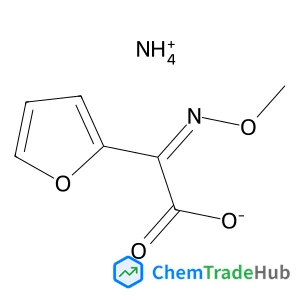
Ammonium (Z)-2-(furan-2-yl)-2-(methoxyimino)acetate
CAS Number:
97148-39-5
Molecular Formula:
C7H10N2O4
Martin Rusek, Karel Vojíř
This paper focuses on the procedure and results for analyzing text-difficulty in lower-secondary chemistry textbooks in the Czech Republic. The authors use established methodology for text-difficulty analysis by Nestler, adapted by Průcha and Pluskal by adding a second independent analyser to improve reliability. Some textbooks do not follow the expected trend of either text-difficulty coherence or increasing text-difficulty between books for the 8th and 9th grade. No trend in topic difficulty was found either. The results show that learning outcomes may differ significantly when different books are used, despite the fact that they are supposed to support the same curriculum. For this reason, the results serve to support not only teachers when selecting a textbook, but also researchers as a starting point for lesson observations.
Ali Ebrahimi, Mostafa Habibi-Khorassani, Sophia Bazzi
DOI: 10.1039/C0CP01279C
Shanthi Murali, Daniel R. Dreyer, Patricia Valle-Vigón, Meryl D. Stoller, Yanwu Zhu, Cornelio Morales, Antonio B. Fuertes, Christopher W. Bielawski, Rodney S. Ruoff
DOI: 10.1039/C0CP02557G
Pablo Garcia-Fernandez, Yang Liu, Isaac B. Bersuker, James E. Boggs
DOI: 10.1039/C0CP00900H
Niss Ole Carstensen, Johannes M. Dieterich, Bernd Hartke
DOI: 10.1039/C0CP01065K
R. M. Lynden-Bell, N. Giovambattista, P. G. Debenedetti, T. Head-Gordon, P. J. Rossky
DOI: 10.1039/C0CP01701A
Ilkeun Lee, Manuel A. Albiter, Qiao Zhang, Jianping Ge, Yadong Yin, Francisco Zaera
DOI: 10.1039/C0CP01688H
Bingbing Suo, Daiqian Xie, Yibo Lei, Yubin Wang
DOI: 10.1039/C0CP01300E
Fabio Capuano, Luigi Paduano, Gerardino D'Errico, Gaetano Mangiapia, Roberto Sartorio
DOI: 10.1039/C0CP00761G
Matthew B. Boucher, Simone Goergen, Nan Yi, Maria Flytzani-Stephanopoulos
DOI: 10.1039/C0CP02009E
1H-Indazole-6-carbonitrile finds applications in pharmaceuticals, where it serve...
Waste containing Dioctyl (2E)-2-butenedioate (CAS: 2997-85-5) should be collecte...
Sodium [(1,2-benzoxazol-3-ylmethyl)sulfonyl]azanide is primarily used in pharmac...
Dimethyl 4-(4,4,5,5-tetramethyl-1,3,2-dioxaborolan-2-yl)-2,6-pyridinedicarboxyla...
Waste containing 2-Fluoro-6-hydrazinopyridine (CAS: 80714-39-2) should be manage...
6-Formyl-2-pyridinecarboxylic acid is an organic compound with the molecular for...
Research trends for this compound indicate a focus on its potential applications...
9H-Tribenzo[b,d,f]azepine is typically synthesized via a multi-step process invo...
1-Cyclopropyl-7-ethoxy-6-fluoro-8-methoxy-4-oxo-1,4-dihydro-3-quinolinecarboxyli...
Waste containing Methyl 3-oxo-1,2,3,4-tetrahydro-6-quinoxalinecarboxylate (CAS: ...

Chemistry Education Research and Practice (CERP) is the journal for teachers, researchers and other practitioners at all levels of chemistry education. It is published free of charge electronically four times a year, thanks to sponsorship by the Royal Society of Chemistry's Education Division. Coverage includes the following: Research, and reviews of research, in chemistry education Evaluations of effective innovative practice in the teaching of chemistry In-depth analyses of issues of direct relevance to chemistry education The objectives of the journal: To provide researchers with the means to publish their work in full in a journal exclusively dedicated to chemistry education To offer teachers of chemistry at all levels a place where they can share effective ideas and methods for the teaching and learning of chemistry To bridge the gap between the two groups so that researchers will have their results seen by those who could benefit from using them, and practitioners will gain from encountering the ideas and results of those who have made a particular study of the learning process