


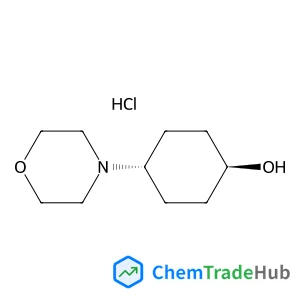
trans-4-(4-Morpholinyl)cyclohexanol hydrochloride (1:1)
CAS Number:
1588441-09-1
Molecular Formula:
C10H20ClNO2
Matthew B. Boucher, Simone Goergen, Nan Yi, Maria Flytzani-Stephanopoulos
We report the activity of shape-controlled metal oxide (CeO2, ZnO and Fe3O4) supported gold catalysts for the steam reforming of methanol (SRM) and the water gas shift (WGS) reactions. Metal oxide nanoshapes, prepared by controlled hydrolysis and thermolysis methods, expose different crystal surfaces, and consequently disperse and stabilize gold differently. We observe that similar to gold supported on CeO2 shapes exposing the {110} and {111} surfaces, gold supported on the oxygen-rich ZnO {0001} and Fe3O4 {111} surfaces shows higher activity for the SRM and WGS reactions. While the reaction rates vary among the Au–CeO2, Au–ZnO and Au–Fe3O4 shapes, the apparent activation energies are similar, indicating a common active site. TPR data further indicate that the reaction lightoff coincides with the activation of Au–O–M species on the surface of all three oxide supports evaluated here. Different shapes contain a different number of binding sites for the gold, imparting different overall activity.

Journal of Saudi Chemical Society

Organic Process Research & Development

Chemistry Education Research and Practice

Russian Journal of Applied Chemistry

Russian Journal of Bioorganic Chemistry

Drug Discovery Today

Russian Chemical Bulletin

Journal of Natural Medicines

Nature Medicine

Russian Journal of Coordination Chemistry
Khalid Ahmed, Shaukatali Najikhan Inamdar, Nashiour Rohman, Adam A. Skelton
DOI: 10.1039/D0CP04498A
Zengjie Li, Xiang Liu, Jiawei Jiang, Wenbo Mi, Haili Bai
DOI: 10.1039/D0CP06362B
DOI: 10.1039/D0CP05105E
Tsung-Lung Li, Zheng-Feng Zhang
DOI: 10.1039/D0CP06173E
Salvador Cardona-Serra, Lorena E. Rosaleny, Silvia Giménez-Santamarina, Luis Martínez-Gil, Alejandro Gaita-Ariño
DOI: 10.1039/D0CP05236A
DOI: 10.1039/D0CP06207C
Alain Moissette, Isabelle Batonneau-Gener, Matthieu Hureau, Ludovic Pinard, Hervé Vezin, Michel Perdicakis, Alain Walcarius
DOI: 10.1039/D0CP06148D
Yun Ni, Jia Li, Wei Tao, Hao Ding, Rui-Xue Li
DOI: 10.1039/D0CP05640E
DOI: 10.1039/D0CP05947A
Abhishek Kumar, T. Rajagopala Rao, Rudraditya Sarkar
DOI: 10.1039/D0CP04619A
Ethyl 4-chlorothieno[2,3-b]pyridine-5-carboxylate (CAS: 59713-58-5) can be synth...
5-Methyl-1H-indole-3-carbaldehyde (CAS: 52562-50-2) is subject to various regula...
(1,3-Dimethyl-2,4-dioxo-1,2,3,4-tetrahydro-5-pyrimidinyl)boronic acid is a white...
Waste containing Sulfocostunolide A (CAS: 1016983-51-9) should be handled with c...
When handling Murraxocin (CAS: 88478-44-8), ensure proper personal protective eq...
Formvar (CAS: 63148-64-1) is an alkyd resin characterized by a high molecular we...
(S)-4-benzyl-2-((benzyloxy)methyl)morpholine is generally safe when handled with...
Methyl 1-(5-bromo-2-pyrimidinyl)cyclopropanecarboxylate (CAS: 1447607-69-3) is p...
2-Methyl-1-phenyl-1-propanamine hydrochloride (CAS: 24290-47-9) is generally con...
3-(4-Bromophenyl)-2-methylpropanoic acid is synthesized through a multi-step pro...

Physical Chemistry Chemical Physics (PCCP) is an international journal co-owned by 19 physical chemistry and physics societies from around the world. This journal publishes original, cutting-edge research in physical chemistry, chemical physics and biophysical chemistry. To be suitable for publication in PCCP, articles must include significant innovation and/or insight into physical chemistry; this is the most important criterion that reviewers and Editors will judge against when evaluating submissions. The journal has a broad scope and welcomes contributions spanning experiment, theory, computation and data science. Topical coverage includes spectroscopy, dynamics, kinetics, statistical mechanics, thermodynamics, electrochemistry, catalysis, surface science, quantum mechanics, quantum computing and machine learning. Interdisciplinary research areas such as polymers and soft matter, materials, nanoscience, energy, surfaces/interfaces, and biophysical chemistry are welcomed if they demonstrate significant innovation and/or insight into physical chemistry. Joined experimental/theoretical studies are particularly appreciated when complementary and based on up-to-date approaches.
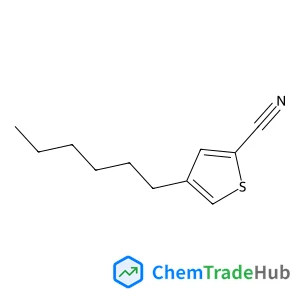
![2-Methyl-2-propanyl 1,6-diazaspiro[3.4]octane-6-carboxylate structure](https://static.chemtradehub.com/structs/115/1158749-79-1-81ee.webp "2-Methyl-2-propanyl 1,6-diazaspiro[3.4]octane-6-carboxylate structure")
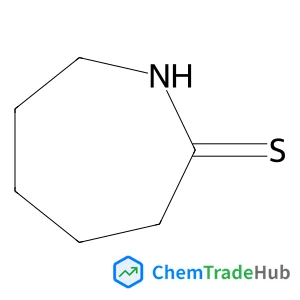
![Sodium 6-amino-3-[(E)-{4-[(E)-(4-aminophenyl)diazenyl]-2-methoxy-5-methylphenyl}diazenyl]-4-hydroxy-2-naphthalenesulfonate structure](https://static.chemtradehub.com/structs/294/2945-96-2-092f.webp "Sodium 6-amino-3-[(E)-{4-[(E)-(4-aminophenyl)diazenyl]-2-methoxy-5-methylphenyl}diazenyl]-4-hydroxy-2-naphthalenesulfonate structure")




