












Trimerization and tetramerization of ethylene in continuous gas-phase reaction using a Cr-based supported liquid phase catalyst
Literature Information
Publication Date
2018-11-19
DOI
10.1039/C8RE00179K
Impact Factor
4.239
Authors
Tobias Müller, John Thomas Dixon, Marco Haumann, Peter Wasserscheid
View Original
Abstract
Homogeneous Cr–PNP tri- and tetramerization catalysts were dissolved together with the co-catalyst MAO in the high-boiling, non-polar, aliphatic hydrocarbon perhydro-dibenzyltoluene (H18-DBT). The solution was then dispersed onto different high surface area supports. The resulting solid materials were tested in the gas-phase selective oligomerization of ethylene at 43 °C and pressures between 1 and 14 bar. Low activities were observed at ambient pressure. At ethylene pressures of higher than 3 bar the formed 1-hexene and 1-octene condensed inside the porous system, thereby facilitating the dissolution and redistribution of the Cr–PNP catalyst. Further studies were conducted at pressures up to 35 bar at which a change in the primary reaction selectivity from 1-hexene to 1-octene could be observed. Such a selectivity switch is in accordance with previously reported mechanistic and kinetic studies.
Related Literature
In situ synthesis of Cu nanocatalysts on ZnO whiskers embedded in a microstructured paper composite for autothermal hydrogen production
Hirotaka Koga, Takuya Kitaoka, Hiroyuki Wariishi
2008-09-26
Communication
DOI: 10.1039/B812216D
Encapsulated molecular catalysts in polysiloxane gels: ruthenium cluster-catalyzed isomerization of alkenes
Motonori Abe, Kazuyuki Kamo, Yusuke Kosako
2008-09-17
Communication
DOI: 10.1039/B809937E
Crystalline low band-gap alternating indolocarbazole and benzothiadiazole-cored oligothiophene copolymer for organic solar cell applications‡
Jianping Lu, Fushun Liang, Nicolas Drolet, Jianfu Ding, Ye Tao, Raluca Movileanu
2008-09-15
Communication
DOI: 10.1039/B811031J
Novel highly active FSM-16 supported molybdenum catalyst for hydrotreatment
Shelu Garg, Thallada Bhaskar, Kapil Soni, Gnanamani Muthu Kumaran, Akinori Muto, Yusaku Sakata, Gudimella Murali Dhar
2008-09-15
Communication
DOI: 10.1039/B809808E
Functional biomimetic models for the active site in the respiratory enzyme cytochrome c oxidase
James P. Collman, Richard A. Decréau
2008-09-04
Feature Article
DOI: 10.1039/B808070B
A two-step spin crossover mononuclear iron(ii) complex with a [HS–LS–LS] intermediate phase
Sylvestre Bonnet, Maxime A. Siegler, José Sánchez Costa, Gábor Molnár, Azzedine Bousseksou, Anthony L. Spek, Patrick Gamez, Jan Reedijk
2008-09-29
Communication
DOI: 10.1039/B811746B
Coordination networks derived from germanium(ii) thioether macrocyclic complexes—the first authenticated chalcogenoether complexes of Ge(ii)
Fei Cheng, Andrew L. Hector, William Levason, Gillian Reid, Michael Webster, Wenjian Zhang
2008-09-22
Communication
DOI: 10.1039/B809444F
Cobalt ferrite nanorings: Ostwald ripening dictated synthesis and magnetic properties
Hui Zhang, Chuanxin Zhai, Jianbo Wu, Xiangyang Ma, Deren Yang
2008-10-14
Communication
DOI: 10.1039/B812752B
You might also like
Compound Q&A
What are the main uses of 1H-Indazole-6-carbonitrile (CAS: 141290-59-7)?
1H-Indazole-6-carbonitrile finds applications in pharmaceuticals, where it serve...
141290-59-71H-Indazole-6-carbon...
Compound Q&A
How should waste containing Dioctyl (2E)-2-butenedioate (CAS: 2997-85-5) be handled?
Waste containing Dioctyl (2E)-2-butenedioate (CAS: 2997-85-5) should be collecte...
2997-85-5Dioctyl (2E)-2-buten...
Compound Q&A
What industries use Sodium [(1,2-benzoxazol-3-ylmethyl)sulfonyl]azanide (CAS: 68291-98-5)?
Sodium [(1,2-benzoxazol-3-ylmethyl)sulfonyl]azanide is primarily used in pharmac...
68291-98-5Sodium [(1,2-benzoxa...
Compound Q&A
Are there alternatives to Dimethyl 4-(4,4,5,5-tetramethyl-1,3,2-dioxaborolan-2-yl)-2,6-pyridinedicarboxylate (CAS: 741709-66-0) in synthesis?
Dimethyl 4-(4,4,5,5-tetramethyl-1,3,2-dioxaborolan-2-yl)-2,6-pyridinedicarboxyla...
741709-66-0Dimethyl 4-(4,4,5,5-...
Compound Q&A
How should waste containing 2-Fluoro-6-hydrazinopyridine (CAS: 80714-39-2) be handled?
Waste containing 2-Fluoro-6-hydrazinopyridine (CAS: 80714-39-2) should be manage...
80714-39-22-Fluoro-6-hydrazino...
Compound Q&A
What is 6-Formyl-2-pyridinecarboxylic acid (CAS: 499214-11-8)?
6-Formyl-2-pyridinecarboxylic acid is an organic compound with the molecular for...
499214-11-86-Formyl-2-pyridinec...
Compound Q&A
What is the market or research trend for 3-(3,4-dimethoxyphenyl)-2,5-dimethyl-N-(2-morpholin-4-ylethyl)pyrazolo[1,5-a]pyrimidin-7-amine (CAS: 900874-91-1)?
Research trends for this compound indicate a focus on its potential applications...
900874-91-13-(3,4-dimethoxyphen...
Compound Q&A
How is 9H-Tribenzo[b,d,f]azepine (CAS: 29875-73-8) typically synthesized?
9H-Tribenzo[b,d,f]azepine is typically synthesized via a multi-step process invo...
29875-73-89H-Tribenzo[b,d,f]az...
Compound Q&A
How is 1-Cyclopropyl-7-ethoxy-6-fluoro-8-methoxy-4-oxo-1,4-dihydro-3-quinolinecarboxylic acid (CAS: 1797982-51-4) typically synthesized?
1-Cyclopropyl-7-ethoxy-6-fluoro-8-methoxy-4-oxo-1,4-dihydro-3-quinolinecarboxyli...
1797982-51-41-Cyclopropyl-7-etho...
Compound Q&A
How should waste containing Methyl 3-oxo-1,2,3,4-tetrahydro-6-quinoxalinecarboxylate (CAS: 671820-52-3) be handled?
Waste containing Methyl 3-oxo-1,2,3,4-tetrahydro-6-quinoxalinecarboxylate (CAS: ...
671820-52-3Methyl 3-oxo-1,2,3,4...
Source Journal
Reaction Chemistry & Engineering

CiteScore:
0
Self-citation Rate:
8.8%
Articles per Year:
284
Reaction Chemistry & Engineering is an interdisciplinary journal reporting cutting-edge research focused on enhancing the understanding and efficiency of reactions. Reaction engineering leverages the interface where fundamental molecular chemistry meets chemical engineering and technology. Challenges in chemistry can be overcome by the application of new technologies, while engineers may find improved solutions for process development from the latest developments in reaction chemistry. Reaction Chemistry & Engineering is a unique forum for researchers whose interests span the broad areas of chemical engineering and chemical sciences to come together in solving problems of importance to wider society. All papers should be written to be approachable by readers across the engineering and chemical sciences. Papers that consider multiple scales, from the laboratory up to and including plant scale, are particularly encouraged.
Recommended Compounds
![9H-Fluoren-9-ylmethyl {15-[(2,5-dioxo-1-pyrrolidinyl)oxy]-15-oxo-3,6,9,12-tetraoxapentadec-1-yl}carbamate structure](https://static.chemtradehub.com/structs/131/1314378-14-7-4316.webp "9H-Fluoren-9-ylmethyl {15-[(2,5-dioxo-1-pyrrolidinyl)oxy]-15-oxo-3,6,9,12-tetraoxapentadec-1-yl}carbamate structure")
9H-Fluoren-9-ylmethyl {15-[(2,5-dioxo-1-pyrrolidinyl)oxy]-15-oxo-3,6,9,12-tetraoxapentadec-1-yl}carbamate
CAS Number:
1314378-14-7
Molecular Formula:
C30H36N2O10
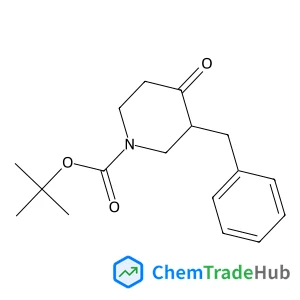
2-Methyl-2-propanyl 3-benzyl-4-oxo-1-piperidinecarboxylate
CAS Number:
193274-82-7
Molecular Formula:
C17H23NO3
Recommended Suppliers




Disclaimer
This page provides academic journal information for reference and research purposes only. We are not affiliated with any journal publishers and do not handle publication submissions. For publication-related inquiries, please contact the respective journal publishers directly.
If you notice any inaccuracies in the information displayed, please contact us at support@chemtradehub.com. We will promptly review and address your concerns.