


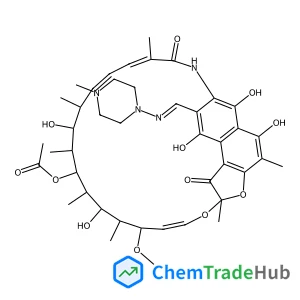
Inside front cover
Literature Information
Publication Date
DOI
10.1039/C8QO90080A
Impact Factor
5.281
Authors
View Original
Abstract
A graphical abstract is available for this content
Recommended Journals

Crystallography Reports

Organic Process Research & Development

Drug Discovery Today

Acta Materialia

Nature Medicine

Russian Journal of General Chemistry

Russian Journal of Organic Chemistry

Current Opinion in Solid State & Materials Science

Journal of Natural Medicines

Russian Journal of Coordination Chemistry
Related Literature
Phase transitions in free water nanoparticles. Theoretical modeling of [H2O]48 and [H2O]118
Aleš Vítek, René Kalus
2015-03-06
Paper
DOI: 10.1039/C4CP04909H
Are intramolecular frustrated Lewis pairs also intramolecular catalysts? A theoretical study on H2 activation
Lei Liu Zeonjuk, Petko St. Petkov, Thomas Heine, Gerd-Volker Röschenthaler, Johannes Eicher, Nina Vankova
2015-03-06
Paper
DOI: 10.1039/C5CP00368G
Adsorption of polyelectrolytes to like-charged substrates induced by multivalent counterions as exemplified by poly(styrene sulfonate) and silica
Plinio Maroni, Michal Borkovec
2015-03-23
Communication
DOI: 10.1039/C5CP00910C
Influence of electric potentials on friction of sliding contacts lubricated by an ionic liquid
Christian Dold, Tobias Amann, Andreas Kailer
2015-03-12
Communication
DOI: 10.1039/C4CP05965D
Energy flow between spectral components in 2D broadband stimulated Raman spectroscopy
G. Fumero, S. Mukamel
2015-03-12
Paper
DOI: 10.1039/C4CP05361C
Magnetic diffusion anomaly at the Néel temperature of pyrrhotite, Fe1−xS
Lucy Rands
2015-02-12
Paper
DOI: 10.1039/C4CP05389C
Electrochemistry at highly oriented pyrolytic graphite (HOPG): lower limit for the kinetics of outer-sphere redox processes and general implications for electron transfer models
Guohui Zhang, Anatolii S. Cuharuc, Aleix G. Güell, Patrick R. Unwin
2015-03-31
Paper
DOI: 10.1039/C5CP00383K
On the relation of energy and electron transfer in multidimensional chromophores based on polychlorinated triphenylmethyl radicals and triarylamines
Markus Steeger, Stefanie Griesbeck, Alexander Schmiedel, Marco Holzapfel, Ivo Krummenacher, Holger Braunschweig, Christoph Lambert
2015-04-14
Paper
DOI: 10.1039/C4CP05929H
Diffusion-influenced reactions in a hollow nano-reactor with a circular hole
2015-02-25
Paper
DOI: 10.1039/C4CP05605A
Tuning the reactivity of a dissociative force field: proton transfer properties of aqueous H3O+ and their dependence on the three-body interaction
Martin J. Wiedemair, Manuel Hitzenberger, Thomas S. Hofer
2015-03-20
Paper
DOI: 10.1039/C4CP05607H
You might also like
Compound Q&A
Is 2-(2-chloroacetamido)-3-phenylpropanoic acid (CAS: 7765-11-9) safe?
2-(2-Chloroacetamido)-3-phenylpropanoic acid (CAS: 7765-11-9) is generally consi...
7765-11-92-(2-chloroacetamido...
Compound Q&A
Is 2-(Benzyloxy)-5-bromobenzoic acid (CAS: 62176-31-2) safe?
2-(Benzyloxy)-5-bromobenzoic acid can be handled safely if appropriate precautio...
62176-31-22-(Benzyloxy)-5-brom...
Compound Q&A
What is (4-Methyl-1,2,5-oxadiazol-3-yl)methanamine hydrochloride (CAS: 1159825-48-5)?
(4-Methyl-1,2,5-oxadiazol-3-yl)methanamine hydrochloride is a chemical compound ...
1159825-48-5(4-Methyl-1,2,5-oxad...
Compound Q&A
What is 2-(5-Hexylthiophen-2-yl)-4,4,5,5-tetramethyl-1,3,2-dioxaborolane (CAS: 917985-54-7)?
2-(5-Hexylthiophen-2-yl)-4,4,5,5-tetramethyl-1,3,2-dioxaborolane (CAS: 917985-54...
917985-54-72-(5-Hexylthiophen-2...
Compound Q&A
Are there alternatives to 4-(8-Methyl-9H-1,3-dioxolo[4,5-h][2,3]benzodiazepin-5-yl)benzenamine (CAS: 102771-26-6) in synthesis?
While 4-(8-Methyl-9H-1,3-dioxolo[4,5-h][2,3]benzodiazepin-5-yl)benzenamine (CAS:...
102771-26-64-(8-Methyl-9H-1,3-d...
Compound Q&A
What is the market or research trend for tert-butyl 3-hydroxy-4,5,7,8-tetrahydro-2H-pyrazolo[3,4-d]azepine-6-carboxylate (CAS: 851376-80-2)?
The market for tert-butyl 3-hydroxy-4,5,7,8-tetrahydro-2H-pyrazolo[3,4-d]azepine...
851376-80-2tert-butyl 3-hydroxy...
Compound Q&A
How should waste containing 3,5-Diamino-1H-pyrazole-4-carbonitrile (CAS: 6844-58-2) be handled?
Waste containing 3,5-Diamino-1H-pyrazole-4-carbonitrile (CAS: 6844-58-2) should ...
6844-58-23,5-Diamino-1H-pyraz...
Compound Q&A
How is (6-Fluoro-3-pyridinyl)boronic acid (CAS: 351019-18-6) typically synthesized?
(6-Fluoro-3-pyridinyl)boronic acid can be synthesized through the reaction of 6-...
351019-18-6(6-Fluoro-3-pyridiny...
Compound Q&A
What industries use Dibenzyl carbonimidoylbiscarbamate (CAS: 10065-79-9)?
Dibenzyl carbonimidoylbiscarbamate (CAS: 10065-79-9) finds applications in vario...
10065-79-9Dibenzyl carbonimido...
Compound Q&A
What is the market or research trend for (beta,beta,2,3,4,5,6-~2~H_7_)Phenylalanine (CAS: 74228-83-4)?
The market for (beta,beta,2,3,4,5,6-~2~H_7_)Phenylalanine (CAS: 74228-83-4) is g...
74228-83-4(beta,beta,2,3,4,5,6...
Source Journal
Organic Chemistry Frontiers

CiteScore:
7.8
Self-citation Rate:
8.7%
Articles per Year:
724
Organic Chemistry Frontiers publishes high-quality research from across organic chemistry. Emphases are placed on studies that make significant contributions to the field of organic chemistry by reporting either new or significantly improved protocols or methodologies. Topics include, but are not limited to the following: Organic synthesis Development of synthetic methodologies Catalysis Natural products Functional organic materials Supramolecular and macromolecular chemistry Physical and computational organic chemistry
Recommended Compounds
![{3-[Bis(4-hydroxyphenyl)methyl]-1-[2-(dimethylamino)ethyl]-1H-indol-2-yl}[4-(2-chlorophenyl)-1-piperazinyl]methanone structure](https://static.chemtradehub.com/structs/170/170365-25-0-e4d7.webp "{3-[Bis(4-hydroxyphenyl)methyl]-1-[2-(dimethylamino)ethyl]-1H-indol-2-yl}[4-(2-chlorophenyl)-1-piperazinyl]methanone structure")
{3-[Bis(4-hydroxyphenyl)methyl]-1-[2-(dimethylamino)ethyl]-1H-indol-2-yl}[4-(2-chlorophenyl)-1-piperazinyl]methanone
CAS Number:
170365-25-0
Molecular Formula:
C36H37ClN4O3
Recommended Suppliers






Disclaimer
This page provides academic journal information for reference and research purposes only. We are not affiliated with any journal publishers and do not handle publication submissions. For publication-related inquiries, please contact the respective journal publishers directly.
If you notice any inaccuracies in the information displayed, please contact us at support@chemtradehub.com. We will promptly review and address your concerns.