












Rate coefficients for the OH + CFH2CH2OH reaction between 238 and 355 K
Literature Information
Publication Date
2005-05-24
DOI
10.1039/B503332B
Impact Factor
3.676
Authors
James B. Burkholder, R. W. Portmann, A. R. Ravishankara
View Original
Abstract
The rate coefficient for the reaction OH + CFH2CH2OH → products (k1) between 238 and 355 K was measured using the pulsed laser photolysis-laser induced fluorescence (PLP-LIF) technique to be (5.15 ± 0.88) × 10−12 exp[−(330 ± 45)/T] cm3 molecule−1 s−1; k1(298 K) = 1.70 × 10⁻¹² cm3 molecule−1 s−1. The quoted uncertainties are 2σ (95% confidence level) and include estimated systematic errors. The present results are discussed in relation to the measured rate coefficients for the reaction of OH with other fluorinated alcohols and those calculated using recently reported structure additivity relationships for fluorinated compounds (K. Tokuhashi, H. Nagai, A. Takahashi, M. Kaise, S. Kondo, A. Sekiya, M. Takahashi, Y. Gotoh and A. Suga, J. Phys. Chem. A, 1999, 103, 2664–2672, ). Infrared absorption cross sections for CFH2CH2OH are reported and they are used to calculate the global warming potentials (GWP) for CFH2CH2OH of ∼8, ∼2, and ∼1, respectively, for the 20, 100 and 500 year horizons. A brief discussion of the atmospheric degradation of CFH2CH2OH is provided. It is concluded that CFH2CH2OH is an acceptable substitute for CFCs in terms of its impact on Earth’s climate and the composition of the atmosphere. The room temperature rate coefficient for the reaction OH + CH3CH2OH → products (k10) was measured to be 3.26 × 10⁻¹² cm3 molecule−1 s−1, in good agreement with recent measurements from this laboratory.
Related Literature
Smartphone-imaged microfluidic biochip for measuring CD64 expression from whole blood
Hatice Ceylan Koydemir, Gregory L. Damhorst, Umer Hassan
2019-05-10
Paper
DOI: 10.1039/C9AN00532C
Visual detection of serum asialohaptoglobin by plasmonic sandwich ELLSA – a new platform for cirrhosis diagnosis
Partha Pratim Bose, Gautam Mandal, Dharmendra Kumar, Ajay Duseja, Bishnu Pada Chatterjee
2015-11-03
Communication
DOI: 10.1039/C5AN02000J
Detection and isolation of circulating exosomes and microvesicles for cancer monitoring and diagnostics using micro-/nano-based devices
Jina Ko, Erica Carpenter
2015-09-08
Critical Review
DOI: 10.1039/C5AN01610J
Combinatorics of proanthocyanidins in wine
Jonathan R. Cave, Andrew L. Waterhouse
2019-06-12
Paper
DOI: 10.1039/C9AN00439D
A smartphone biosensor based on analysing structural colour of porous silicon
Tengfei Cao, Yiliang Zhao, Rabeb Layouni
2019-05-06
Paper
DOI: 10.1039/C9AN00022D
Raman technologies in cancer diagnostics
Lauren A. Austin, Conor L. Evans
2015-10-22
Critical Review
DOI: 10.1039/C5AN01786F
A universal tumor cell isolation method enabled by fibrin-coated microchannels
Jinling Zhang
2015-11-06
Communication
DOI: 10.1039/C5AN01783A
Real-time imaging of cancer cell chemotaxis in paper-based scaffolds
Rachael M. Kenney, Matthew W. Boyce, Andrew S. Truong, C. Robert Bagnell
2015-11-09
Paper
DOI: 10.1039/C5AN01787D
Cancer biomarker discovery using DNA aptamers
Cheng Jin, Jin Li, Xiaobing Zhang
2015-10-30
Critical Review
DOI: 10.1039/C5AN01918D
Subcutaneous and transcutaneous monitoring of murine hindlimb ischemia by in vivo Raman spectroscopy
Rida Al-Rifai, Samar Kheirallah, Nicole Bouland, Gaël Poitevin, Abdelilah Beljebbar
2019-07-03
Paper
DOI: 10.1039/C8AN02449A
You might also like
Compound Q&A
How should waste containing (6-Bromo-2-naphthyl)oxy](dimethyl)(2-methyl-2-propanyl)silane be handled?
Waste containing (6-Bromo-2-naphthyl)oxy](dimethyl)(2-methyl-2-propanyl)silane (...
100751-65-3[(6-Bromo-2-naphthyl...
Compound Q&A
How is 7-Fluoro-4-isoquinolinecarboxylic acid (CAS: 1841081-40-0) typically synthesized?
7-Fluoro-4-isoquinolinecarboxylic acid can be synthesized via a multi-step proce...
1841081-40-07-Fluoro-4-isoquinol...
Compound Q&A
What are the physical and chemical properties of 2,3,5,6-Tetrabromothieno[3,2-b]thiophene (CAS: 124638-53-5)?
2,3,5,6-Tetrabromothieno[3,2-b]thiophene is a crystalline compound with a high m...
124638-53-52,3,5,6-Tetrabromoth...
Compound Q&A
Is 1-[4-(Benzylamino)-7,8-dihydro-5H-pyrano[4,3-d]pyrimidin-2-yl]-2-methyl-1H-indole-4-carboxamide (CAS: 1542705-92-9) safe?
1-[4-(Benzylamino)-7,8-dihydro-5H-pyrano[4,3-d]pyrimidin-2-yl]-2-methyl-1H-indol...
1542705-92-91-[4-(Benzylamino)-7...
Compound Q&A
What is the market or research trend for imidazo[5,1-d]-1,2,3,5-tetrazine-8-carboxylic acid, 3,4-dihydro-3-methyl-4-oxo- (CAS: 113942-30-6)?
The market for imidazo[5,1-d]-1,2,3,5-tetrazine-8-carboxylic acid, 3,4-dihydro-3...
113942-30-6Imidazo[5,1-d]-1,2,3...
Compound Q&A
What is 3-(Triisopropylsilyl)propiolaldehyde (CAS: 163271-80-5)?
3-(Triisopropylsilyl)propiolaldehyde is a synthetic organic compound with the CA...
163271-80-53-(Triisopropylsilyl...
Compound Q&A
What regulatory guidelines apply to 6-Nitro-2H-1,4-benzoxazin-3(4H)-one (CAS: 81721-87-1)?
6-Nitro-2H-1,4-benzoxazin-3(4H)-one (CAS: 81721-87-1) is subject to various regu...
81721-87-16-Nitro-2H-1,4-benzo...
Compound Q&A
How should waste containing (3-Fluorophenyl)(4-{[(2-methyl-2-propanyl)oxy]carbonyl}-1-piperazinyl)acetic acid (CAS: 885272-91-3) be handled?
Waste containing (3-Fluorophenyl)(4-{[(2-methyl-2-propanyl)oxy]carbonyl}-1-piper...
885272-91-3(3-Fluorophenyl)(4-{...
Compound Q&A
What are the physical and chemical properties of N,N'-4,4'-Biphenyldiyldiisonicotinamide (CAS: 55119-40-9)?
N,N'-4,4'-Biphenyldiyldiisonicotinamide is a white crystalline solid with a mole...
55119-40-9N,N'-4,4'-Biphenyldi...
Compound Q&A
What industries use 6-Bromo-8-fluoro-2-quinazolinol (CAS: 1036756-15-6)?
6-Bromo-8-fluoro-2-quinazolinol is primarily used in the pharmaceutical industry...
1036756-15-66-Bromo-8-fluoro-2-q...
Source Journal
Physical Chemistry Chemical Physics

CiteScore:
5.5
Self-citation Rate:
10.3%
Articles per Year:
3036
Physical Chemistry Chemical Physics (PCCP) is an international journal co-owned by 19 physical chemistry and physics societies from around the world. This journal publishes original, cutting-edge research in physical chemistry, chemical physics and biophysical chemistry. To be suitable for publication in PCCP, articles must include significant innovation and/or insight into physical chemistry; this is the most important criterion that reviewers and Editors will judge against when evaluating submissions. The journal has a broad scope and welcomes contributions spanning experiment, theory, computation and data science. Topical coverage includes spectroscopy, dynamics, kinetics, statistical mechanics, thermodynamics, electrochemistry, catalysis, surface science, quantum mechanics, quantum computing and machine learning. Interdisciplinary research areas such as polymers and soft matter, materials, nanoscience, energy, surfaces/interfaces, and biophysical chemistry are welcomed if they demonstrate significant innovation and/or insight into physical chemistry. Joined experimental/theoretical studies are particularly appreciated when complementary and based on up-to-date approaches.
Recommended Compounds
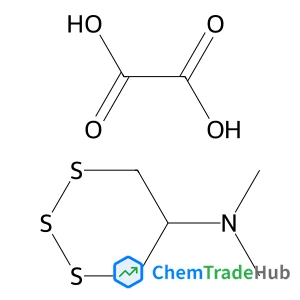
Oxalic acid compound with cyclohexylsulfamothioic O-acid (11)
CAS Number:
31895-22-4
Molecular Formula:
C7H13NO4S3
Recommended Suppliers





Disclaimer
This page provides academic journal information for reference and research purposes only. We are not affiliated with any journal publishers and do not handle publication submissions. For publication-related inquiries, please contact the respective journal publishers directly.
If you notice any inaccuracies in the information displayed, please contact us at support@chemtradehub.com. We will promptly review and address your concerns.