












Semi-syntheses of the 11-hydroxyrotenoids sumatrol and villosinol
Literature Information
Publication Date
2018-08-22
DOI
10.1039/C8OB01919C
Impact Factor
3.876
Authors
David A. Russell, Julien J. Freudenreich, Hannah L. Stewart, Andrew D. Bond, Hannah F. Sore, David R. Spring
View Original
Abstract
We describe semi-syntheses of the 11-hydroxyrotenoids sumatrol (1) and villosinol (2), starting from rotenone (5), using an oxime-directed C11–H functionalisation approach. Thus, rotenone (5) was converted into rotenone oxime (6), which gave dimeric palladacycle 7 following reaction with Na2PdCl4·3H2O. Controlled, divergent, oxidation of palladacycle 7 with either Pb(OAc)4 or K2Cr2O7 afforded the 11-acetoxylated intermediates 9 and 13, respectively, which were transformed into sumatrol (1) and villosinol (2).
Related Literature
Tricarabrols A–C, three anti-inflammatory sesquiterpene lactone trimers featuring a methylene-tethered linkage from Carpesium faberi
Xuelan Wen, Chang-Qiang Ke, Tian Zhang, Ligen Lin, Sheng Yao, Jason D. Goodpaster, Chunping Tang
2020-04-22
Research Article
DOI: 10.1039/D0QO00093K
Investigations into the DNA-binding mode of doxorubicinone
Samuel Steucek Tartakoff, Jennifer M. Finan, Ellis J. Curtis, Haley M. Anchukaitis, Danielle J. Couture, Samantha Glazier
2018-10-31
Paper
DOI: 10.1039/C8OB02344A
Correction: An elusive thermal [2 + 2] cycloaddition driven by visible light photocatalysis: tapping into strain to access C2-symmetric tricyclic rings
Kamaljeet Singh, Winston Trinh, Reza Latifi, Jimmie D. Weaver
2018-10-18
Correction
DOI: 10.1039/C8OB90145G
Diastereoselective synthesis of 3,3-disubstituted 3-nitro-4-chromanone derivatives as potential antitumor agents
Huiqing Chen, Jia Xie, Dong Xing, Jinping Wang, Jie Tang, Zhengfang Yi, Fei Xia, Wen-Wei Qiu, Fan Yang
2019-01-07
Communication
DOI: 10.1039/C8OB02761G
Straight access to highly fluorescent angular indolocarbazoles via merging Au- and Mo-catalysis
Fernando Martínez-Lara, Anisley Suárez, Samuel Suárez-Pantiga, M. José Tapia, Roberto Sanz
2020-06-10
Research Article
DOI: 10.1039/D0QO00405G
Chelation-assisted transition metal-catalysed C–H chalcogenylations
Wenbo Ma, Nikolaos Kaplaneris, Xinyue Fang, Linghui Gu, Ruhuai Mei, Lutz Ackermann
2020-03-11
Review Article
DOI: 10.1039/C9QO01497G
Iron catalysed selective reduction of esters to alcohols
Sem Raj Tamang, Anthony F. Cozzolino, Michael Findlater
2018-12-18
Communication
DOI: 10.1039/C8OB02661K
Expeditious access of chromone analogues via a Michael addition-driven multicomponent reaction
Liu-Jun He, Ya-Fei Luo, Dian-Yong Tang, Wei Yan, Hui-Kuan Lin, Hong-yu Li, Zhong-Zhu Chen, Zhi-Gang Xu
2020-03-06
Research Article
DOI: 10.1039/D0QO00145G
You might also like
Compound Q&A
What industries use (1R,3S)-1,3-Cyclopentanediol (CAS: 16326-97-9)?
(1R,3S)-1,3-Cyclopentanediol finds applications in various industries. In the ph...
16326-97-9(1R,3S)-1,3-Cyclopen...
Compound Q&A
What precautions should be taken when handling N'-[4-(Dimethylamino)phenyl]-N,N-dimethyl-1,4-benzenediamine (CAS: 637-31-0)?
When handling N'-[4-(Dimethylamino)phenyl]-N,N-dimethyl-1,4-benzenediamine, it i...
637-31-0N'-[4-(Dimethylamino...
Compound Q&A
Are there alternatives to 5-(2,4-Difluorophenyl)-2-methoxypyrimidine (CAS: 1352318-16-1) in synthesis?
There are several alternatives to 5-(2,4-Difluorophenyl)-2-methoxypyrimidine in ...
1352318-16-15-(2,4-Difluoropheny...
Compound Q&A
What regulatory guidelines apply to 1-(3-Methoxyphenoxy)propan-2-ol (CAS: 382141-68-6)?
1-(3-Methoxyphenoxy)propan-2-ol (CAS: 382141-68-6) must comply with the Globally...
382141-68-61-(3-Methoxyphenoxy)...
Compound Q&A
Is Tetrodotoxin Citrate (CAS: 18660-81-6) safe?
Tetrodotoxin Citrate is extremely dangerous and should be handled with extreme c...
18660-81-6Tetrodotoxin Citrate
Compound Q&A
What are the main uses of 2-Methyl-2-propanyl [(1R,3S)-3-hydroxycyclopentyl]carbamate (CAS: 225641-84-9)?
2-Methyl-2-propanyl [(1R,3S)-3-hydroxycyclopentyl]carbamate (CAS: 225641-84-9) i...
225641-84-92-Methyl-2-propanyl ...
Compound Q&A
How should waste containing 4-(2-Hydroxyhexafluoroisopropyl)Benzoic Acid (CAS: 16261-80-6) be handled?
Waste containing 4-(2-Hydroxyhexafluoroisopropyl)Benzoic Acid (CAS: 16261-80-6) ...
16261-80-64-(2-Hydroxyhexafluo...
Compound Q&A
How is 2-Methyl-2-proanyl {(2S)-1-[(benzyloxy)amino]-3-hydroxy-3-methyl-1-oxo-2-butanyl}carbamate (CAS: 102507-19-7) typically synthesized?
2-Methyl-2-proanyl {(2S)-1-[(benzyloxy)amino]-3-hydroxy-3-methyl-1-oxo-2-butanyl...
102507-19-72-Methyl-2-propanyl ...
Compound Q&A
What is Benzeneethanamine, α-ethyl-, hydrochloride (1:1) (CAS: 20735-15-3)?
Benzeneethanamine, α-ethyl-, hydrochloride (1:1) is an organic compound with the...
20735-15-3Benzeneethanamine, α...
Compound Q&A
Are there alternatives to 3-{(E)-[4-(Dimethylamino)phenyl]diazenyl}benzoic acid (CAS: 20691-84-3) in synthesis?
In the synthesis of compounds similar to 3-{(E)-[4-(Dimethylamino)phenyl]diazeny...
20691-84-33-{(E)-[4-(Dimethyla...
Source Journal
Organic & Biomolecular Chemistry

CiteScore:
3.4
Self-citation Rate:
10.3%
Articles per Year:
1041
Organic & Biomolecular Chemistry (OBC) publishes original and high impact research and reviews in organic chemistry. We welcome research that shows new or significantly improved protocols or methodologies in total synthesis, synthetic methodology or physical and theoretical organic chemistry as well as research that shows a significant advance in the organic chemistry or molecular design aspects of chemical biology, catalysis, supramolecular and macromolecular chemistry, theoretical chemistry, mechanism-oriented physical organic chemistry, medicinal chemistry or natural products. Articles published in the journal should report new work which makes a highly-significant impact in the field. Routine and incremental work is generally not suitable for publication in the journal. More details about key areas of our scope are below. In all cases authors should include in their article clear rationale for why their research has been carried out.
Recommended Compounds
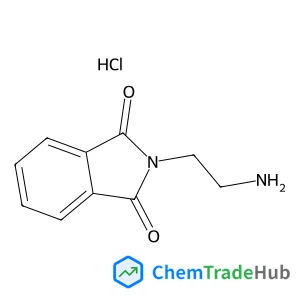
2-(2-Aminoethyl)-1H-isoindole-1,3(2H)-dione hydrochloride (1:1)
CAS Number:
30250-67-0
Molecular Formula:
C10H11ClN2O2
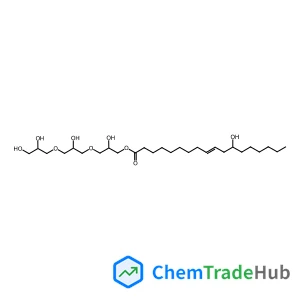
![N,N'-1,2-Ethanediylbis[2-(vinylsulfonyl)acetamide] structure](https://static.chemtradehub.com/structs/667/66710-66-5-b556.webp "N,N'-1,2-Ethanediylbis[2-(vinylsulfonyl)acetamide] structure")
N,N'-1,2-Ethanediylbis[2-(vinylsulfonyl)acetamide]
CAS Number:
66710-66-5
Molecular Formula:
C10H16N2O6S2
Recommended Suppliers


Disclaimer
This page provides academic journal information for reference and research purposes only. We are not affiliated with any journal publishers and do not handle publication submissions. For publication-related inquiries, please contact the respective journal publishers directly.
If you notice any inaccuracies in the information displayed, please contact us at support@chemtradehub.com. We will promptly review and address your concerns.