












Tricarabrols A–C, three anti-inflammatory sesquiterpene lactone trimers featuring a methylene-tethered linkage from Carpesium faberi
Literature Information
Publication Date
2020-04-22
DOI
10.1039/D0QO00093K
Impact Factor
5.281
Authors
Xuelan Wen, Chang-Qiang Ke, Tian Zhang, Ligen Lin, Sheng Yao, Jason D. Goodpaster, Chunping Tang
View Original
Abstract
Tricarabrols A–C (1–3), three sesquiterpene lactone trimers, were identified from Carpesium faberi. Tricarabrols A and B are a pair of stereoisomers possessing a novel C44 skeleton featuring a methylene-tethered linkage among the sesquiterpene scaffolds. Besides the unique linkage of the cyclopentane ring, tricarabrol C also manifests a methylene bridge. Their full structures were established on the basis of spectroscopic data and further confirmed by computational methods. The biosynthetic pathways involving the Alder-ene reaction, [3 + 2] cycloaddition, and Michael addition reaction were proposed. Tricarabrols A and B (1–2) significantly inhibited the nitric oxide production on lipopolysaccaride-stimulated RAW264.7 macrophages with IC50 values of 2.90 and 4.52 μM, respectively, compared with the positive control indomethacin. Further studies indicated that the anti-inflammatory effect of tricarabrol A was mediated through inhibiting the phosphorylation and nuclear translocation of nuclear factor-κB.
Related Literature
Identification of neural stem and progenitor cell subpopulations using DC insulator-based dielectrophoresis
Yameng Liu, Estelle Kim, Clarissa Ro, Thomas J. Taylor, Mark A. Hayes
2019-06-03
Paper
DOI: 10.1039/C9AN00456D
A facile electrochemical intercalation and microwave assisted exfoliation methodology applied to screen-printed electrochemical-based sensing platforms to impart improved electroanalytical outputs
Christopher W. Foster, Samuel. J. Rowley-Neale, Héctor Fernández, Craig E. Banks
2018-05-18
Paper
DOI: 10.1039/C7AN01982C
Smartphone-based rapid quantification of viable bacteria by single-cell microdroplet turbidity imaging
Yufei Shan
2018-04-25
Paper
DOI: 10.1039/C8AN00456K
Label-free tracking of nanosized graphene oxide cellular uptake by confocal Raman microscopy
Michal Bodík, Nikola Bugárová, Martina Labudová, Miriam Zaťovičová, Tibor Hianik, Mária Omastová, Matej Jergel, Silvia Pastoreková
2018-06-12
Paper
DOI: 10.1039/C8AN00225H
You might also like
Compound Q&A
What industries use (1R,3S)-1,3-Cyclopentanediol (CAS: 16326-97-9)?
(1R,3S)-1,3-Cyclopentanediol finds applications in various industries. In the ph...
16326-97-9(1R,3S)-1,3-Cyclopen...
Compound Q&A
What precautions should be taken when handling N'-[4-(Dimethylamino)phenyl]-N,N-dimethyl-1,4-benzenediamine (CAS: 637-31-0)?
When handling N'-[4-(Dimethylamino)phenyl]-N,N-dimethyl-1,4-benzenediamine, it i...
637-31-0N'-[4-(Dimethylamino...
Compound Q&A
Are there alternatives to 5-(2,4-Difluorophenyl)-2-methoxypyrimidine (CAS: 1352318-16-1) in synthesis?
There are several alternatives to 5-(2,4-Difluorophenyl)-2-methoxypyrimidine in ...
1352318-16-15-(2,4-Difluoropheny...
Compound Q&A
What regulatory guidelines apply to 1-(3-Methoxyphenoxy)propan-2-ol (CAS: 382141-68-6)?
1-(3-Methoxyphenoxy)propan-2-ol (CAS: 382141-68-6) must comply with the Globally...
382141-68-61-(3-Methoxyphenoxy)...
Compound Q&A
Is Tetrodotoxin Citrate (CAS: 18660-81-6) safe?
Tetrodotoxin Citrate is extremely dangerous and should be handled with extreme c...
18660-81-6Tetrodotoxin Citrate
Compound Q&A
What are the main uses of 2-Methyl-2-propanyl [(1R,3S)-3-hydroxycyclopentyl]carbamate (CAS: 225641-84-9)?
2-Methyl-2-propanyl [(1R,3S)-3-hydroxycyclopentyl]carbamate (CAS: 225641-84-9) i...
225641-84-92-Methyl-2-propanyl ...
Compound Q&A
How should waste containing 4-(2-Hydroxyhexafluoroisopropyl)Benzoic Acid (CAS: 16261-80-6) be handled?
Waste containing 4-(2-Hydroxyhexafluoroisopropyl)Benzoic Acid (CAS: 16261-80-6) ...
16261-80-64-(2-Hydroxyhexafluo...
Compound Q&A
How is 2-Methyl-2-proanyl {(2S)-1-[(benzyloxy)amino]-3-hydroxy-3-methyl-1-oxo-2-butanyl}carbamate (CAS: 102507-19-7) typically synthesized?
2-Methyl-2-proanyl {(2S)-1-[(benzyloxy)amino]-3-hydroxy-3-methyl-1-oxo-2-butanyl...
102507-19-72-Methyl-2-propanyl ...
Compound Q&A
What is Benzeneethanamine, α-ethyl-, hydrochloride (1:1) (CAS: 20735-15-3)?
Benzeneethanamine, α-ethyl-, hydrochloride (1:1) is an organic compound with the...
20735-15-3Benzeneethanamine, α...
Compound Q&A
Are there alternatives to 3-{(E)-[4-(Dimethylamino)phenyl]diazenyl}benzoic acid (CAS: 20691-84-3) in synthesis?
In the synthesis of compounds similar to 3-{(E)-[4-(Dimethylamino)phenyl]diazeny...
20691-84-33-{(E)-[4-(Dimethyla...
Source Journal
Organic Chemistry Frontiers

CiteScore:
7.8
Self-citation Rate:
8.7%
Articles per Year:
724
Organic Chemistry Frontiers publishes high-quality research from across organic chemistry. Emphases are placed on studies that make significant contributions to the field of organic chemistry by reporting either new or significantly improved protocols or methodologies. Topics include, but are not limited to the following: Organic synthesis Development of synthetic methodologies Catalysis Natural products Functional organic materials Supramolecular and macromolecular chemistry Physical and computational organic chemistry
Recommended Compounds
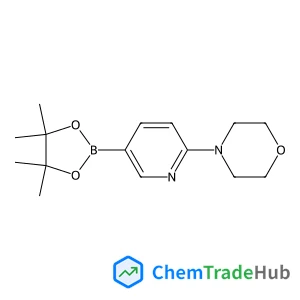
4-(5-(4,4,5,5-tetramethyl-1,3,2-dioxaborolan-2-yl)pyridin-2-yl)morpholine
CAS Number:
485799-04-0
Molecular Formula:
C15H23BN2O3
Recommended Suppliers




Disclaimer
This page provides academic journal information for reference and research purposes only. We are not affiliated with any journal publishers and do not handle publication submissions. For publication-related inquiries, please contact the respective journal publishers directly.
If you notice any inaccuracies in the information displayed, please contact us at support@chemtradehub.com. We will promptly review and address your concerns.