


Purine-substituted imidazolium mesomeric betaines and their tautomeric N-heterocyclic carbenes. Formation of a cyclic borane adduct
Literature Information
Publication Date
2018-09-05
DOI
10.1039/C8OB01916A
Impact Factor
3.876
Authors
Jiaxi Zhang, Eike G. Hübner, Jan C. Namyslo, Martin Nieger, Andreas Schmidt
View Original
Abstract
6-Chloropurine and 2,6-dichloropurine were reacted with N1-substituted imidazoles to give purin-6-yl substituted imidazolium salts, respectively. Deprotonation of the 1-methylimidazolium derivative resulted in the formation of the corresponding stable conjugated mesomeric betaine, whereas the 1-phenyl,- 1-vinyl- and 1-(2-hydroxyethyl) derivatives proved to be unstable. In situ generation of the mesomeric betaines by caesium carbonate in the presence of sulfur and selenium, however, gave the thiones and the selenones of the tautomeric purine-substituted imidazol-2-ylidene, respectively. Its anionic N-heterocyclic carbene was formally trapped by reaction with triethylborane at high temperatures as a cyclic boron adduct which is the first representative of a new heterocyclic ring system. DFT calculations gained insight into the electronic properties of the N-heterocyclic carbenes substituted by π-electron donators. Results of a single crystal X-ray analysis of the boron adduct are presented.
Recommended Journals

Acta Metallurgica Sinica-English Letters

Journal of Asian Natural Products Research

Bioorganic & Medicinal Chemistry

Biocatalysis and Biotransformation

Journal of Chemical Sciences

Critical Reviews in Solid State and Materials Sciences

Atomization and Sprays

Cellulose

Journal of the Indian Institute of Science

Colloid Journal
Related Literature
Phase-transfer dynamic combinatorial chemistry
Ruth Pérez-Fernández, Michael Pittelkow, Ana M. Belenguer, Jeremy K. M. Sanders
2008-01-03
Communication
DOI: 10.1039/B718075F
Single molecule conformational analysis of the biologically relevant DNA G-quadruplex in the promoter of the proto-oncogene c-MYC
Pravin S. Shirude, Liming Ying, Shankar Balasubramanian
2008-03-20
Communication
DOI: 10.1039/B801465E
Layer-by-layer assembly of single-charged ions with a rigid polyampholyte
Suobo Zhang, Zhaohui Su
2008-03-14
Communication
DOI: 10.1039/B801784K
Chiral dinuclear vanadium(v) catalysts for oxidative coupling of 2-naphthols‡
Shinobu Takizawa, Tomomi Katayama, Chiaki Kameyama, Kiyotaka Onitsuka, Takeyuki Suzuki, Takeshi Yanagida, Tomoji Kawai, Hiroaki Sasai
2008-02-14
Communication
DOI: 10.1039/B717068H
Sulfate ion encapsulation in caged supramolecular structures assembled by second-sphere coordination
Jianjun Liang, Jin Yang, Chuandong Jia, Hongrui Zhang, Ning Tang, Christoph Janiak
2008-02-11
Communication
DOI: 10.1039/B719019K
A homospin iron(ii) single chain magnet‡
Szymon W. Przybylak, Floriana Tuna, Simon J. Teat, Richard E. P. Winpenny
2008-02-22
Communication
DOI: 10.1039/B717277J
Macromolecular complexation of poly(methylenephosphine) to gold(i): a facile route to highly metallated polymers
Bronwyn H. Gillon, Brian O. Patrick, Derek P. Gates
2008-03-28
Communication
DOI: 10.1039/B719199E
A new enantiopure unsaturated dicarboxylate as a 4-connected unit in a flexible homochiral PtS-type framework
Jian Zhang, Xianhui Bu
2008-02-11
Communication
DOI: 10.1039/B719368H
Construction of aryl-substituted triquinanes through the interrupted Nazarov reaction
Curtis J. Rieder, Ryan J. Fradette, F. G. West
2008-02-25
Communication
DOI: 10.1039/B800800K
You might also like
Compound Q&A
What is the market or research trend for N-(4-Methoxybenzyl)-2-pyridinamine (CAS: 52818-63-0)?
N-(4-Methoxybenzyl)-2-pyridinamine (CAS: 52818-63-0) is increasingly being used ...
52818-63-0N-(4-Methoxybenzyl)-...
Compound Q&A
What precautions should be taken when handling Ethyl 4-(2-chlorophenyl)-1,3-thiazole-2-carboxylate (CAS: 1050507-06-6)?
When handling Ethyl 4-(2-chlorophenyl)-1,3-thiazole-2-carboxylate, appropriate p...
1050507-06-6Ethyl 4-(2-chlorophe...
Compound Q&A
What regulatory guidelines apply to diethyldiselane (CAS: 628-39-7)?
Diethyldiselane (CAS: 628-39-7) is classified under the Globally Harmonized Syst...
628-39-7Diethyldiselane
Compound Q&A
What is the market or research trend for oxocopper (CAS: 12053-18-8)?
The market for oxocopper (CAS: 12053-18-8) is primarily driven by its use in cat...
12053-18-8oxocopper; oxo-(oxoc...
Compound Q&A
What is the market or research trend for 5-{[(2-Methyl-2-propanyl)oxy]carbonyl}-5-azaspiro[2.4]heptane-7-carboxylic acid?
The market for 5-{[(2-Methyl-2-propanyl)oxy]carbonyl}-5-azaspiro[2.4]heptane-7-c...
1268519-54-55-{[(2-Methyl-2-prop...
Compound Q&A
What is 2-(1-Pyrrolidinyl)-4-pyridinamine (CAS: 35981-63-6)?
2-(1-Pyrrolidinyl)-4-pyridinamine is a chemical compound with the CAS number 359...
35981-63-62-(1-Pyrrolidinyl)-4...
Compound Q&A
What are the physical and chemical properties of 2-(3-Pyridinyl)-1-azabicyclo[2.2.2]octane (CAS: 91556-75-1)?
2-(3-Pyridinyl)-1-azabicyclo[2.2.2]octane (CAS: 91556-75-1) is a crystalline sol...
91556-75-12-(3-Pyridinyl)-1-az...
Compound Q&A
How is (S)-Alpha-allyl-proline hydrochloride (CAS: 129704-91-2) typically synthesized?
(S)-Alpha-allyl-proline hydrochloride is usually synthesized via a Wittig reacti...
129704-91-2(S)-Alpha-allyl-prol...
Compound Q&A
What is 3-Methyl-1,2-oxazole-5-carboxylic acid (CAS: 4857-42-5)?
3-Methyl-1,2-oxazole-5-carboxylic acid (CAS: 4857-42-5) is an organic compound w...
4857-42-53-Methyl-1,2-oxazole...
Compound Q&A
How is Lys-SMCC-DM1 (CAS: 1281816-04-3) typically synthesized?
Lys-SMCC-DM1 is synthesized via a multi-step process involving the coupling of S...
1281816-04-3Lys-SMCC-DM1
Source Journal
Organic & Biomolecular Chemistry

CiteScore:
3.4
Self-citation Rate:
10.3%
Articles per Year:
1041
Organic & Biomolecular Chemistry (OBC) publishes original and high impact research and reviews in organic chemistry. We welcome research that shows new or significantly improved protocols or methodologies in total synthesis, synthetic methodology or physical and theoretical organic chemistry as well as research that shows a significant advance in the organic chemistry or molecular design aspects of chemical biology, catalysis, supramolecular and macromolecular chemistry, theoretical chemistry, mechanism-oriented physical organic chemistry, medicinal chemistry or natural products. Articles published in the journal should report new work which makes a highly-significant impact in the field. Routine and incremental work is generally not suitable for publication in the journal. More details about key areas of our scope are below. In all cases authors should include in their article clear rationale for why their research has been carried out.
Recommended Compounds
![(2R,6S)-6-[(Benzyloxy)methyl]-4-{[(2-methyl-2-propanyl)oxy]carbonyl}-2-morpholinecarboxylic acid structure](https://static.chemtradehub.com/structs/109/1093085-91-6-3382.webp "(2R,6S)-6-[(Benzyloxy)methyl]-4-{[(2-methyl-2-propanyl)oxy]carbonyl}-2-morpholinecarboxylic acid structure")
(2R,6S)-6-[(Benzyloxy)methyl]-4-{[(2-methyl-2-propanyl)oxy]carbonyl}-2-morpholinecarboxylic acid
CAS Number:
1093085-91-6
Molecular Formula:
C18H25NO6
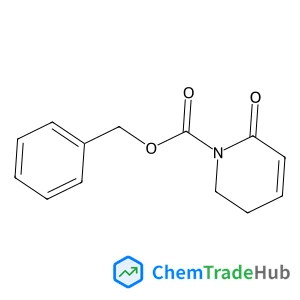
Benzyl 6-oxo-3,6-dihydro-1(2H)-pyridinecarboxylate
CAS Number:
725746-35-0
Molecular Formula:
C13H13NO3
Recommended Suppliers





Disclaimer
This page provides academic journal information for reference and research purposes only. We are not affiliated with any journal publishers and do not handle publication submissions. For publication-related inquiries, please contact the respective journal publishers directly.
If you notice any inaccuracies in the information displayed, please contact us at support@chemtradehub.com. We will promptly review and address your concerns.