












Molecularly imprinted artificial esterases with highly specific active sites and precisely installed catalytic groups
Literature Information
Publication Date
2018-07-24
DOI
10.1039/C8OB01584H
Impact Factor
3.876
Authors
Lan Hu, Yan Zhao
View Original
Abstract
A difficult challenge in synthetic enzymes is the creation of substrate-selective active sites with accurately positioned catalytic groups. Covalent molecular imprinting in cross-linked micelles afforded such active sites in protein-sized, water-soluble nanoparticle catalysts. Our method allowed a systematic tuning of the distance of the catalytic group to the bound substrate. The catalysts displayed enzyme-like kinetics and easily distinguished substrates with subtle structural differences.
Related Literature
Interface hybridization and spin filter effect in metal-free phthalocyanine spin valves
Xiannian Yao, Lianqun Zhou, Fubo Tian
2020-04-28
Paper
DOI: 10.1039/D0CP00651C
Excited-state proton transfer in protonated adrenaline revealed by cryogenic UV photodissociation spectroscopy
Jordan Dezalay, Michel Broquier, Satchin Soorkia
2020-04-28
Paper
DOI: 10.1039/D0CP01127D
Charge fluctuations from molecular simulations in the constant-potential ensemble
Laura Scalfi, Sara Bonella, Paul A. Madden
2019-12-13
Paper
DOI: 10.1039/C9CP06285H
Analytical magnetostatic model for 2D arrays of interacting magnetic nanowires and nanotubes
Yenni Velázquez-Galván, Armando Encinas
2020-06-02
Paper
DOI: 10.1039/D0CP00808G
Surface-orientation- and ligand-dependent quenching of the spin magnetic moment of Co porphyrins adsorbed on Cu substrates
Md. Ehesan Ali, Matthias Bernien, Nino Hatter, Fabian Nickel, Lalminthang Kipgen, Christian F. Hermanns, Timo Bißwanger, Philip Loche, Benjamin W. Heinrich, Katharina J. Franke, Peter M. Oppeneer, Wolfgang Kuch
2020-05-18
Paper
DOI: 10.1039/D0CP00854K
Fragment-based quantum mechanical approach to biomolecules, molecular clusters, molecular crystals and liquids
2020-05-11
Perspective
DOI: 10.1039/D0CP01095B
Benchmark and performance of long-range corrected time-dependent density functional tight binding (LC-TD-DFTB) on rhodopsins and light-harvesting complexes
Beatrix M. Bold, Monja Sokolov, Sayan Maity, Marius Wanko, Philipp M. Dohmen, Ulrich Kleinekathöfer, Sebastian Höfener
2020-01-13
Paper
DOI: 10.1039/C9CP05753F
You might also like
Compound Q&A
What are the main uses of 4-Nitrophenyl phosphate disodium salt hexahydrate (CAS: 333338-18-4)?
4-Nitrophenyl phosphate disodium salt hexahydrate is primarily used as a substra...
333338-18-44-Nitrophenyl phosph...
Compound Q&A
What are the main uses of 2-(Trifluoromethyl)-1,3-oxazole-4-carboxylic Acid (CAS: 1060816-01-4)?
2-(Trifluoromethyl)-1,3-oxazole-4-carboxylic Acid (CAS: 1060816-01-4) is widely ...
1060816-01-42-(Trifluoromethyl)-...
Compound Q&A
How should 2-Fluoro-4-biphenylcarboxylic acid (CAS: 137045-30-8) be stored?
2-Fluoro-4-biphenylcarboxylic acid should be stored in a cool, dry place at room...
137045-30-82-Fluoro-4-biphenylc...
Compound Q&A
What industries use Prednisolone-21-Carboxylic Acid (CAS: 61549-70-0)?
Prednisolone-21-Carboxylic Acid is primarily used in the pharmaceutical industry...
61549-70-0Prednisolone-21-Carb...
Compound Q&A
How should 4-(Hydrazinomethyl)-1,2,3-benzenetriol (CAS: 3614-72-0) be stored?
4-(Hydrazinomethyl)-1,2,3-benzenetriol (CAS: 3614-72-0) should be stored in a co...
3614-72-04-(Hydrazinomethyl)-...
Compound Q&A
What industries use 4-Amino-1-methyl-1H-pyrazole-5-carboxylic acid hydrochloride (CAS: 92534-70-8)?
4-Amino-1-methyl-1H-pyrazole-5-carboxylic acid hydrochloride (CAS: 92534-70-8) i...
92534-70-84-Amino-1-methyl-1H-...
Compound Q&A
What regulatory guidelines apply to dehydropachymic acid (CAS: 77012-31-8)?
Dehydropachymic acid (CAS: 77012-31-8) is regulated by various agencies. It fall...
77012-31-8Dehydropachymic acid
Compound Q&A
What is the market or research trend for 6-[(2,2-Dimethylpropanoyl)amino]nicotinic acid (CAS: 898561-66-5)?
The market and research trends for 6-[(2,2-Dimethylpropanoyl)amino]nicotinic aci...
898561-66-56-[(2,2-Dimethylprop...
Compound Q&A
How should 1,10-Phenanthroline-2,9-dicarbaldehyde (CAS: 57709-62-3) be stored?
1,10-Phenanthroline-2,9-dicarbaldehyde should be stored in a cool, dry place awa...
57709-62-31,10-Phenanthroline-...
Compound Q&A
How is 5-Carbamoyl-11-oxo-10,11-dihydro-5H-dibenzo[b,f]azepin-10-yl acetate (CAS: 113952-21-9) typically synthesized?
5-Carbamoyl-11-oxo-10,11-dihydro-5H-dibenzo[b,f]azepin-10-yl acetate can be synt...
113952-21-95-Carbamoyl-11-oxo-1...
Source Journal
Organic & Biomolecular Chemistry

CiteScore:
3.4
Self-citation Rate:
10.3%
Articles per Year:
1041
Organic & Biomolecular Chemistry (OBC) publishes original and high impact research and reviews in organic chemistry. We welcome research that shows new or significantly improved protocols or methodologies in total synthesis, synthetic methodology or physical and theoretical organic chemistry as well as research that shows a significant advance in the organic chemistry or molecular design aspects of chemical biology, catalysis, supramolecular and macromolecular chemistry, theoretical chemistry, mechanism-oriented physical organic chemistry, medicinal chemistry or natural products. Articles published in the journal should report new work which makes a highly-significant impact in the field. Routine and incremental work is generally not suitable for publication in the journal. More details about key areas of our scope are below. In all cases authors should include in their article clear rationale for why their research has been carried out.
Recommended Compounds
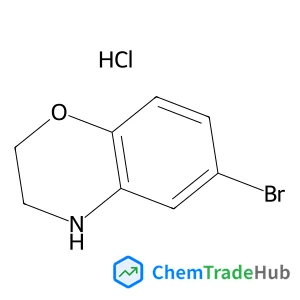
6-Bromo-3,4-dihydro-2H-1,4-benzoxazine hydrochloride (1:1)
CAS Number:
1260803-10-8
Molecular Formula:
C8H9BrClNO

Recommended Suppliers





Disclaimer
This page provides academic journal information for reference and research purposes only. We are not affiliated with any journal publishers and do not handle publication submissions. For publication-related inquiries, please contact the respective journal publishers directly.
If you notice any inaccuracies in the information displayed, please contact us at support@chemtradehub.com. We will promptly review and address your concerns.