












![(2E)-3-(3-Chlorophenyl)-N-{2-[4-(methylsulfonyl)-1-piperazinyl]-2-oxoethyl}acrylamide structure](https://static.chemtradehub.com/structs/250/2505001-54-5-c1e9.webp "(2E)-3-(3-Chlorophenyl)-N-{2-[4-(methylsulfonyl)-1-piperazinyl]-2-oxoethyl}acrylamide structure")
(2E)-3-(3-Chlorophenyl)-N-{2-[4-(methylsulfonyl)-1-piperazinyl]-2-oxoethyl}acrylamide
CAS Number:
2505001-54-5
Molecular Formula:
C16H20ClN3O4S
Laura Scalfi, Sara Bonella, Paul A. Madden
We revisit the statistical mechanics of charge fluctuations in capacitors. In constant-potential classical molecular simulations, the atomic charges of electrode atoms are treated as additional degrees of freedom which evolve in time so as to satisfy the constraint of fixed electrostatic potential for each configuration of the electrolyte. The present work clarifies the role of the overall electroneutrality constraint, as well as the link between the averages computed within the Born–Oppenheimer approximation and that of the full constant-potential ensemble. This allows us in particular to derive a complete fluctuation–dissipation relation for the differential capacitance, that includes a contribution from the charge fluctuations (around the charges satisfying the constant-potential and electroneutrality constraints) also present in the absence of an electrolyte. We provide a simple expression for this contribution from the elements of the inverse of the matrix defining the quadratic form of the fluctuating charges in the energy. We then illustrate numerically the validity of our results, and recover the expected continuum result for an empty capacitor with structureless electrodes at large inter-electrode distances. By considering a variety of liquids between graphite electrodes, we confirm that this contribution to the total differential capacitance is small compared to that induced by the thermal fluctuations of the electrolyte.
Francesco Basile, Patricia Benito, Pascal Del Gallo, Giuseppe Fornasari, Daniel Gary, Valentina Rosetti, Erika Scavetta, Domenica Tonelli, Angelo Vaccari
DOI: 10.1039/B801645C
Dattatraya H. Dethe, David Y.-K. Chen
DOI: 10.1039/B805069B
Alois Fürstner, Jens Ackerstaff
DOI: 10.1039/B805295F
Jong Hyeok Park, Tae-Woo Lee, Man Gu Kang
DOI: 10.1039/B800660A
Brenda Long, Tan Man Wu, Francesco Stellacci
DOI: 10.1039/B719380G
Fang Niu, Chang-Chang Liu, Zhi-Min Cui, Jin Zhai, Lei Jiang, Wei-Guo Song
DOI: 10.1039/B801361F
Jiangying Qu, Zongbin Zhao, Jieshan Qiu, Yury Gogotsi
DOI: 10.1039/B805622F
Ian Paterson, Edward A. Anderson, Stephen M. Dalby, Jong Ho Lim, Philip Maltas, Christian Moessner
DOI: 10.1039/B612697A
Juta Kobayashi, Yuichiro Mori, Shū Kobayashi
DOI: 10.1039/B609335C
4-Nitrophenyl phosphate disodium salt hexahydrate is primarily used as a substra...
2-(Trifluoromethyl)-1,3-oxazole-4-carboxylic Acid (CAS: 1060816-01-4) is widely ...
2-Fluoro-4-biphenylcarboxylic acid should be stored in a cool, dry place at room...
Prednisolone-21-Carboxylic Acid is primarily used in the pharmaceutical industry...
4-(Hydrazinomethyl)-1,2,3-benzenetriol (CAS: 3614-72-0) should be stored in a co...
4-Amino-1-methyl-1H-pyrazole-5-carboxylic acid hydrochloride (CAS: 92534-70-8) i...
Dehydropachymic acid (CAS: 77012-31-8) is regulated by various agencies. It fall...
The market and research trends for 6-[(2,2-Dimethylpropanoyl)amino]nicotinic aci...
1,10-Phenanthroline-2,9-dicarbaldehyde should be stored in a cool, dry place awa...
5-Carbamoyl-11-oxo-10,11-dihydro-5H-dibenzo[b,f]azepin-10-yl acetate can be synt...

Physical Chemistry Chemical Physics (PCCP) is an international journal co-owned by 19 physical chemistry and physics societies from around the world. This journal publishes original, cutting-edge research in physical chemistry, chemical physics and biophysical chemistry. To be suitable for publication in PCCP, articles must include significant innovation and/or insight into physical chemistry; this is the most important criterion that reviewers and Editors will judge against when evaluating submissions. The journal has a broad scope and welcomes contributions spanning experiment, theory, computation and data science. Topical coverage includes spectroscopy, dynamics, kinetics, statistical mechanics, thermodynamics, electrochemistry, catalysis, surface science, quantum mechanics, quantum computing and machine learning. Interdisciplinary research areas such as polymers and soft matter, materials, nanoscience, energy, surfaces/interfaces, and biophysical chemistry are welcomed if they demonstrate significant innovation and/or insight into physical chemistry. Joined experimental/theoretical studies are particularly appreciated when complementary and based on up-to-date approaches.
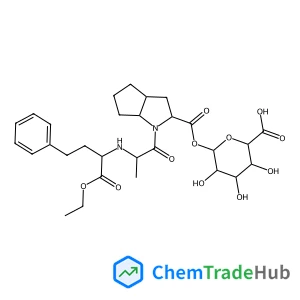
phosphoryl}methyl 4-methylbenzenesulfonate structure](https://static.chemtradehub.com/structs/864/864068-45-1-ba7c.webp "{[3-(Hexadecyloxy)propoxy](hydroxy)phosphoryl}methyl 4-methylbenzenesulfonate structure")
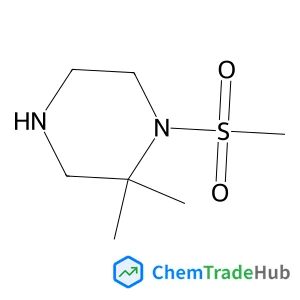
![S-[2,3-Bis(palmitoyloxy)propyl]-N-[(9H-fluoren-9-ylmethoxy)(hydroxy)methylene]cysteine structure](https://static.chemtradehub.com/structs/210/210532-98-2-f6a7.webp "S-[2,3-Bis(palmitoyloxy)propyl]-N-[(9H-fluoren-9-ylmethoxy)(hydroxy)methylene]cysteine structure")




