












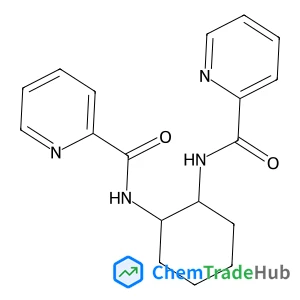
N,N'-(1R,2R)-1,2-Cyclohexanediyldi(2-pyridinecarboxamide)
CAS Number:
218290-24-5
Molecular Formula:
C18H20N4O2
Aleks Reinhardt
Predicting phase stabilities of crystal polymorphs is central to computational materials science and chemistry. Such predictions are challenging because they first require searching for potential energy minima and then performing arduous free-energy calculations to account for entropic effects at finite temperatures. Here, we develop a framework that facilitates such predictions by exploiting all the information obtained from random searches of crystal structures. This framework combines automated clustering, classification and visualisation of crystal structures with machine-learning estimation of their enthalpy and entropy. We demonstrate the framework on the technologically important system of TiO2, which has many polymorphs, without relying on prior knowledge of known phases. We find a number of new phases and predict the phase diagram and metastabilities of crystal polymorphs at 1600 K, benchmarking the results against full free-energy calculations.
Franz Mantei, Kai Hesterwerth, Eleonora Bargiacchi, Harald Klein, Robin J. White
DOI: 10.1039/C8RE00100F
Péter Bana, Áron Szigetvári, János Kóti, János Éles, István Greiner
DOI: 10.1039/C8RE00266E
C. Daniel Scott, Ricardo Labes, Martin Depardieu, Claudio Battilocchio, Matthew G. Davidson, Steven V. Ley, Karen Robertson
DOI: 10.1039/C8RE00087E
Liangliang Lin, Sergey A. Starostin, Xintong Ma, Sirui Li, Saif A. Khan, Volker Hessel
DOI: 10.1039/C8RE00357B
Jeffrey A. Bennett, Zachary S. Campbell, Milad Abolhasani
DOI: 10.1039/C8RE00189H
Bojana Bradić, David Bajec, Andrej Pohar, Uroš Novak, Blaž Likozar
DOI: 10.1039/C8RE00170G
Mark Byrne, Paul D. Thornton, Sally-Ann Cryan, Andreas Heise
DOI: 10.1039/C2PY20327H
Ying Jin, Wei Wang, Zhaohui Su
DOI: 10.1039/C2PY20259J
Ana María López Fernández, Abdul Rehman, Adam P. Harvey
DOI: 10.1039/C8RE00094H
DOI: 10.1039/C8RE00323H
6-Bromo-2-methylimidazo[1,2-a]pyrimidine (CAS: 1111638-05-1) falls under various...
While there are no direct alternatives, similar compounds like 1-Pyrrolidineetha...
4-Methyl-2,6-bis(2-methyl-2-propanyl)phenyl methylcarbamate (CAS: 1918-11-2) is ...
2-(3-Bromo-4-fluorophenyl)-1,3-dioxolane (CAS: 77771-04-1) should be stored in a...
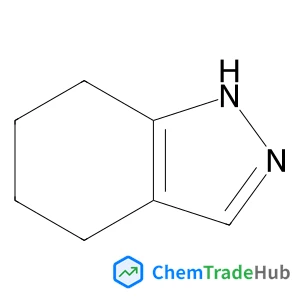
4,5,6,7-Tetrahydro-1H-indazole hydrochloride is a white crystalline solid with a...
(2R)-1-Methoxy-3-phenyl-2-propanamine is a chiral organic compound with the CAS ...
Ethyl 1-(1-phenylethyl)-1H-imidazole-5-carboxylate is used in various industries...
4-[(1E,3S)-1-(4-Hydroxyphenyl)-1,4-pentadien-3-yl]phenol (CAS: 17676-24-3) falls...
(S)-3-Amino-5-phenylpentanoic acid hydrochloride is primarily used in the pharma...
7-Methoxy-1-benzothiophene-2-carboxylic acid is typically synthesized by reactin...

Physical Chemistry Chemical Physics (PCCP) is an international journal co-owned by 19 physical chemistry and physics societies from around the world. This journal publishes original, cutting-edge research in physical chemistry, chemical physics and biophysical chemistry. To be suitable for publication in PCCP, articles must include significant innovation and/or insight into physical chemistry; this is the most important criterion that reviewers and Editors will judge against when evaluating submissions. The journal has a broad scope and welcomes contributions spanning experiment, theory, computation and data science. Topical coverage includes spectroscopy, dynamics, kinetics, statistical mechanics, thermodynamics, electrochemistry, catalysis, surface science, quantum mechanics, quantum computing and machine learning. Interdisciplinary research areas such as polymers and soft matter, materials, nanoscience, energy, surfaces/interfaces, and biophysical chemistry are welcomed if they demonstrate significant innovation and/or insight into physical chemistry. Joined experimental/theoretical studies are particularly appreciated when complementary and based on up-to-date approaches.
![(3R)-4-(4-Chlorophenyl)-3-({[(2-methyl-2-propanyl)oxy]carbonyl}amino)butanoic acid structure](https://static.chemtradehub.com/structs/218/218608-96-9-f871.webp "(3R)-4-(4-Chlorophenyl)-3-({[(2-methyl-2-propanyl)oxy]carbonyl}amino)butanoic acid structure")



