


![[4-Amino-2-(methylsulfanyl)-5-pyrimidinyl]methanol structure](https://static.chemtradehub.com/structs/588/588-36-3-fc73.webp "[4-Amino-2-(methylsulfanyl)-5-pyrimidinyl]methanol structure")
Consecutive Lossen rearrangement/transamidation reaction of hydroxamic acids under catalyst- and additive-free conditions
Literature Information
Publication Date
2018-04-20
DOI
10.1039/C8OB00490K
Impact Factor
3.876
Authors
Mengmeng Jia, Heng Zhang, Yongjia Lin, Dimei Chen, Yanmei Chen
View Original
Abstract
The Lossen rearrangement is a classic process for transforming activated hydroxamic acids into isocyanate under basic or thermal conditions. In the current report we disclosed a consecutive Lossen rearrangement/transamidation reaction in which unactivated hydroxamic acids were converted into N-substituted formamides in a one-pot manner under catalyst- and additive-free conditions. One feature of this novel transformation is that the formamide plays triple roles in the reaction by acting as a readily available solvent, a promoter for additive-free Lossen rearrangement, and a source of the formyl group in the final products. Acyl groups other than formyl could also be introduced into the product when changing the solvent to other low molecular weight aliphatic amide derivatives. The solvent-promoted Lossen rearrangement was better understood by DFT calculations, and the intermediacy of isocyanate and amine was supported well by experiments, in which the desired products were obtained in excellent yields under similar conditions. Not only monosubstituted formamides were synthesized from hydroxamic acids, but also N,N-disubstituted formamides were obtained when secondary amines were used as precursors.
Recommended Journals

Journal of Medicinal Chemistry

Molecular Pharmacology

Pharmacological Reviews

Proceedings of the National Academy of Sciences of the United States of America

Kinetics and Catalysis

Organic Preparations and Procedures International

Journal of Catalysis

Science

Journal of Organometallic Chemistry

Planta Medica
Related Literature
Can boron antisites of BNNTs be an efficient metal-free catalyst for nitrogen fixation? – A DFT investigation
2017-05-23
Paper
DOI: 10.1039/C7CP02220D
Molecular dynamics simulations of solvent-exfoliation and stabilization of graphene with the assistance of compressed carbon dioxide and pyrene–polyethylene glycol
Xiaodan Xu, Lu Cai, Xiaoli Zheng, Qun Xu
2017-05-31
Paper
DOI: 10.1039/C7CP01277B
Thermal mismatch strain induced disorder of Y2Mo3O12 and its effect on thermal expansion of Y2Mo3O12/Al composites
Chang Zhou, Qiang Zhang, Saiyue Liu, Bingcheng Luo, Eongyu Yi, Enke Tian, Guowu Li, Longtu Li, Gaohui Wu
2017-04-13
Paper
DOI: 10.1039/C7CP00676D
Identification of the smallest peptide with a zwitterion as the global minimum: a first-principles study on arginine-containing peptides
Hongbao Li, Jun Jiang
2017-04-06
Paper
DOI: 10.1039/C7CP01380A
Single-layer MoS2 formation by sulfidation of molybdenum oxides in different oxidation states on Au(111)
Norberto Salazar, Igor Beinik, Jeppe V. Lauritsen
2017-04-20
Paper
DOI: 10.1039/C7CP00958E
Unusual molecular mechanism behind the thermal response of polypeptoids in aqueous solutions
Jianbo Ma, Sunting Xuan, Abby C. Guerin, Tianyi Yu, Donghui Zhang, Daniel G. Kuroda
2017-04-04
Paper
DOI: 10.1039/C6CP08536A
Buckling behaviour of composites with double walled nanotubes from carbon and phosphorus
Jing Wan, Likui Yang, Ning Wei, Jiao Shi, Qing-Hua Qin
2017-03-28
Paper
DOI: 10.1039/C7CP01274H
Modeling DNA oxidation in water
Amedeo Capobianco, Alessandro Landi, Andrea Peluso
2017-05-03
Paper
DOI: 10.1039/C7CP02029E
Tunable photoluminescence and room temperature ferromagnetism of In2S3:Dy3+,Tb3+ nanoparticles
Zhifang Li, Tianye Yang, Qi Zhao, Mingzhe Zhang
2017-06-19
Paper
DOI: 10.1039/C7CP02481A
You might also like
Compound Q&A
How should waste containing N-Methoxy-N-methyl-1,3-thiazole-5-carboxamide (CAS: 898825-89-3) be handled?
Waste containing N-Methoxy-N-methyl-1,3-thiazole-5-carboxamide (CAS: 898825-89-3...
898825-89-3N-Methoxy-N-methyl-1...
Compound Q&A
How should N-(4-Biphenylyl)dibenzo[b,d]furan-4-amine (CAS: 1318338-47-4) be stored?
N-(4-Biphenylyl)dibenzo[b,d]furan-4-amine should be stored in a tightly sealed c...
1318338-47-4N-(4-Biphenylyl)dibe...
Compound Q&A
What is the market or research trend for 3-Acetamido-5-amino-2,4,6-triiodobenzoic acid (CAS: 1713-07-1)?
The market for 3-Acetamido-5-amino-2,4,6-triiodobenzoic acid (CAS: 1713-07-1) is...
1713-07-13-Acetamido-5-amino-...
Compound Q&A
How should Benzyl 2-O-acetyl-3,4,6-tri-O-benzyl-beta-D-galactopyranoside (CAS: 61820-03-9) be stored?
Benzyl 2-O-acetyl-3,4,6-tri-O-benzyl-beta-D-galactopyranoside (CAS: 61820-03-9) ...
61820-03-9Benzyl 2-O-acetyl-3,...
Compound Q&A
What regulatory guidelines apply to 2-Ethylpiperazine dihydrochloride (CAS: 438050-52-3)?
2-Ethylpiperazine dihydrochloride (CAS: 438050-52-3) is regulated under the Glob...
438050-52-32-Ethylpiperazine di...
Compound Q&A
What regulatory guidelines apply to 1,1'-[1,3-Phenylenebis(methylene)]bis(3-methyl-1H-pyrrole-2,5-dione) (CAS: 119462-56-5)?
1,1'-[1,3-Phenylenebis(methylene)]bis(3-methyl-1H-pyrrole-2,5-dione) (CAS: 11946...
119462-56-51,1'-[1,3-Phenyleneb...
Compound Q&A
Are there alternatives to 5-Fluoro-2-(1-pyrrolidinyl)pyridine (CAS: 1287217-79-1) in synthesis?
Several alternatives can be used in the synthesis of 5-Fluoro-2-(1-pyrrolidinyl)...
1287217-79-15-Fluoro-2-(1-pyrrol...
Compound Q&A
What precautions should be taken when handling 1-((2R,3R,4R,5R)-5-((bis(4-methoxyphenyl)(phenyl)methoxy)methyl)-4-hydroxy-3-methoxytetrahydrofuran-2-yl)-5-methylpyrimidine-2,4(1H,3H)-dione (CAS: 153631-19-7)?
Proper personal protective equipment (PPE) must be worn when handling this compo...
153631-19-71-((2R,3R,4R,5R)-5-(...
Compound Q&A
What precautions should be taken when handling 6-Bromoimidazo[1,2-a]pyridin-8-amine (CAS: 676371-00-9)?
When handling 6-Bromoimidazo[1,2-a]pyridin-8-amine, it is important to wear appr...
676371-00-96-Bromoimidazo[1,2-a...
Compound Q&A
Are there alternatives to (2S,4R)-4-(4-Nitrobenzyl)pyrrolidine-2-carboxylic acid hydrochloride (CAS: 1049740-22-8) in synthesis?
Alternatives to (2S,4R)-4-(4-Nitrobenzyl)pyrrolidine-2-carboxylic acid hydrochlo...
1049740-22-8(2S,4R)-4-(4-Nitrobe...
Source Journal
Organic & Biomolecular Chemistry

CiteScore:
3.4
Self-citation Rate:
10.3%
Articles per Year:
1041
Organic & Biomolecular Chemistry (OBC) publishes original and high impact research and reviews in organic chemistry. We welcome research that shows new or significantly improved protocols or methodologies in total synthesis, synthetic methodology or physical and theoretical organic chemistry as well as research that shows a significant advance in the organic chemistry or molecular design aspects of chemical biology, catalysis, supramolecular and macromolecular chemistry, theoretical chemistry, mechanism-oriented physical organic chemistry, medicinal chemistry or natural products. Articles published in the journal should report new work which makes a highly-significant impact in the field. Routine and incremental work is generally not suitable for publication in the journal. More details about key areas of our scope are below. In all cases authors should include in their article clear rationale for why their research has been carried out.
Recommended Compounds
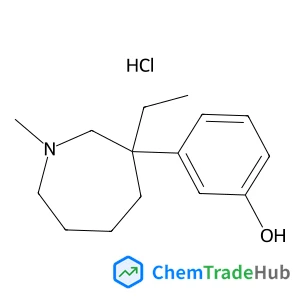
3-(3-Ethyl-1-methyl-3-azepanyl)phenol hydrochloride (1:1)
CAS Number:
59263-76-2
Molecular Formula:
C15H24ClNO
Recommended Suppliers




Disclaimer
This page provides academic journal information for reference and research purposes only. We are not affiliated with any journal publishers and do not handle publication submissions. For publication-related inquiries, please contact the respective journal publishers directly.
If you notice any inaccuracies in the information displayed, please contact us at support@chemtradehub.com. We will promptly review and address your concerns.