












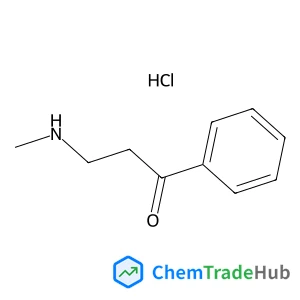
3-(Methylamino)-1-phenyl-1-propanone hydrochloride (1:1)
CAS Number:
2538-50-3
Molecular Formula:
C10H14ClNO
Nitrogen fixation is a challenging reaction under ambient conditions. So far, a few metal-based catalysts have been reported; however, noticeable disadvantages including high cost, gas poisoning, and them being hazardous to the environment are still to be resolved. We have carried out density functional theory based calculations with the ωB97X-D/6-31G* level of theory to investigate the activation of dinitrogen using boron nitride based metal-free catalysts for the first time as they are environmentally friendly and corrosion resistant. The boron antisite of a boron nitride nanotube is found to be an active site for nitrogen activation. The activated N2 is characterized by the increase in bond length and the red shift in the stretching frequency of the NN bond. The subsequent reduction mechanisms of activated N2 into ammonia through six-proton and six-electron processes have also been elucidated. The selectivity of the nitrogen reduction reaction between distal and alternating associative pathways is also rationalized. The reaction energetics highlight the distal associative mechanism as a feasible pathway under ambient conditions. The catalytic performance of BAS is further unraveled with the help of variation in the charge density. This work provides a rational model for the metal-free catalytic conversion of N2 to ammonia via an eco-friendly pathway under ambient conditions.
Jukka Jokisaari, Juha Vaara
DOI: 10.1039/C3CP50625H
Devin T. Edwards, Zhidong Ma, Daniella Goldfarb
DOI: 10.1039/C3CP43787F
Shamon A. Walker, Devin T. Edwards, Ting Ann Siaw, Brandon D. Armstrong
DOI: 10.1039/C3CP51628H
Esther Rebollar, Javier R. Vázquez de Aldana, Ignacio Martín-Fabiani, Margarita Hernández, Daniel R. Rueda, Tiberio A. Ezquerra, Concepción Domingo, Pablo Moreno, Marta Castillejo
DOI: 10.1039/C3CP51523K
Virginie Peneau, Qian He, Gregory Shaw, Simon A. Kondrat, Thomas E. Davies, Peter Miedziak, Michael Forde, Nikolaos Dimitratos, Christopher J. Kiely, Graham J. Hutchings
DOI: 10.1039/C3CP50361E
Jaume Puy, Joan Cecília, Josep Galceran
DOI: 10.1039/C3CP51038G
Matthias Schnurr, Christopher Witte, Leif Schröder
DOI: 10.1039/C3CP51227D
Waste containing N-Methoxy-N-methyl-1,3-thiazole-5-carboxamide (CAS: 898825-89-3...
N-(4-Biphenylyl)dibenzo[b,d]furan-4-amine should be stored in a tightly sealed c...
The market for 3-Acetamido-5-amino-2,4,6-triiodobenzoic acid (CAS: 1713-07-1) is...
Benzyl 2-O-acetyl-3,4,6-tri-O-benzyl-beta-D-galactopyranoside (CAS: 61820-03-9) ...
2-Ethylpiperazine dihydrochloride (CAS: 438050-52-3) is regulated under the Glob...
1,1'-[1,3-Phenylenebis(methylene)]bis(3-methyl-1H-pyrrole-2,5-dione) (CAS: 11946...
Several alternatives can be used in the synthesis of 5-Fluoro-2-(1-pyrrolidinyl)...
Proper personal protective equipment (PPE) must be worn when handling this compo...
When handling 6-Bromoimidazo[1,2-a]pyridin-8-amine, it is important to wear appr...
Alternatives to (2S,4R)-4-(4-Nitrobenzyl)pyrrolidine-2-carboxylic acid hydrochlo...

Physical Chemistry Chemical Physics (PCCP) is an international journal co-owned by 19 physical chemistry and physics societies from around the world. This journal publishes original, cutting-edge research in physical chemistry, chemical physics and biophysical chemistry. To be suitable for publication in PCCP, articles must include significant innovation and/or insight into physical chemistry; this is the most important criterion that reviewers and Editors will judge against when evaluating submissions. The journal has a broad scope and welcomes contributions spanning experiment, theory, computation and data science. Topical coverage includes spectroscopy, dynamics, kinetics, statistical mechanics, thermodynamics, electrochemistry, catalysis, surface science, quantum mechanics, quantum computing and machine learning. Interdisciplinary research areas such as polymers and soft matter, materials, nanoscience, energy, surfaces/interfaces, and biophysical chemistry are welcomed if they demonstrate significant innovation and/or insight into physical chemistry. Joined experimental/theoretical studies are particularly appreciated when complementary and based on up-to-date approaches.
![1,2-Diphenyl-4-[2-(phenylsulfinyl)ethyl]-3,5-pyrazolidinedione structure](https://static.chemtradehub.com/structs/57-/57-96-5-efcc.webp "1,2-Diphenyl-4-[2-(phenylsulfinyl)ethyl]-3,5-pyrazolidinedione structure")
![5-Acetyl-2,3-dihydrobenzo[b]furan structure](https://static.chemtradehub.com/structs/908/90843-31-5-eea4.webp "5-Acetyl-2,3-dihydrobenzo[b]furan structure")






