












Introducing mesoscopic charge transfer rates into molecular electronics
Literature Information
Publication Date
2020-04-27
DOI
10.1039/D0CP01621G
Impact Factor
3.676
Authors
Adriano Santos, Ushula M. Tefashe, Richard L. McCreery, Paulo R. Bueno
View Original
Abstract
It has been demonstrated that mesoscopic rates operate in nanoscale electrochemical systems and, from a fundamental point of view, are able to establish a bridge between electrochemical and molecular electronic concepts. In the present work we offer additional experimental evidence in support of this statement.
Related Literature
Mechanism for the elimination of aromatic molecules from polyenes in tandem mass spectrometry
Ernani Pinto, Pio Colepicolo, Paul J. Gates
2006-08-23
Communication
DOI: 10.1039/B609672G
Coupling–isomerization–Claisen sequences – mechanistic dichotomies in hetero domino reactions‡
Daniel M. D'Souza, Frank Rominger, Thomas J. J. Müller
2006-09-12
Communication
DOI: 10.1039/B609669G
Total syntheses of amythiamicins A, B and C‡
Dattatraya H. Dethe, David Y.-K. Chen
2008-05-08
Communication
DOI: 10.1039/B805069B
Selective monitoring of parts per million levels of CO by covalently immobilized metal complexes on glass
Tarkeshwar Gupta, Marc Altman, Sandra Lo Schiavo, Placido G. Mineo, Ignazio L. Fragalà, Guennadi Evmenenko, Pulak Dutta, Milko E. van der Boom
2008-04-22
Communication
DOI: 10.1039/B802670J
Gold nanocomposites with rigid fully conjugated heteroditopic ligands shell as nanobuilding blocks for coordination chemistry
Cédric R. Mayer, Eddy Dumas, Aude Michel, Francis Sécheresse
2006-09-21
Communication
DOI: 10.1039/B610631E
Novel immobilization method of enzymes using a hydrophilic polymer support
Juta Kobayashi, Yuichiro Mori, Shū Kobayashi
2006-08-30
Communication
DOI: 10.1039/B609335C
Large mixed metal nitride clusters encapsulated in a small cage: the confinement of the C68-based clusterfullerenes
Lothar Dunsch
2008-04-18
Communication
DOI: 10.1039/B803200A
Selective detection of cesium by a water-soluble fluorescent molecular sensor based on a calix[4]arene-bis(crown-6-ether)
Vincent Souchon, Isabelle Leray, Bernard Valeur
2006-08-29
Communication
DOI: 10.1039/B609466J
Highly fluorescent supramolecular gels with chirality transcription through hydrogen bonding
Jangwon Seo, Jong Won Chung, Eun-Hye Jo, Soo Young Park
2008-04-17
Communication
DOI: 10.1039/B802096E
You might also like
Compound Q&A
What are the main uses of 4-Nitrophenyl phosphate disodium salt hexahydrate (CAS: 333338-18-4)?
4-Nitrophenyl phosphate disodium salt hexahydrate is primarily used as a substra...
333338-18-44-Nitrophenyl phosph...
Compound Q&A
What are the main uses of 2-(Trifluoromethyl)-1,3-oxazole-4-carboxylic Acid (CAS: 1060816-01-4)?
2-(Trifluoromethyl)-1,3-oxazole-4-carboxylic Acid (CAS: 1060816-01-4) is widely ...
1060816-01-42-(Trifluoromethyl)-...
Compound Q&A
How should 2-Fluoro-4-biphenylcarboxylic acid (CAS: 137045-30-8) be stored?
2-Fluoro-4-biphenylcarboxylic acid should be stored in a cool, dry place at room...
137045-30-82-Fluoro-4-biphenylc...
Compound Q&A
What industries use Prednisolone-21-Carboxylic Acid (CAS: 61549-70-0)?
Prednisolone-21-Carboxylic Acid is primarily used in the pharmaceutical industry...
61549-70-0Prednisolone-21-Carb...
Compound Q&A
How should 4-(Hydrazinomethyl)-1,2,3-benzenetriol (CAS: 3614-72-0) be stored?
4-(Hydrazinomethyl)-1,2,3-benzenetriol (CAS: 3614-72-0) should be stored in a co...
3614-72-04-(Hydrazinomethyl)-...
Compound Q&A
What industries use 4-Amino-1-methyl-1H-pyrazole-5-carboxylic acid hydrochloride (CAS: 92534-70-8)?
4-Amino-1-methyl-1H-pyrazole-5-carboxylic acid hydrochloride (CAS: 92534-70-8) i...
92534-70-84-Amino-1-methyl-1H-...
Compound Q&A
What regulatory guidelines apply to dehydropachymic acid (CAS: 77012-31-8)?
Dehydropachymic acid (CAS: 77012-31-8) is regulated by various agencies. It fall...
77012-31-8Dehydropachymic acid
Compound Q&A
What is the market or research trend for 6-[(2,2-Dimethylpropanoyl)amino]nicotinic acid (CAS: 898561-66-5)?
The market and research trends for 6-[(2,2-Dimethylpropanoyl)amino]nicotinic aci...
898561-66-56-[(2,2-Dimethylprop...
Compound Q&A
How should 1,10-Phenanthroline-2,9-dicarbaldehyde (CAS: 57709-62-3) be stored?
1,10-Phenanthroline-2,9-dicarbaldehyde should be stored in a cool, dry place awa...
57709-62-31,10-Phenanthroline-...
Compound Q&A
How is 5-Carbamoyl-11-oxo-10,11-dihydro-5H-dibenzo[b,f]azepin-10-yl acetate (CAS: 113952-21-9) typically synthesized?
5-Carbamoyl-11-oxo-10,11-dihydro-5H-dibenzo[b,f]azepin-10-yl acetate can be synt...
113952-21-95-Carbamoyl-11-oxo-1...
Source Journal
Physical Chemistry Chemical Physics

CiteScore:
5.5
Self-citation Rate:
10.3%
Articles per Year:
3036
Physical Chemistry Chemical Physics (PCCP) is an international journal co-owned by 19 physical chemistry and physics societies from around the world. This journal publishes original, cutting-edge research in physical chemistry, chemical physics and biophysical chemistry. To be suitable for publication in PCCP, articles must include significant innovation and/or insight into physical chemistry; this is the most important criterion that reviewers and Editors will judge against when evaluating submissions. The journal has a broad scope and welcomes contributions spanning experiment, theory, computation and data science. Topical coverage includes spectroscopy, dynamics, kinetics, statistical mechanics, thermodynamics, electrochemistry, catalysis, surface science, quantum mechanics, quantum computing and machine learning. Interdisciplinary research areas such as polymers and soft matter, materials, nanoscience, energy, surfaces/interfaces, and biophysical chemistry are welcomed if they demonstrate significant innovation and/or insight into physical chemistry. Joined experimental/theoretical studies are particularly appreciated when complementary and based on up-to-date approaches.
Recommended Compounds
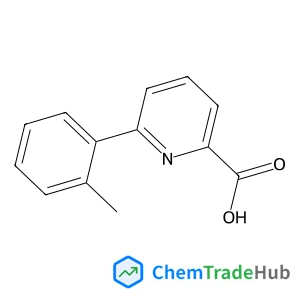

cis-3-Amino-1-(trifluoromethyl)cyclobutanol hydrochloride (1:1)
CAS Number:
1408075-16-0
Molecular Formula:
C5H9ClF3NO
Recommended Suppliers




Disclaimer
This page provides academic journal information for reference and research purposes only. We are not affiliated with any journal publishers and do not handle publication submissions. For publication-related inquiries, please contact the respective journal publishers directly.
If you notice any inaccuracies in the information displayed, please contact us at support@chemtradehub.com. We will promptly review and address your concerns.