












Temperature-modulated diastereoselective transformations of 2-vinylindoles to tetrahydrocarbazoles and tetrahydrocycloheptadiindoles
Literature Information
Publication Date
2018-03-22
DOI
10.1039/C8OB00228B
Impact Factor
3.876
Authors
Imtiyaz Ahmad Wani, Aditya Bhattacharyya, Masthanvali Sayyad, Manas K. Ghorai
View Original
Abstract
Direct and expedient access to densely substituted tetrahydrocarbazoles and tetrahydrocycloheptadiindoles bearing multiple contiguous stereocentres has been achieved via a two-fold divergent diastereoselective (dr up to >99 : 1) transformation of 2-vinylindoles. The high-yielding conversions (yield up to 87%) that are amenable for a wide range of substituted 2-vinylindoles proceed through Lewis acid-catalyzed [4 + 2] and [4 + 3] cyclization–aromatization cascade reactions, respectively, involving a heretofore-unprecedented reversal of the polarity (umpolung) of 2-vinylindoles. The two synthetic routes are effortlessly transposable into each other by merely modulating the temperature to furnish the corresponding products in a selective and exclusive fashion. In addition, another novel synthetic route to tetrahydroindolocarbazoles has been developed that advances via a formal [4 + 2] cyclization of 4-vinylindoles involving sequential C3 Michael addition–dearomatization–aromatization cascade reactions.
Related Literature
Towards improved magnetic fluid hyperthermia: major-loops to diminish variations in local heating
Cristina Munoz-Menendez, Juan M. Ruso, Daniel Baldomir
2017-05-11
Paper
DOI: 10.1039/C7CP01442B
Charge transfer quantification in a SnOx/CuPc semiconductor heterostructure: investigation of buried interface energy structure by photoelectron spectroscopies
Lucyna Grządziel, Adnan Sarfraz
2017-04-26
Paper
DOI: 10.1039/C7CP01688C
Identifying electrochemical effects in a thermal–electrochemical co-driven system for CO2 capture
Guang X. Liu, Yun S. Yu, Ying T. Hong, Geoff G. X. Wang
2017-04-25
Paper
DOI: 10.1039/C7CP01035D
Sugar–peptidic bond interactions: spectroscopic characterization of a model system
Ander Camiruaga, Imanol Usabiaga, Aran Insausti, José A. Fernández
2017-04-11
Paper
DOI: 10.1039/C7CP00615B
Can boron antisites of BNNTs be an efficient metal-free catalyst for nitrogen fixation? – A DFT investigation
2017-05-23
Paper
DOI: 10.1039/C7CP02220D
A nematic to nematic transformation exhibited by a rod-like liquid crystal
Richard J. Mandle, S. J. Cowling, J. W. Goodby
2017-04-12
Paper
DOI: 10.1039/C7CP00456G
Assessing the predictability of anharmonic vibrational modes at the example of hydroxyl groups – ad hoc construction of localised modes and the influence of structural solute–solvent motifs
Manuel J. Schuler, Thomas S. Hofer, Christian W. Huck
2017-04-18
Paper
DOI: 10.1039/C7CP01662J
Molecular dynamics simulations of solvent-exfoliation and stabilization of graphene with the assistance of compressed carbon dioxide and pyrene–polyethylene glycol
Xiaodan Xu, Lu Cai, Xiaoli Zheng, Qun Xu
2017-05-31
Paper
DOI: 10.1039/C7CP01277B
You might also like
Compound Q&A
How should waste containing N-Methoxy-N-methyl-1,3-thiazole-5-carboxamide (CAS: 898825-89-3) be handled?
Waste containing N-Methoxy-N-methyl-1,3-thiazole-5-carboxamide (CAS: 898825-89-3...
898825-89-3N-Methoxy-N-methyl-1...
Compound Q&A
How should N-(4-Biphenylyl)dibenzo[b,d]furan-4-amine (CAS: 1318338-47-4) be stored?
N-(4-Biphenylyl)dibenzo[b,d]furan-4-amine should be stored in a tightly sealed c...
1318338-47-4N-(4-Biphenylyl)dibe...
Compound Q&A
What is the market or research trend for 3-Acetamido-5-amino-2,4,6-triiodobenzoic acid (CAS: 1713-07-1)?
The market for 3-Acetamido-5-amino-2,4,6-triiodobenzoic acid (CAS: 1713-07-1) is...
1713-07-13-Acetamido-5-amino-...
Compound Q&A
How should Benzyl 2-O-acetyl-3,4,6-tri-O-benzyl-beta-D-galactopyranoside (CAS: 61820-03-9) be stored?
Benzyl 2-O-acetyl-3,4,6-tri-O-benzyl-beta-D-galactopyranoside (CAS: 61820-03-9) ...
61820-03-9Benzyl 2-O-acetyl-3,...
Compound Q&A
What regulatory guidelines apply to 2-Ethylpiperazine dihydrochloride (CAS: 438050-52-3)?
2-Ethylpiperazine dihydrochloride (CAS: 438050-52-3) is regulated under the Glob...
438050-52-32-Ethylpiperazine di...
Compound Q&A
What regulatory guidelines apply to 1,1'-[1,3-Phenylenebis(methylene)]bis(3-methyl-1H-pyrrole-2,5-dione) (CAS: 119462-56-5)?
1,1'-[1,3-Phenylenebis(methylene)]bis(3-methyl-1H-pyrrole-2,5-dione) (CAS: 11946...
119462-56-51,1'-[1,3-Phenyleneb...
Compound Q&A
Are there alternatives to 5-Fluoro-2-(1-pyrrolidinyl)pyridine (CAS: 1287217-79-1) in synthesis?
Several alternatives can be used in the synthesis of 5-Fluoro-2-(1-pyrrolidinyl)...
1287217-79-15-Fluoro-2-(1-pyrrol...
Compound Q&A
What precautions should be taken when handling 1-((2R,3R,4R,5R)-5-((bis(4-methoxyphenyl)(phenyl)methoxy)methyl)-4-hydroxy-3-methoxytetrahydrofuran-2-yl)-5-methylpyrimidine-2,4(1H,3H)-dione (CAS: 153631-19-7)?
Proper personal protective equipment (PPE) must be worn when handling this compo...
153631-19-71-((2R,3R,4R,5R)-5-(...
Compound Q&A
What precautions should be taken when handling 6-Bromoimidazo[1,2-a]pyridin-8-amine (CAS: 676371-00-9)?
When handling 6-Bromoimidazo[1,2-a]pyridin-8-amine, it is important to wear appr...
676371-00-96-Bromoimidazo[1,2-a...
Compound Q&A
Are there alternatives to (2S,4R)-4-(4-Nitrobenzyl)pyrrolidine-2-carboxylic acid hydrochloride (CAS: 1049740-22-8) in synthesis?
Alternatives to (2S,4R)-4-(4-Nitrobenzyl)pyrrolidine-2-carboxylic acid hydrochlo...
1049740-22-8(2S,4R)-4-(4-Nitrobe...
Source Journal
Organic & Biomolecular Chemistry

CiteScore:
3.4
Self-citation Rate:
10.3%
Articles per Year:
1041
Organic & Biomolecular Chemistry (OBC) publishes original and high impact research and reviews in organic chemistry. We welcome research that shows new or significantly improved protocols or methodologies in total synthesis, synthetic methodology or physical and theoretical organic chemistry as well as research that shows a significant advance in the organic chemistry or molecular design aspects of chemical biology, catalysis, supramolecular and macromolecular chemistry, theoretical chemistry, mechanism-oriented physical organic chemistry, medicinal chemistry or natural products. Articles published in the journal should report new work which makes a highly-significant impact in the field. Routine and incremental work is generally not suitable for publication in the journal. More details about key areas of our scope are below. In all cases authors should include in their article clear rationale for why their research has been carried out.
Recommended Compounds
![N-[(Benzyloxy)carbonyl]serine structure](https://static.chemtradehub.com/structs/276/2768-56-1-77f7.webp "N-[(Benzyloxy)carbonyl]serine structure")

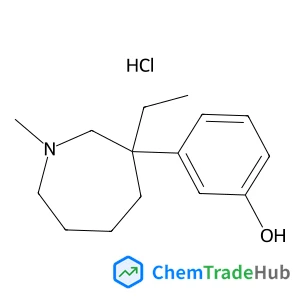
3-(3-Ethyl-1-methyl-3-azepanyl)phenol hydrochloride (1:1)
CAS Number:
59263-76-2
Molecular Formula:
C15H24ClNO

Recommended Suppliers



Disclaimer
This page provides academic journal information for reference and research purposes only. We are not affiliated with any journal publishers and do not handle publication submissions. For publication-related inquiries, please contact the respective journal publishers directly.
If you notice any inaccuracies in the information displayed, please contact us at support@chemtradehub.com. We will promptly review and address your concerns.