












Ab initio prediction of structuring/mesoscale inhomogeneities in surfactant-free microemulsions and hydrogen-bonding-free microemulsions
Literature Information
Publication Date
2019-03-25
DOI
10.1039/C8CP07544A
Impact Factor
3.676
Authors
Sebastian Krickl, Thomas Buchecker, Gašper Jošt, Didier Touraud, Pierre Bauduin, Arno Pfitzner, Werner Kunz
View Original
Abstract
In this paper, we consider the influence of H-bond donor and acceptor functionalities on the formation of mesoscale inhomogeneities in ternary systems. It was found that hydrogen-bonding re-enforces such structures, but is not necessarily a prerequisite for the occurrence of mesoscale, microemulsion-like structuring in ternary surfactant-free microemulsions (SFME) and consequently, hydrogen-bonding-free microemulsions (HBFME) exist. The evaluated ternary systems were investigated by means of dynamic light scattering (DLS) and computer-based calculation methods. Theoretical COSMO-RS based calculations were applied to provide an explanation for different hydrotropic efficiencies, and COSMOplex calculations were used to predict and evaluate the propensity of the molecules to form mesoscale structures in SFME and HBFME. Microemulsion-like fluctuations could be observed in the COSMOplex simulations and correlate fairly well with the appearance of mesoscopic structures observed in SFME and HBFME, although the free energy differences in the formation of aggregate structures in the investigated systems are very small, in the range of 0.05 kcal mol−1.
Related Literature
Univalent transition metal complexes of arenes stabilized by a bulky terphenylligand: differences in the stability of Cr(i), Mn(i) or Fe(i) complexes
Chengbao Ni, Bobby D. Ellis, James C. Fettinger, Gary J. Long, Philip P. Power
2007-12-20
Communication
DOI: 10.1039/B715027J
Nickeladihydrofuran. Key intermediate for nickel-catalyzed reaction of alkyne and aldehyde
Sensuke Ogoshi, Tomoya Arai, Masato Ohashi, Hideo Kurosawa
2008-01-21
Communication
DOI: 10.1039/B717261C
Eight coordination with bis(bidentate) bridging ligands: zeolitic topology versus square grid networks
Jian-Yong Zhang, Ai-Ling Cheng, Qi Yue, Wei-Wei Sun, En-Qing Gao
2007-12-17
Communication
DOI: 10.1039/B717233H
Ionic liquids enable electrospray ionisation mass spectrometry in hexane
Matthew A. Henderson, J. Scott McIndoe
2006-06-16
Communication
DOI: 10.1039/B606938J
Capturing a [c2]daisy chain using the threading-followed-by-swelling approach
Shau-Hua Ueng, Sheng-Yao Hsueh, Chien-Chen Lai, Yi-Hung Liu, Shie-Ming Peng, Sheng-Hsien Chiu
2007-12-11
Communication
DOI: 10.1039/B716331B
Fabrication of zeolite-4A membranes on a catalyst particle level
Yijun Zhong, Mengfei Luo, Yunlong Xie, Weidong Zhu
2006-06-05
Communication
DOI: 10.1039/B603128E
Poly(acenaphtho[1,2-b]thieno[3,4-e]pyrazine): a new low band gap conjugated polymer
Jon P. Nietfeld, Christopher L. Heth, Seth C. Rasmussen
2008-01-02
Communication
DOI: 10.1039/B713126G
A new, simple approach to confer permanent antimicrobial properties to hydroxylated surfaces by surface functionalization
Othman Bouloussa
2008-01-03
Communication
DOI: 10.1039/B716026G
Organocatalysis “on water”. Regioselective [3 + 2]-cycloaddition of nitrones and allenolates
Ezequiel Q. Morales
2006-05-26
Communication
DOI: 10.1039/B606096J
You might also like
Compound Q&A
Are there alternatives to 1-(4-Chlorophenyl)-N-hydroxymethanimine (CAS: 3848-36-0) in synthesis?
When considering alternatives to 1-(4-Chlorophenyl)-N-hydroxymethanimine (CAS: 3...
3848-36-01-(4-Chlorophenyl)-N...
Compound Q&A
How should (1R,9S,10S,12S,14E,16S,19R,20R,21S,22R)-3,9,21-Trihydroxy-5,10,12,14,16,20,22-heptamethyl-23,24-dioxatetracyclo[17.3.1.1~6,9~.0~2,7~]tetracosa-2,5,7,14-tetraen-4-one (CAS: 183202-73-5) be stored?
This compound should be stored in a cool, dry place away from direct sunlight. I...
183202-73-5(1R,9S,10S,12S,14E,1...
Compound Q&A
How is 3-(4-Bromophenyl)-5-(2-fluorophenyl)-1,2,4-oxadiazole (CAS: 419553-16-5) typically synthesized?
3-(4-Bromophenyl)-5-(2-fluorophenyl)-1,2,4-oxadiazole is synthesized through a m...
419553-16-53-(4-Bromophenyl)-5-...
Compound Q&A
How is 5-Chloro-2-(4-chlorophenyl)-4-methyl-6-[3-(1-piperidinyl)propoxy]pyrimidine (CAS: 1639220-19-1) typically synthesized?
5-Chloro-2-(4-chlorophenyl)-4-methyl-6-[3-(1-piperidinyl)propoxy]pyrimidine (CAS...
1639220-19-15-Chloro-2-(4-chloro...
Compound Q&A
What industries use 2-Chloro-4-(difluoromethoxy)pyridine (CAS: 1206978-15-5)?
2-Chloro-4-(difluoromethoxy)pyridine is used in the pharmaceutical industry for ...
1206978-15-52-Chloro-4-(difluoro...
Compound Q&A
What regulatory guidelines apply to 3-Chloro-6-methylpyridazine (CAS: 1121-79-5)?
3-Chloro-6-methylpyridazine (CAS: 1121-79-5) is classified under the Globally Ha...
1121-79-53-Chloro-6-methylpyr...
Compound Q&A
Are there alternatives to Methyl 4,5-dimethyl-2-nitrobenzoate in synthesis?
Several alternatives can be used in the synthesis of Methyl 4,5-dimethyl-2-nitro...
90922-74-0Methyl 4,5-dimethyl-...
Compound Q&A
Are there alternatives to (2E,2'E)-3,3'-(1,4-Phenylene)bisacrylaldehyde in synthesis?
Alternatives to (2E,2'E)-3,3'-(1,4-Phenylene)bisacrylaldehyde include other acry...
63405-68-5(2E,2'E)-3,3'-(1,4-P...
Compound Q&A
What is 3-Amino-5-chloropyridin-2-ol hydrochloride (CAS: 1261906-29-9)?
3-Amino-5-chloropyridin-2-ol hydrochloride is an organic compound with the CAS n...
1261906-29-93-Amino-5-chloropyri...
Compound Q&A
What precautions should be taken when handling 6,7-Difluoro-2,3-dihydro-4H-chromen-4-one (CAS: 1092349-93-3)?
When handling 6,7-Difluoro-2,3-dihydro-4H-chromen-4-one, it is essential to wear...
1092349-93-36,7-Difluoro-2,3-dih...
Source Journal
Physical Chemistry Chemical Physics

CiteScore:
5.5
Self-citation Rate:
10.3%
Articles per Year:
3036
Physical Chemistry Chemical Physics (PCCP) is an international journal co-owned by 19 physical chemistry and physics societies from around the world. This journal publishes original, cutting-edge research in physical chemistry, chemical physics and biophysical chemistry. To be suitable for publication in PCCP, articles must include significant innovation and/or insight into physical chemistry; this is the most important criterion that reviewers and Editors will judge against when evaluating submissions. The journal has a broad scope and welcomes contributions spanning experiment, theory, computation and data science. Topical coverage includes spectroscopy, dynamics, kinetics, statistical mechanics, thermodynamics, electrochemistry, catalysis, surface science, quantum mechanics, quantum computing and machine learning. Interdisciplinary research areas such as polymers and soft matter, materials, nanoscience, energy, surfaces/interfaces, and biophysical chemistry are welcomed if they demonstrate significant innovation and/or insight into physical chemistry. Joined experimental/theoretical studies are particularly appreciated when complementary and based on up-to-date approaches.
Recommended Compounds
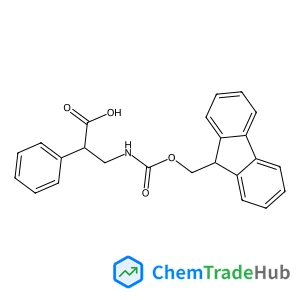
(S)-3-((((9H-Fluoren-9-yl)methoxy)carbonyl)amino)-2-phenylpropanoic acid
CAS Number:
1217663-60-9
Molecular Formula:
C24H21NO4
![[4-(Isobutyrylamino)phenyl]boronic acid structure](https://static.chemtradehub.com/structs/874/874219-50-8-6ab5.webp "[4-(Isobutyrylamino)phenyl]boronic acid structure")
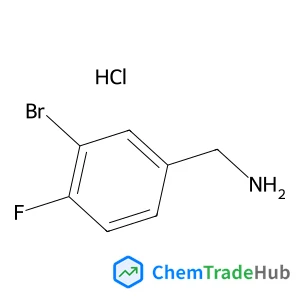
1-(3-Bromo-4-fluorophenyl)methanamine hydrochloride (1:1)
CAS Number:
202865-68-7
Molecular Formula:
C7H8BrClFN

Recommended Suppliers







Disclaimer
This page provides academic journal information for reference and research purposes only. We are not affiliated with any journal publishers and do not handle publication submissions. For publication-related inquiries, please contact the respective journal publishers directly.
If you notice any inaccuracies in the information displayed, please contact us at support@chemtradehub.com. We will promptly review and address your concerns.