












Influence of side chain isomerism on the rigidity of poly(3-alkylthiophenes) in solutions revealed by neutron scattering
Literature Information
Publication Date
2019-02-25
DOI
10.1039/C8CP07520D
Impact Factor
3.676
Authors
William D. Hong, Christopher N. Lam, Yangyang Wang, Youjun He, Luis E. Sánchez-Díaz, Changwoo Do
View Original
Abstract
Using small-angle neutron scattering, we conducted a detailed conformational study of poly(3-alkylthiophene) solutions in deuterated dichlorobenzene. The focus was placed on addressing the influence of the spatial arrangement of side chain constituents on backbone conformation. We demonstrate that by introducing a branch point in the side chain, side chain steric interactions may promote torsional motion between backbone units, resulting in greater chain flexibility. Our findings highlight the key role of topological isomerism in determining the chain rigidity and throw new light on the debate about the effective approaches for optimizing the electronic properties of conducting polymers via side chain engineering.
Related Literature
2-D Self-assembly of the bis(phthalocyaninato)terbium(iii) single-molecule magnet studied by scanning tunnelling microscopy
Jordi Gómez-Segura, Ismael Díez-Pérez, Naoto Ishikawa, Motohiro Nakano, Jaume Veciana, Daniel Ruiz-Molina
2006-06-15
Communication
DOI: 10.1039/B606276H
STEM characterization on silicananowires with new mesopore structures by space-confined self-assembly within nano-scale channels
Michael Z. Hu, Donglu Shi, Douglas Blom
2008-01-23
Communication
DOI: 10.1039/B717461F
Stereoselective polymerization of rac- and meso-lactide catalyzed by sterically encumbered N-heterocyclic carbenes
Andrew P. Dove, Hongbo Li, Russell C. Pratt, Bas G. G. Lohmeijer, Darcy A. Culkin, Robert M. Waymouth, James L. Hedrick
2006-06-06
Communication
DOI: 10.1039/B601393G
Synthesis of para-sulfonatocalix[4]arene-modified silver nanoparticles as colorimetric histidine probes
Dejun Xiong, Mingliang Chen, Haibing Li
2007-12-18
Communication
DOI: 10.1039/B716270G
Cu-catalyzed regioselective carbomagnesiation of dienes and enynes with sec- and tert-alkyl Grignard reagents
Hirohisa Todo, Jun Terao, Hideyuki Watanabe, Hitoshi Kuniyasu, Nobuaki Kambe
2008-01-11
Communication
DOI: 10.1039/B716678H
Nanomechanical properties of reversed surfactant bilayers formed in micrometre-sized holes
Jian Jin, Yukihiro Sugiyama, Keita Mitsui, Hideo Arakawa, Izumi Ichinose
2008-01-14
Communication
DOI: 10.1039/B717485C
A mild and convenient synthesis of N-carbobenzyloxy ketimines
Jun-ichi Matsuo, Yumi Tanaki, Aimi Kido, Hiroyuki Ishibashi
2006-06-01
Communication
DOI: 10.1039/B605882E
Synergistic effect of binary component ligands in chiral catalyst library engineering for enantioselective reactions
2008-01-21
Feature Article
DOI: 10.1039/B710668H
You might also like
Compound Q&A
Are there alternatives to 1-(4-Chlorophenyl)-N-hydroxymethanimine (CAS: 3848-36-0) in synthesis?
When considering alternatives to 1-(4-Chlorophenyl)-N-hydroxymethanimine (CAS: 3...
3848-36-01-(4-Chlorophenyl)-N...
Compound Q&A
How should (1R,9S,10S,12S,14E,16S,19R,20R,21S,22R)-3,9,21-Trihydroxy-5,10,12,14,16,20,22-heptamethyl-23,24-dioxatetracyclo[17.3.1.1~6,9~.0~2,7~]tetracosa-2,5,7,14-tetraen-4-one (CAS: 183202-73-5) be stored?
This compound should be stored in a cool, dry place away from direct sunlight. I...
183202-73-5(1R,9S,10S,12S,14E,1...
Compound Q&A
How is 3-(4-Bromophenyl)-5-(2-fluorophenyl)-1,2,4-oxadiazole (CAS: 419553-16-5) typically synthesized?
3-(4-Bromophenyl)-5-(2-fluorophenyl)-1,2,4-oxadiazole is synthesized through a m...
419553-16-53-(4-Bromophenyl)-5-...
Compound Q&A
How is 5-Chloro-2-(4-chlorophenyl)-4-methyl-6-[3-(1-piperidinyl)propoxy]pyrimidine (CAS: 1639220-19-1) typically synthesized?
5-Chloro-2-(4-chlorophenyl)-4-methyl-6-[3-(1-piperidinyl)propoxy]pyrimidine (CAS...
1639220-19-15-Chloro-2-(4-chloro...
Compound Q&A
What industries use 2-Chloro-4-(difluoromethoxy)pyridine (CAS: 1206978-15-5)?
2-Chloro-4-(difluoromethoxy)pyridine is used in the pharmaceutical industry for ...
1206978-15-52-Chloro-4-(difluoro...
Compound Q&A
What regulatory guidelines apply to 3-Chloro-6-methylpyridazine (CAS: 1121-79-5)?
3-Chloro-6-methylpyridazine (CAS: 1121-79-5) is classified under the Globally Ha...
1121-79-53-Chloro-6-methylpyr...
Compound Q&A
Are there alternatives to Methyl 4,5-dimethyl-2-nitrobenzoate in synthesis?
Several alternatives can be used in the synthesis of Methyl 4,5-dimethyl-2-nitro...
90922-74-0Methyl 4,5-dimethyl-...
Compound Q&A
Are there alternatives to (2E,2'E)-3,3'-(1,4-Phenylene)bisacrylaldehyde in synthesis?
Alternatives to (2E,2'E)-3,3'-(1,4-Phenylene)bisacrylaldehyde include other acry...
63405-68-5(2E,2'E)-3,3'-(1,4-P...
Compound Q&A
What is 3-Amino-5-chloropyridin-2-ol hydrochloride (CAS: 1261906-29-9)?
3-Amino-5-chloropyridin-2-ol hydrochloride is an organic compound with the CAS n...
1261906-29-93-Amino-5-chloropyri...
Compound Q&A
What precautions should be taken when handling 6,7-Difluoro-2,3-dihydro-4H-chromen-4-one (CAS: 1092349-93-3)?
When handling 6,7-Difluoro-2,3-dihydro-4H-chromen-4-one, it is essential to wear...
1092349-93-36,7-Difluoro-2,3-dih...
Source Journal
Physical Chemistry Chemical Physics

CiteScore:
5.5
Self-citation Rate:
10.3%
Articles per Year:
3036
Physical Chemistry Chemical Physics (PCCP) is an international journal co-owned by 19 physical chemistry and physics societies from around the world. This journal publishes original, cutting-edge research in physical chemistry, chemical physics and biophysical chemistry. To be suitable for publication in PCCP, articles must include significant innovation and/or insight into physical chemistry; this is the most important criterion that reviewers and Editors will judge against when evaluating submissions. The journal has a broad scope and welcomes contributions spanning experiment, theory, computation and data science. Topical coverage includes spectroscopy, dynamics, kinetics, statistical mechanics, thermodynamics, electrochemistry, catalysis, surface science, quantum mechanics, quantum computing and machine learning. Interdisciplinary research areas such as polymers and soft matter, materials, nanoscience, energy, surfaces/interfaces, and biophysical chemistry are welcomed if they demonstrate significant innovation and/or insight into physical chemistry. Joined experimental/theoretical studies are particularly appreciated when complementary and based on up-to-date approaches.
Recommended Compounds
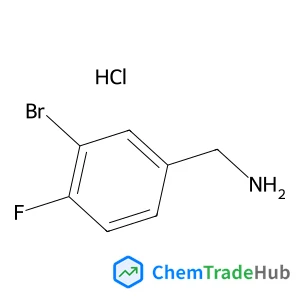
1-(3-Bromo-4-fluorophenyl)methanamine hydrochloride (1:1)
CAS Number:
202865-68-7
Molecular Formula:
C7H8BrClFN
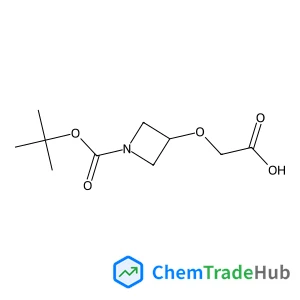
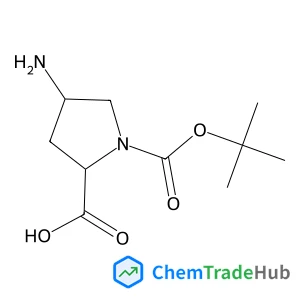
(2R,4R)-1-Boc-4-Aminopyrrolidine-2-carboxylic acid
CAS Number:
132622-98-1
Molecular Formula:
C10H18N2O4
Recommended Suppliers





Disclaimer
This page provides academic journal information for reference and research purposes only. We are not affiliated with any journal publishers and do not handle publication submissions. For publication-related inquiries, please contact the respective journal publishers directly.
If you notice any inaccuracies in the information displayed, please contact us at support@chemtradehub.com. We will promptly review and address your concerns.