












The interplay between structural perfectness and CO oxidation catalysis on aluminum, phosphorous and silicon complexes of corroles
Literature Information
Publication Date
2019-03-26
DOI
10.1039/C8CP07372D
Impact Factor
3.676
Authors
Afshan Mohajeri, Nasim Hassani
View Original
Abstract
Catalytic oxidation of carbon monoxide on perfect and defective structures of corrole complexes with aluminum, phosphorous and silicon have been investigated by performing density functional theory calculations. The main objective is to highlight the effect of structural defects on the catalytic activity of corrole complexes for the CO oxidation reaction. Moreover, we also study how phenyl substitution at the meso or axial position of the corrole will affect its catalytic efficiency. It is shown that a vacancy defect leads to the formation of an interior cavity inside the corrole structure which hinders proper orientation of reacting O2 and CO molecules. While corrole complexes with aluminum may serve as potential catalysts for CO oxidation with a moderate energy barrier, phosphorous corrole displays superior catalytic activity with a very low energy barrier. We also demonstrate that phenyl substitution at the axial position reduces the catalytic activity of corrole complexes, whereas phenyl substitution at the meso sites does not change the activity of corrole complexes toward O2 and CO molecules. The results of the present study are promising to develop highly efficient single atom phosphorous–nitrogen–carbon catalysts for low temperature CO oxidation.
Related Literature
Electrochemical detection of microRNA-21 based on a Au nanoparticle functionalized g-C3N4 nanosheet nanohybrid as a sensing platform and a hybridization chain reaction amplification strategy
Ya Wang, Mengyao Li, Yuzhong Zhang
2021-03-02
Paper
DOI: 10.1039/D1AN00029B
Hybrid gold nanocube@silica@graphene-quantum-dot superstructures: synthesis and specific cell surface protein imaging applications
Liu Deng, Ling Liu, Chengzhou Zhu, Dan Li, Shaojun Dong
2013-02-07
Communication
DOI: 10.1039/C3CC38776C
A route to diastereomerically pure phenylglycine thioester peptides: crucial intermediates for investigating glycopeptide antibiotic biosynthesis
Madeleine Peschke, Clara Brieke
2018-02-09
Communication
DOI: 10.1039/C7CC09409D
A new synthetic approach to functionalize oxomolybdenum complexes
Zhengguo Lin, Bo Wang, Xiao Feng, Linyuan Fan, Song Yang, Xianqiang Huang, Changwen Hu
2013-07-11
Communication
DOI: 10.1039/C3CE40994E
Parametric optimization and spectral line selection for liquid sampling-atmospheric pressure glow discharge – optical emission spectroscopy
Katja A. Hall, R. Kenneth Marcus
2019-11-07
Paper
DOI: 10.1039/C9JA00325H
Ambient mass spectrometry of covalently bound organic monolayers
Radostina K. Manova, Frank W. Claassen, Teris A. van Beek
2012-12-11
Communication
DOI: 10.1039/C2CC37605A
Phase transitions in tantalum-modified silver niobate ceramics for high power energy storage
Li Jin, Qingyuan Hu, Kun Yu, Yongyong Zhuang, Giuseppe Viola, Zhuo Xu, Xiaoyong Wei
2018-12-10
Paper
DOI: 10.1039/C8TA10075F
Facile fabrication and application of near-IR light-responsive drug release system based on gold nanorods and phase change material
Junseok Lee, Cherlhyun Jeong, Won Jong Kim
2014-10-07
Paper
DOI: 10.1039/C4TB01631A
Electrochemiluminescent screening for methamphetamine metabolites
Emre Dokuzparmak, Kelly Brown, Lynn Dennany
2021-04-07
Paper
DOI: 10.1039/D1AN00226K
Retroreflection-based sandwich type affinity sensing of isothermal gene amplification products for foodborne pathogen detection
Danbi Lee, Eunsuk Kim, Kyung Won Lee, Ka Ram Kim, Hyeong Jin Chun, Hyunjin Yoon, Hyun C. Yoon
2021-12-10
Paper
DOI: 10.1039/D1AN01543E
You might also like
Compound Q&A
How is Ethyl 4-chlorothieno[2,3-b]pyridine-5-carboxylate (CAS: 59713-58-5) typically synthesized?
Ethyl 4-chlorothieno[2,3-b]pyridine-5-carboxylate (CAS: 59713-58-5) can be synth...
59713-58-5Ethyl 4-chlorothieno...
Compound Q&A
What regulatory guidelines apply to 5-Methyl-1H-indole-3-carbaldehyde (CAS: 52562-50-2)?
5-Methyl-1H-indole-3-carbaldehyde (CAS: 52562-50-2) is subject to various regula...
52562-50-25-Methyl-1H-indole-3...
Compound Q&A
What are the physical and chemical properties of (1,3-Dimethyl-2,4-dioxo-1,2,3,4-tetrahydro-5-pyrimidinyl)boronic acid (CAS: 223418-73-3)?
(1,3-Dimethyl-2,4-dioxo-1,2,3,4-tetrahydro-5-pyrimidinyl)boronic acid is a white...
223418-73-3(1,3-Dimethyl-2,4-di...
Compound Q&A
How should waste containing Sulfocostunolide A (CAS: 1016983-51-9) be handled?
Waste containing Sulfocostunolide A (CAS: 1016983-51-9) should be handled with c...
1016983-51-9Sulfocostunolide A
Compound Q&A
What precautions should be taken when handling Murraxocin (CAS: 88478-44-8)?
When handling Murraxocin (CAS: 88478-44-8), ensure proper personal protective eq...
88478-44-8Murraxocin
Compound Q&A
What are the physical and chemical properties of Formvar (CAS: 63148-64-1)?
Formvar (CAS: 63148-64-1) is an alkyd resin characterized by a high molecular we...
63148-64-1Formvar(R)
Compound Q&A
Is (S)-4-benzyl-2-((benzyloxy)methyl)morpholine (CAS: 205242-66-6) safe?
(S)-4-benzyl-2-((benzyloxy)methyl)morpholine is generally safe when handled with...
205242-66-6(S)-4-benzyl-2-((ben...
Compound Q&A
What industries use Methyl 1-(5-bromo-2-pyrimidinyl)cyclopropanecarboxylate (CAS: 1447607-69-3)?
Methyl 1-(5-bromo-2-pyrimidinyl)cyclopropanecarboxylate (CAS: 1447607-69-3) is p...
1447607-69-3Methyl 1-(5-bromo-2-...
Compound Q&A
Is 2-Methyl-1-phenyl-1-propanamine hydrochloride (CAS: 24290-47-9) safe?
2-Methyl-1-phenyl-1-propanamine hydrochloride (CAS: 24290-47-9) is generally con...
24290-47-92-Methyl-1-phenyl-1-...
Compound Q&A
How is 3-(4-Bromophenyl)-2-methylpropanoic acid (CAS: 66735-01-1) typically synthesized?
3-(4-Bromophenyl)-2-methylpropanoic acid is synthesized through a multi-step pro...
66735-01-13-(4-Bromophenyl)-2-...
Source Journal
Physical Chemistry Chemical Physics

CiteScore:
5.5
Self-citation Rate:
10.3%
Articles per Year:
3036
Physical Chemistry Chemical Physics (PCCP) is an international journal co-owned by 19 physical chemistry and physics societies from around the world. This journal publishes original, cutting-edge research in physical chemistry, chemical physics and biophysical chemistry. To be suitable for publication in PCCP, articles must include significant innovation and/or insight into physical chemistry; this is the most important criterion that reviewers and Editors will judge against when evaluating submissions. The journal has a broad scope and welcomes contributions spanning experiment, theory, computation and data science. Topical coverage includes spectroscopy, dynamics, kinetics, statistical mechanics, thermodynamics, electrochemistry, catalysis, surface science, quantum mechanics, quantum computing and machine learning. Interdisciplinary research areas such as polymers and soft matter, materials, nanoscience, energy, surfaces/interfaces, and biophysical chemistry are welcomed if they demonstrate significant innovation and/or insight into physical chemistry. Joined experimental/theoretical studies are particularly appreciated when complementary and based on up-to-date approaches.
Recommended Compounds
![4-[(1-Methyl-1H-pyrrol-2-yl)methylene]-1,3(2H,4H)-isoquinolinedione structure](https://static.chemtradehub.com/structs/110/1104546-89-5-a600.webp "4-[(1-Methyl-1H-pyrrol-2-yl)methylene]-1,3(2H,4H)-isoquinolinedione structure")
4-[(1-Methyl-1H-pyrrol-2-yl)methylene]-1,3(2H,4H)-isoquinolinedione
CAS Number:
1104546-89-5
Molecular Formula:
C15H12N2O2
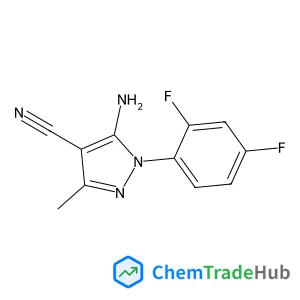
5-Amino-1-(2,4-difluorophenyl)-3-methyl-1H-pyrazole-4-carbonitrile
CAS Number:
1020057-92-4
Molecular Formula:
C11H8F2N4
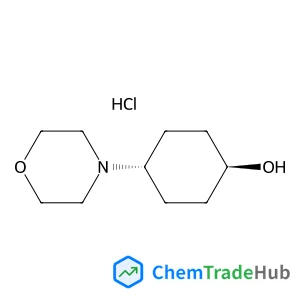
trans-4-(4-Morpholinyl)cyclohexanol hydrochloride (1:1)
CAS Number:
1588441-09-1
Molecular Formula:
C10H20ClNO2
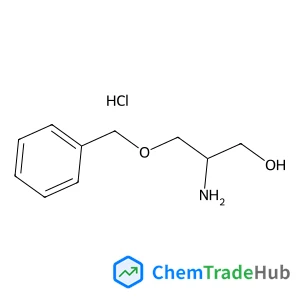
(R)-2-amino-3-(benzyloxy)propan-1-ol hydrochloride
CAS Number:
58577-95-0
Molecular Formula:
C10H16ClNO2
Recommended Suppliers





Disclaimer
This page provides academic journal information for reference and research purposes only. We are not affiliated with any journal publishers and do not handle publication submissions. For publication-related inquiries, please contact the respective journal publishers directly.
If you notice any inaccuracies in the information displayed, please contact us at support@chemtradehub.com. We will promptly review and address your concerns.