












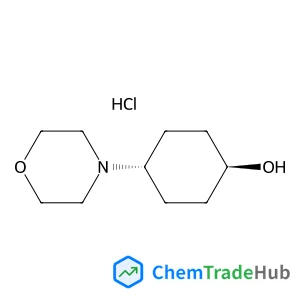
trans-4-(4-Morpholinyl)cyclohexanol hydrochloride (1:1)
CAS Number:
1588441-09-1
Molecular Formula:
C10H20ClNO2
Emre Dokuzparmak, Kelly Brown, Lynn Dennany
The abuse of methamphetamine (MA) is to date detected and subsequently verified through the monitoring of MA and its metabolites within biological specimens. Current approaches require complex sample purification strategies alongside significant analysis time. Given the high prevalence of MA within the global drug market, there remains a need for rapid, portable and alternative screening approaches appropriate for direct detection within biological matrices for employment across the forensic and clinical environments. This contribution illustrates the use of an electrochemiluminescence (ECL) strategy for the screening of MA, amphetamine (AMP) and para hydroxy-methamphetamine (pOH-MA) for such applications. The sensing system showed ideal analytical performance with linear ranges at forensically relevant concentrations of 0.1 μM to 0.5 mM for MA, 10 μM to 1 mM AMP and 10 μM to 5 mM for pOH-MA, and superb detection limits of 74.6 nM, 6 μM and 82. μM for MA, AMP and pOH-MA respectively. Furthermore, the sensor was successful in the detection of MA, AMP and pOH-AMP within human pooled serum, artificial urine and saliva, without any prior purification strategies. Here a portable ECL sensor is detailed for the successful employment of the direct screening of these amphetamine type substances and their corresponding metabolites at clinically and forensically relevant concentrations within a range of biological matrices. This approach successfully represents a strong proof-of-concept, for a novel, simple and rapid screening method with significant potential for high-throughput screening of biological samples for drug metabolites, widening the avenues where ECL sensors could be employed.
Zifeng Wang, Zhaoheng Ruan, Zhuoxin Liu, Yukun Wang, Zijie Tang, Hongfei Li, Minshen Zhu, Tak Fuk Hung, Jun Liu, Zicong Shi, Chunyi Zhi
DOI: 10.1039/C8TA01172A
Leigh Loots, Helene Wahl, Leandi van der Westhuizen, Delia A. Haynes, Tanya le Roex
DOI: 10.1039/C2CC36313E
Kazuhiro Yamato, Mark Kline, Bing Gong
DOI: 10.1039/C2CC36391G
Mingchao Wang, Renhao Dong, Xinliang Feng
DOI: 10.1039/D2CS90005J
Kumar Vikrant, Vanish Kumar, Ki-Hyun Kim
DOI: 10.1039/C8TA90287A
Rubén Granero-García, Fernando J. Lahoz, Sofiane Saouane, Francesca P. A. Fabbiani
DOI: 10.1039/C2CE26362A
Ethyl 4-chlorothieno[2,3-b]pyridine-5-carboxylate (CAS: 59713-58-5) can be synth...
5-Methyl-1H-indole-3-carbaldehyde (CAS: 52562-50-2) is subject to various regula...
(1,3-Dimethyl-2,4-dioxo-1,2,3,4-tetrahydro-5-pyrimidinyl)boronic acid is a white...
Waste containing Sulfocostunolide A (CAS: 1016983-51-9) should be handled with c...
When handling Murraxocin (CAS: 88478-44-8), ensure proper personal protective eq...
Formvar (CAS: 63148-64-1) is an alkyd resin characterized by a high molecular we...
(S)-4-benzyl-2-((benzyloxy)methyl)morpholine is generally safe when handled with...
Methyl 1-(5-bromo-2-pyrimidinyl)cyclopropanecarboxylate (CAS: 1447607-69-3) is p...
2-Methyl-1-phenyl-1-propanamine hydrochloride (CAS: 24290-47-9) is generally con...
3-(4-Bromophenyl)-2-methylpropanoic acid is synthesized through a multi-step pro...

Analyst publishes analytical and bioanalytical research that reports premier fundamental discoveries and inventions, and the applications of those discoveries, unconfined by traditional discipline barriers.
![[2-(Benzyloxy)-3-bromo-5-methylphenyl]boronic acid structure](https://static.chemtradehub.com/structs/870/870777-20-1-24ac.webp "[2-(Benzyloxy)-3-bromo-5-methylphenyl]boronic acid structure")
![Sodium 6-amino-3-[(E)-{4-[(E)-(4-aminophenyl)diazenyl]-2-methoxy-5-methylphenyl}diazenyl]-4-hydroxy-2-naphthalenesulfonate structure](https://static.chemtradehub.com/structs/294/2945-96-2-092f.webp "Sodium 6-amino-3-[(E)-{4-[(E)-(4-aminophenyl)diazenyl]-2-methoxy-5-methylphenyl}diazenyl]-4-hydroxy-2-naphthalenesulfonate structure")





