












A single boron atom doped boron nitride edge as a metal-free catalyst for N2 fixation
Literature Information
Publication Date
2018-12-11
DOI
10.1039/C8CP07064D
Impact Factor
3.676
Authors
Xin Mao, Cheng Yan, Zhonghua Zhu, Aijun Du
View Original
Abstract
N2 fixation is one of the most challenging tasks in chemistry. Recently, tremendous efforts have been devoted to transition metal-based materials. However, metal-free catalysts for N2 conversion have been rarely explored. Here, by using density functional theory, we predict, for the first time that a single B-atom decorated BN edge (B@BN) can act as a metal-free catalyst for the conversion of an N2 molecule to NH3 under ambient conditions. N2 fixation on the B@BN edge exhibits an extremely low overpotential of only 0.13 V through a distal mechanism. Moreover, fast removal of the produced NH3 molecule is observed with an uphill Gibbs free energy change of only 0.35 V, which is lower than those of ever-reported electrocatalysts such as Mo-doped BN and 2D Mxene. Our findings highlight a novel single atom metal-free catalyst for N2 fixation, providing a cost-efficient process for sustainable NH3 production.
Related Literature
Direct evidence for an iron(iv)-oxo porphyrin π-cation radical as an active oxidant in catalytic oxygenation reactions
Ah-Rim Han, Yu Jin Jeong, Yaeun Kang, Jung Yoon Lee, Mi Sook Seo, Wonwoo Nam
2008-01-03
Communication
DOI: 10.1039/B716558G
Stereoselective coordination of ditopic phospholyl-azahelicenes: a novel approach towards structural diversity in chiral π-conjugated assemblies
Wenting Shen, Sébastien Graule, Jeanne Crassous, Christophe Lescop, Heinz Gornitzka, Régis Réau
2007-12-18
Communication
DOI: 10.1039/B714340K
Nickel catalyzed stereoselective conjugate addition of dimethylzinc upon aldimines across 1,3-dien-8-ynes and 1,3-dien-9-ynes
Masanari Kimura, Masahiko Mori, Nahoko Mukai, Keisuke Kojima, Yoshinao Tamaru
2006-05-31
Communication
DOI: 10.1039/B605728D
Notable norbornene (NBE) incorporation in ethylene–NBE copolymerization catalysed by nonbridged half-titanocenes: better correlation between NBE incorporation and coordination energy
Kotohiro Nomura, Wei Wang, Michiya Fujiki, Jingyu Liu
2006-05-18
Communication
DOI: 10.1039/B605005K
Highly active iridium(i) complexes for catalytic hydrogen isotope exchange
Jack A. Brown, Stephanie Irvine, Alan R. Kennedy, William J. Kerr, Shalini Andersson, Göran N. Nilsson
2008-01-03
Communication
DOI: 10.1039/B715938B
Facile preparation of water-soluble fluorescent silver nanoclusters using a polyelectrolyte template
Li Shang, Shaojun Dong
2008-01-10
Communication
DOI: 10.1039/B717728C
Fabrication of zeolite-4A membranes on a catalyst particle level
Yijun Zhong, Mengfei Luo, Yunlong Xie, Weidong Zhu
2006-06-05
Communication
DOI: 10.1039/B603128E
Eight coordination with bis(bidentate) bridging ligands: zeolitic topology versus square grid networks
Jian-Yong Zhang, Ai-Ling Cheng, Qi Yue, Wei-Wei Sun, En-Qing Gao
2007-12-17
Communication
DOI: 10.1039/B717233H
Supramolecular PhanePhos-analogous ligands through hydrogen-bonding for asymmetric hydrogenation
Andy Ch. Laungani, Bernhard Breit
2007-12-18
Communication
DOI: 10.1039/B716529C
Organic field-effect transistors of poly(2,5-bis(3-dodecylthiophen-2-yl)thieno[2,3-b]thiophene) deposited on five different silane self-assembled monolayers
Ruth Rawcliffe, Martin Heeney, Steven Tierney, Iain McCulloch, Alasdair Campbell
2007-12-21
Communication
DOI: 10.1039/B715536K
You might also like
Compound Q&A
Are there alternatives to 1-(4-Chlorophenyl)-N-hydroxymethanimine (CAS: 3848-36-0) in synthesis?
When considering alternatives to 1-(4-Chlorophenyl)-N-hydroxymethanimine (CAS: 3...
3848-36-01-(4-Chlorophenyl)-N...
Compound Q&A
How should (1R,9S,10S,12S,14E,16S,19R,20R,21S,22R)-3,9,21-Trihydroxy-5,10,12,14,16,20,22-heptamethyl-23,24-dioxatetracyclo[17.3.1.1~6,9~.0~2,7~]tetracosa-2,5,7,14-tetraen-4-one (CAS: 183202-73-5) be stored?
This compound should be stored in a cool, dry place away from direct sunlight. I...
183202-73-5(1R,9S,10S,12S,14E,1...
Compound Q&A
How is 3-(4-Bromophenyl)-5-(2-fluorophenyl)-1,2,4-oxadiazole (CAS: 419553-16-5) typically synthesized?
3-(4-Bromophenyl)-5-(2-fluorophenyl)-1,2,4-oxadiazole is synthesized through a m...
419553-16-53-(4-Bromophenyl)-5-...
Compound Q&A
How is 5-Chloro-2-(4-chlorophenyl)-4-methyl-6-[3-(1-piperidinyl)propoxy]pyrimidine (CAS: 1639220-19-1) typically synthesized?
5-Chloro-2-(4-chlorophenyl)-4-methyl-6-[3-(1-piperidinyl)propoxy]pyrimidine (CAS...
1639220-19-15-Chloro-2-(4-chloro...
Compound Q&A
What industries use 2-Chloro-4-(difluoromethoxy)pyridine (CAS: 1206978-15-5)?
2-Chloro-4-(difluoromethoxy)pyridine is used in the pharmaceutical industry for ...
1206978-15-52-Chloro-4-(difluoro...
Compound Q&A
What regulatory guidelines apply to 3-Chloro-6-methylpyridazine (CAS: 1121-79-5)?
3-Chloro-6-methylpyridazine (CAS: 1121-79-5) is classified under the Globally Ha...
1121-79-53-Chloro-6-methylpyr...
Compound Q&A
Are there alternatives to Methyl 4,5-dimethyl-2-nitrobenzoate in synthesis?
Several alternatives can be used in the synthesis of Methyl 4,5-dimethyl-2-nitro...
90922-74-0Methyl 4,5-dimethyl-...
Compound Q&A
Are there alternatives to (2E,2'E)-3,3'-(1,4-Phenylene)bisacrylaldehyde in synthesis?
Alternatives to (2E,2'E)-3,3'-(1,4-Phenylene)bisacrylaldehyde include other acry...
63405-68-5(2E,2'E)-3,3'-(1,4-P...
Compound Q&A
What is 3-Amino-5-chloropyridin-2-ol hydrochloride (CAS: 1261906-29-9)?
3-Amino-5-chloropyridin-2-ol hydrochloride is an organic compound with the CAS n...
1261906-29-93-Amino-5-chloropyri...
Compound Q&A
What precautions should be taken when handling 6,7-Difluoro-2,3-dihydro-4H-chromen-4-one (CAS: 1092349-93-3)?
When handling 6,7-Difluoro-2,3-dihydro-4H-chromen-4-one, it is essential to wear...
1092349-93-36,7-Difluoro-2,3-dih...
Source Journal
Physical Chemistry Chemical Physics

CiteScore:
5.5
Self-citation Rate:
10.3%
Articles per Year:
3036
Physical Chemistry Chemical Physics (PCCP) is an international journal co-owned by 19 physical chemistry and physics societies from around the world. This journal publishes original, cutting-edge research in physical chemistry, chemical physics and biophysical chemistry. To be suitable for publication in PCCP, articles must include significant innovation and/or insight into physical chemistry; this is the most important criterion that reviewers and Editors will judge against when evaluating submissions. The journal has a broad scope and welcomes contributions spanning experiment, theory, computation and data science. Topical coverage includes spectroscopy, dynamics, kinetics, statistical mechanics, thermodynamics, electrochemistry, catalysis, surface science, quantum mechanics, quantum computing and machine learning. Interdisciplinary research areas such as polymers and soft matter, materials, nanoscience, energy, surfaces/interfaces, and biophysical chemistry are welcomed if they demonstrate significant innovation and/or insight into physical chemistry. Joined experimental/theoretical studies are particularly appreciated when complementary and based on up-to-date approaches.
Recommended Compounds
![2-{[(1R,2S)-2-Aminocyclohexyl]amino}-4-{[3-(2H-1,2,3-triazol-2-yl)phenyl]amino}-5-pyrimidinecarboxamide structure](https://static.chemtradehub.com/structs/137/1370261-96-3-40df.webp "2-{[(1R,2S)-2-Aminocyclohexyl]amino}-4-{[3-(2H-1,2,3-triazol-2-yl)phenyl]amino}-5-pyrimidinecarboxamide structure")
2-{[(1R,2S)-2-Aminocyclohexyl]amino}-4-{[3-(2H-1,2,3-triazol-2-yl)phenyl]amino}-5-pyrimidinecarboxamide
CAS Number:
1370261-96-3
Molecular Formula:
C19H23N9O
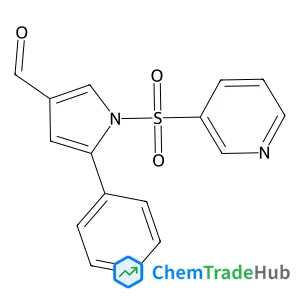
5-Phenyl-1-(pyridin-3-ylsulfonyl)-1H-pyrrole-3-carbaldehyde
CAS Number:
881676-90-0
Molecular Formula:
C16H12N2O3S
Recommended Suppliers





Disclaimer
This page provides academic journal information for reference and research purposes only. We are not affiliated with any journal publishers and do not handle publication submissions. For publication-related inquiries, please contact the respective journal publishers directly.
If you notice any inaccuracies in the information displayed, please contact us at support@chemtradehub.com. We will promptly review and address your concerns.