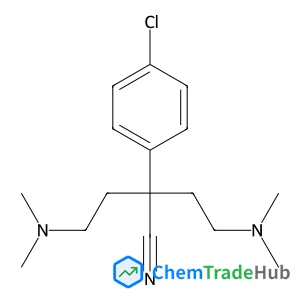
2-(4-Chlorophenyl)-4-(dimethylamino)-2-(2-(dimethylamino)ethyl)butanenitrile
CAS Number:
1246816-57-8
Molecular Formula:
C16H24ClN3
Jian Wang
Using nonequilibrium Green's function combined with density functional theory, we investigate the spin-related current generated by the photogalvanic effect (PGE) in monolayer zigzag SiC nanoribbons (ZSiCNRs) by first-principles calculations. Due to its unique atomic structure and band structure properties, we find that 100% spin polarized photocurrent can be easily obtained in a wide range of photon energies by shining linearly/circularly polarized light when ZSiCNRs are in the anti-ferromagnetic (AFM) state. In comparison, when the ZSiCNRs are in the ferromagnetic (FM) state, the spin polarization of photocurrent can vary from 0% to 100% by changing the photon energy or polarization angle. More interestingly, pure spin current can also be generated by changing the circular polarization angle in the FM state. Thus, by properly tuning the photon energy, one can obtain 100% spin polarized current regardless of its magnetic configuration and pure spin current in its FM state. Our numerical findings pave a feasible way for ZSiCNRs’ novel applications in spintronics.
Leining Zhang, Weikang Wu, Yi Zhou, Hongru Ren, Jichen Dong, Hui Li
DOI: 10.1039/C5CP07641B
Johannes R. Klein, Oliver Flender, Mirko Scholz, Kawon Oum, Thomas Lenzer
DOI: 10.1039/C5CP07167D
Aurélien Bornet, Sami Jannin
DOI: 10.1039/C5CP07884A
Changqing Ye, Liwei Zhou, Xiaomei Wang, Zuoqin Liang
DOI: 10.1039/C5CP07296D
Vu Thi Thu Huong, Truong Ba Tai, Minh Tho Nguyen
DOI: 10.1039/C5CP07277H
Bang-Bao Chen, De-Kun Ma, Qing-Ping Ke, Wei Chen, Shao-Ming Huang
DOI: 10.1039/C5CP07900D
Steven H. Overbury
DOI: 10.1039/C6CP00151C
Marcus D. Pohl, Viktor Colic
DOI: 10.1039/C5CP08000B
Simon Kujawski, Arndt Remhof, Yigang Yan, Nicholas P. Stadie, Ali Al-Zein, Metin Tolan, Simo Huotari, Michael Krisch, Christian Sternemann
DOI: 10.1039/C5CP06571B
Andreas W. Hauser, Paul R. Horn, Martin Head-Gordon, Alexis T. Bell
DOI: 10.1039/C6CP00360E
This compound is mainly used as an intermediate in the synthesis of antipsychoti...
Waste containing 1-(D-Ribofuranosyl)-1,4-dihydro-3-pyridinecarboxamide (CAS: 191...
2-Methyl-2-propanyl 3-bromo-3-(hydroxymethyl)-1-azetidinecarboxylate (CAS: 20079...
N-(4-Chloro-2-pyridinyl)acetamide (CAS: 245056-66-0) is a chemical compound with...
5-Chloro-2-hydroxybenzoic acid, also known as 5-chlorosalicylic acid, is an arom...
When handling 1,1-Dichloro-1-fluoroethane (CAS: 1717-00-6), it is important to u...
Fmoc-(2S,3R)-3-phenylpyrrolidine-2-carboxylic acid is a white crystalline solid ...
4-Amino-5-bromo-2-pyridinecarboxylic acid is primarily used as a precursor in th...
Handling this compound should be done with personal protective equipment (PPE) i...
When handling 8-bromo-2,2-dimethyl-3,4-dihydro-2H-1,4-benzoxazin-3-one, use prop...

Physical Chemistry Chemical Physics (PCCP) is an international journal co-owned by 19 physical chemistry and physics societies from around the world. This journal publishes original, cutting-edge research in physical chemistry, chemical physics and biophysical chemistry. To be suitable for publication in PCCP, articles must include significant innovation and/or insight into physical chemistry; this is the most important criterion that reviewers and Editors will judge against when evaluating submissions. The journal has a broad scope and welcomes contributions spanning experiment, theory, computation and data science. Topical coverage includes spectroscopy, dynamics, kinetics, statistical mechanics, thermodynamics, electrochemistry, catalysis, surface science, quantum mechanics, quantum computing and machine learning. Interdisciplinary research areas such as polymers and soft matter, materials, nanoscience, energy, surfaces/interfaces, and biophysical chemistry are welcomed if they demonstrate significant innovation and/or insight into physical chemistry. Joined experimental/theoretical studies are particularly appreciated when complementary and based on up-to-date approaches.
![Pyrazolo[1,5-a]pyridine-3-carbothioamide structure](https://static.chemtradehub.com/structs/885/885275-44-5-aae0.webp "Pyrazolo[1,5-a]pyridine-3-carbothioamide structure")
![tert-Butyl N-[(2-chloropyridin-4-yl)methyl]carbamate structure](https://static.chemtradehub.com/structs/916/916210-27-0-9f95.webp "tert-Butyl N-[(2-chloropyridin-4-yl)methyl]carbamate structure")