











Photon upconversion: from two-photon absorption (TPA) to triplet–triplet annihilation (TTA)
Literature Information
Publication Date
2016-01-25
DOI
10.1039/C5CP07296D
Impact Factor
3.676
Authors
Changqing Ye, Liwei Zhou, Xiaomei Wang, Zuoqin Liang
View Original
Abstract
Organic upconversion is a unique process in which low-energy light (usually NIR light) is converted to high-energy light through either the two-photon absorption (TPA) mechanism or the triplet–triplet annihilation (TTA) mechanism. Both TPA upconversion (TPA-UC) and TTA upconversion (TTA-UC) have been actively investigated in recent years due to their intriguing applications in optics, biophotonics, and solar energy utilization. Although they show some similarity (i.e., belonging to the nonlinear two-quantum process and needing focused excitation light), TPA-UC and TTA-UC are very different, such as in mechanism, characteristics involved, molecular design and potential applications. Here, we collectively reviewed these two kinds of upconversion processes and compared their respective characteristics and merits. We also present recent advances made in the areas of TPA- and TTA-UC, the remaining challenges and opportunities, with particular emphasis on molecular engineering of these two active upconversion materials.
Related Literature
Extraction desulfurization process of fuels with ammonium-based deep eutectic solvents
Changping Li, Dan Li, Shuangshuang Zou, Jingmei Yin, Ailing Wang, Yingna Cui, Zhilong Yao, Qi Zhao
2013-07-31
Paper
DOI: 10.1039/C3GC41067F
Palladium supported on a magnetic microgel: an efficient and recyclable catalyst for Suzuki and Heck reactions in water
Jianhua Yang, Dongfang Wang, Wendong Liu, Xi Zhang, Fengling Bian, Wei Yu
2013-09-18
Paper
DOI: 10.1039/C3GC40941D
An efficient palladium catalyst on bentonite for Suzuki–Miyaura reaction at room temperature
Guodong Ding, Weitao Wang, Tao Jiang, Buxing Han
2013-09-10
Paper
DOI: 10.1039/C3GC41469H
One-pot transformation of alkynes into alcohols and amines with formic acid
Jia Li, Chao Wang, Dong Xue, Yawen Wei
2013-08-02
Communication
DOI: 10.1039/C3GC41133H
Synthesis of acetylenic alcohols with calcium carbide as the acetylene source
Yin Ngai Sum, Dingyi Yu, Yugen Zhang
2013-08-14
Communication
DOI: 10.1039/C3GC41269E
Environmentally benign enhanced H2 production from abundant copious waste H2S using size tuneable cubic bismuth (Bi0) quantum dots–GeO2 glass photocatalyst under solar light
Sanjay K. Apte, Sunil N. Garaje, Sonali D. Naik, Rupali P. Waichal, Bharat B. Kale
2013-10-22
Paper
DOI: 10.1039/C3GC41940A
Characteristics and origin of char and coke from fast and slow, catalytic and thermal pyrolysis of biomass and relevant model compounds
Shoucheng Du, Julia A. Valla, George M. Bollas
2013-09-13
Paper
DOI: 10.1039/C3GC41581C
Self-healable polymer networks based on the cross-linking of epoxidised soybean oil by an aqueous citric acid solution
Facundo I. Altuna, Valeria Pettarin, Roberto J. J. Williams
2013-09-09
Paper
DOI: 10.1039/C3GC41384E
Self-floating ability and initiating gradient photopolymerization of acrylamide aqueous solution of a water-soluble polysiloxane benzophenone photoinitiator
Jiansheng Wang, Jiye Cheng, Jiancheng Liu, Yanjing Gao
2013-06-24
Paper
DOI: 10.1039/C3GC40704G
You might also like
Compound Q&A
What are the main uses of 1-(3-Aminophenyl)-3-[(3R)-1-(3,3-dimethyl-2-oxobutyl)-2-oxo-5-(2-pyridinyl)-2,3-dihydro-1H-1,4-benzodiazepin-3-yl]urea (CAS: 155412-88-7)?
This compound is mainly used as an intermediate in the synthesis of antipsychoti...
155412-88-71-(3-Aminophenyl)-3-...
Compound Q&A
How should waste containing 1-(D-Ribofuranosyl)-1,4-dihydro-3-pyridinecarboxamide (CAS: 19132-12-8) be handled?
Waste containing 1-(D-Ribofuranosyl)-1,4-dihydro-3-pyridinecarboxamide (CAS: 191...
19132-12-81-(D-Ribofuranosyl)-...
Compound Q&A
What regulatory guidelines apply to 2-Methyl-2-propanyl 3-bromo-3-(hydroxymethyl)-1-azetidinecarboxylate (CAS: 2007919-81-3)?
2-Methyl-2-propanyl 3-bromo-3-(hydroxymethyl)-1-azetidinecarboxylate (CAS: 20079...
2007919-81-32-Methyl-2-propanyl ...
Compound Q&A
What is N-(4-Chloro-2-pyridinyl)acetamide (CAS: 245056-66-0)?
N-(4-Chloro-2-pyridinyl)acetamide (CAS: 245056-66-0) is a chemical compound with...
245056-66-0N-(4-Chloro-2-pyridi...
Compound Q&A
What is 5-Chloro-2-hydroxybenzoic acid (CAS: 321-14-2)?
5-Chloro-2-hydroxybenzoic acid, also known as 5-chlorosalicylic acid, is an arom...
321-14-25-Chloro-2-hydroxybe...
Compound Q&A
What precautions should be taken when handling 1,1-Dichloro-1-fluoroethane (CAS: 1717-00-6)?
When handling 1,1-Dichloro-1-fluoroethane (CAS: 1717-00-6), it is important to u...
1717-00-61,1-Dichloro-1-fluor...
Compound Q&A
What are the physical and chemical properties of Fmoc-(2S,3R)-3-phenylpyrrolidine-2-carboxylic acid (CAS: 281655-32-1)?
Fmoc-(2S,3R)-3-phenylpyrrolidine-2-carboxylic acid is a white crystalline solid ...
281655-32-1Fmoc-(2S,3R)-3-pheny...
Compound Q&A
What are the main uses of 4-Amino-5-bromo-2-pyridinecarboxylic acid (CAS: 1363381-01-4)?
4-Amino-5-bromo-2-pyridinecarboxylic acid is primarily used as a precursor in th...
1363381-01-44-Amino-5-bromo-2-py...
Compound Q&A
What precautions should be taken when handling (S)-tert-butyl 2-((2-(4-bromophenyl)-2-oxoethyl)carbamoyl)pyrrolidine-1-carboxylate (CAS: 1007881-98-2)?
Handling this compound should be done with personal protective equipment (PPE) i...
1007881-98-2(S)-tert-butyl 2-((2...
Compound Q&A
What precautions should be taken when handling 8-bromo-2,2-dimethyl-3,4-dihydro-2H-1,4-benzoxazin-3-one (CAS: 688363-73-7)?
When handling 8-bromo-2,2-dimethyl-3,4-dihydro-2H-1,4-benzoxazin-3-one, use prop...
688363-73-78-bromo-2,2-dimethyl...
Source Journal
Physical Chemistry Chemical Physics

CiteScore:
5.5
Self-citation Rate:
10.3%
Articles per Year:
3036
Physical Chemistry Chemical Physics (PCCP) is an international journal co-owned by 19 physical chemistry and physics societies from around the world. This journal publishes original, cutting-edge research in physical chemistry, chemical physics and biophysical chemistry. To be suitable for publication in PCCP, articles must include significant innovation and/or insight into physical chemistry; this is the most important criterion that reviewers and Editors will judge against when evaluating submissions. The journal has a broad scope and welcomes contributions spanning experiment, theory, computation and data science. Topical coverage includes spectroscopy, dynamics, kinetics, statistical mechanics, thermodynamics, electrochemistry, catalysis, surface science, quantum mechanics, quantum computing and machine learning. Interdisciplinary research areas such as polymers and soft matter, materials, nanoscience, energy, surfaces/interfaces, and biophysical chemistry are welcomed if they demonstrate significant innovation and/or insight into physical chemistry. Joined experimental/theoretical studies are particularly appreciated when complementary and based on up-to-date approaches.
Recommended Compounds
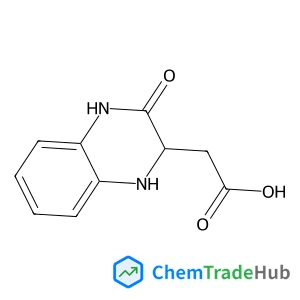
(3-Oxo-1,2,3,4-tetrahydro-2-quinoxalinyl)acetic acid
CAS Number:
136584-14-0
Molecular Formula:
C10H10N2O3
![5-Methyl-4,5,6,7-tetrahydropyrazolo[1,5-a]pyrazin-2-amine structure](https://static.chemtradehub.com/structs/122/1227210-33-4-8d64.webp "5-Methyl-4,5,6,7-tetrahydropyrazolo[1,5-a]pyrazin-2-amine structure")
5-Methyl-4,5,6,7-tetrahydropyrazolo[1,5-a]pyrazin-2-amine
CAS Number:
1227210-33-4
Molecular Formula:
C7H12N4
Recommended Suppliers





Disclaimer
This page provides academic journal information for reference and research purposes only. We are not affiliated with any journal publishers and do not handle publication submissions. For publication-related inquiries, please contact the respective journal publishers directly.
If you notice any inaccuracies in the information displayed, please contact us at support@chemtradehub.com. We will promptly review and address your concerns.