












Reply to the ‘Comment on “Perturbation theory of scattering for grazing-incidence fast-atom diffraction”’ by G. A. Bocan, H. Breiss, S. Szilasi, A. Momeni, E. M. S. Casagrande, E. A. Sánchez, M. S. Gravielle and H. Khemliche, Phys. Chem. Chem. Phys., 2023, 25, DOI: 10.1039/D3CP02486E
Literature Information
Publication Date
2023-12-04
DOI
10.1039/D3CP04559E
Impact Factor
3.676
Authors
W. Allison, S. Miret-Artés, E. Pollak
View Original
Abstract
In this Reply, we show that criticisms of perturbation theory for grazing-incidence fast-atom diffraction (GIFAD) are ill-founded. We show explicitly that our formulation (W. Allison, S. Miret-Artés and E. Pollak, Phys. Chem. Chem. Phys., 2022, 24, 15851) provides a similar precision in describing the observed phenomena as ab initio potentials. Since that is the main criterion to distinguish between methods, it seems reasonable to conclude that the perturbation approach using a Morse-type potential reproduces the essential aspects of the dynamics correctly. In addition we expand on the historical context and summarize the physical insights provided by our methods.
Related Literature
Interconnected mesoporous V2O5 electrode: impact on lithium ion insertion rate
Eleanor I. Gillette, Nam Kim, Gary W. Rubloff, Sang Bok Lee
2016-10-27
Paper
DOI: 10.1039/C6CP05640G
Ultrafast multiexponential electron injection dynamics at a dye and ZnO QD interface: a combined spectroscopic and first principles study
Pushpendra Kumar, Suman Kalyan Pal
2016-09-30
Paper
DOI: 10.1039/C6CP04610J
The role of sequence in altering the unfolding pathway of an RNA pseudoknot: a steered molecular dynamics study
Asmita Gupta, Manju Bansal
2016-09-22
Paper
DOI: 10.1039/C6CP04617G
Contrasting effects of pH on the modulation of the structural integrity of hemoglobin induced by sodium deoxycholate
Ramakanta Mondal, Narayani Ghosh, Saptarshi Mukherjee
2016-10-19
Paper
DOI: 10.1039/C6CP05216A
Combined influence of ectoine and salt: spectroscopic and numerical evidence for compensating effects on aqueous solutions
Frank Uhlig, Tihomir Solomun, Jens Smiatek
2016-09-22
Communication
DOI: 10.1039/C6CP05417J
Energetics and transition-state dynamics of the F + HOCH3 → HF + OCH3 reaction
Amelia W. Ray, Jay Agarwal, Ben B. Shen, H. F. Schaefer, III, Robert E. Continetti
2016-10-21
Paper
DOI: 10.1039/C6CP06409D
Reaction mechanism of the dengue virus serine protease: a QM/MM study
M. C. P. Lima, G. M. Seabra
2016-06-10
Paper
DOI: 10.1039/C6CP03209E
Controlled fabrication of mesoporous TiO2 hierarchical structures as scattering layers to enhance the power conversion efficiency of dye-sensitized solar cells
Dae-Kue Hwang, Shi-Joon Sung
2016-09-21
Paper
DOI: 10.1039/C6CP05999F
Nanosized Na-EMT and Li-EMT zeolites: selective sorption of water and methanol studied by a combined IR and TG approach
Hacan Ali Ahmad, Sébastien Thomas, Philippe Bazin, Aurélie Vicente, Christian Fernandez, Hussein Awala, Svetlana Mintova
2016-10-12
Paper
DOI: 10.1039/C6CP05766G
Optical properties of acene molecules and pentacene crystal from the many-body Green's function method
Xia Leng, Jin Feng, Tingwei Chen, Chengbu Liu, Yuchen Ma
2016-10-18
Paper
DOI: 10.1039/C6CP05902C
You might also like
Compound Q&A
Are there alternatives to 1-(4-Chlorophenyl)-N-hydroxymethanimine (CAS: 3848-36-0) in synthesis?
When considering alternatives to 1-(4-Chlorophenyl)-N-hydroxymethanimine (CAS: 3...
3848-36-01-(4-Chlorophenyl)-N...
Compound Q&A
How should (1R,9S,10S,12S,14E,16S,19R,20R,21S,22R)-3,9,21-Trihydroxy-5,10,12,14,16,20,22-heptamethyl-23,24-dioxatetracyclo[17.3.1.1~6,9~.0~2,7~]tetracosa-2,5,7,14-tetraen-4-one (CAS: 183202-73-5) be stored?
This compound should be stored in a cool, dry place away from direct sunlight. I...
183202-73-5(1R,9S,10S,12S,14E,1...
Compound Q&A
How is 3-(4-Bromophenyl)-5-(2-fluorophenyl)-1,2,4-oxadiazole (CAS: 419553-16-5) typically synthesized?
3-(4-Bromophenyl)-5-(2-fluorophenyl)-1,2,4-oxadiazole is synthesized through a m...
419553-16-53-(4-Bromophenyl)-5-...
Compound Q&A
How is 5-Chloro-2-(4-chlorophenyl)-4-methyl-6-[3-(1-piperidinyl)propoxy]pyrimidine (CAS: 1639220-19-1) typically synthesized?
5-Chloro-2-(4-chlorophenyl)-4-methyl-6-[3-(1-piperidinyl)propoxy]pyrimidine (CAS...
1639220-19-15-Chloro-2-(4-chloro...
Compound Q&A
What industries use 2-Chloro-4-(difluoromethoxy)pyridine (CAS: 1206978-15-5)?
2-Chloro-4-(difluoromethoxy)pyridine is used in the pharmaceutical industry for ...
1206978-15-52-Chloro-4-(difluoro...
Compound Q&A
What regulatory guidelines apply to 3-Chloro-6-methylpyridazine (CAS: 1121-79-5)?
3-Chloro-6-methylpyridazine (CAS: 1121-79-5) is classified under the Globally Ha...
1121-79-53-Chloro-6-methylpyr...
Compound Q&A
Are there alternatives to Methyl 4,5-dimethyl-2-nitrobenzoate in synthesis?
Several alternatives can be used in the synthesis of Methyl 4,5-dimethyl-2-nitro...
90922-74-0Methyl 4,5-dimethyl-...
Compound Q&A
Are there alternatives to (2E,2'E)-3,3'-(1,4-Phenylene)bisacrylaldehyde in synthesis?
Alternatives to (2E,2'E)-3,3'-(1,4-Phenylene)bisacrylaldehyde include other acry...
63405-68-5(2E,2'E)-3,3'-(1,4-P...
Compound Q&A
What is 3-Amino-5-chloropyridin-2-ol hydrochloride (CAS: 1261906-29-9)?
3-Amino-5-chloropyridin-2-ol hydrochloride is an organic compound with the CAS n...
1261906-29-93-Amino-5-chloropyri...
Compound Q&A
What precautions should be taken when handling 6,7-Difluoro-2,3-dihydro-4H-chromen-4-one (CAS: 1092349-93-3)?
When handling 6,7-Difluoro-2,3-dihydro-4H-chromen-4-one, it is essential to wear...
1092349-93-36,7-Difluoro-2,3-dih...
Source Journal
Physical Chemistry Chemical Physics

CiteScore:
5.5
Self-citation Rate:
10.3%
Articles per Year:
3036
Physical Chemistry Chemical Physics (PCCP) is an international journal co-owned by 19 physical chemistry and physics societies from around the world. This journal publishes original, cutting-edge research in physical chemistry, chemical physics and biophysical chemistry. To be suitable for publication in PCCP, articles must include significant innovation and/or insight into physical chemistry; this is the most important criterion that reviewers and Editors will judge against when evaluating submissions. The journal has a broad scope and welcomes contributions spanning experiment, theory, computation and data science. Topical coverage includes spectroscopy, dynamics, kinetics, statistical mechanics, thermodynamics, electrochemistry, catalysis, surface science, quantum mechanics, quantum computing and machine learning. Interdisciplinary research areas such as polymers and soft matter, materials, nanoscience, energy, surfaces/interfaces, and biophysical chemistry are welcomed if they demonstrate significant innovation and/or insight into physical chemistry. Joined experimental/theoretical studies are particularly appreciated when complementary and based on up-to-date approaches.
Recommended Compounds
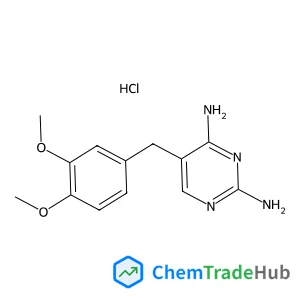
5-(3,4-Dimethoxybenzyl)-2,4-pyrimidinediamine hydrochloride (1:1)
CAS Number:
2507-23-5
Molecular Formula:
C13H17ClN4O2

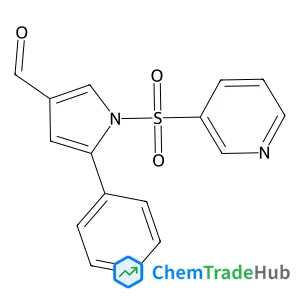
5-Phenyl-1-(pyridin-3-ylsulfonyl)-1H-pyrrole-3-carbaldehyde
CAS Number:
881676-90-0
Molecular Formula:
C16H12N2O3S
Recommended Suppliers






Disclaimer
This page provides academic journal information for reference and research purposes only. We are not affiliated with any journal publishers and do not handle publication submissions. For publication-related inquiries, please contact the respective journal publishers directly.
If you notice any inaccuracies in the information displayed, please contact us at support@chemtradehub.com. We will promptly review and address your concerns.