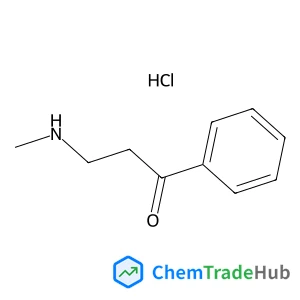
3-(Methylamino)-1-phenyl-1-propanone hydrochloride (1:1)
CAS Number:
2538-50-3
Molecular Formula:
C10H14ClNO
Y. Khabzina, C. Laroche, J. Pérez-Pellitero, D. Farrusseng
Streamlining the xylene separation process on faujasites is a promising way to design innovative adsorbents for this application. For this purpose, we present herein an original quantitative structure–property relationship (QSPR) approach. It deals with the development of a multi-linear predictive model correlating the separation properties with a set of structural descriptors for the adsorbents. The implementation of such an approach makes it necessary to (i) set an appropriate design of experiment (DOE), (ii) prepare an adsorbent database, (iii) test the adsorbent database for xylene separation and (iv) compute a set of relevant descriptors. The selected descriptors essentially characterize the nature of the confinement in the faujasite supercage, i.e., the size of the cations localized in adsorption sites II, as well as the occupancy ratio of both adsorption sites II and III. Two different statistical methods were applied to develop a structure–property relationship model linking experimental selectivity and the set of descriptors. A multiple linear regression model enables the prediction of para/meta-xylene selectivity with a correlation coefficient R2 of 0.78, while a linear discriminant analysis predicts the assignment of the adsorbents to four identified classes with a total prediction percentage of 76%.

Planta Medica

Science Progress

European Journal of Wood and Wood Products

Proceedings of the National Academy of Sciences of the United States of America

Pure and Applied Chemistry

Helvetica Chimica Acta

Journal of Heterocyclic Chemistry

Organic Preparations and Procedures International

Science

Russian Chemical Reviews
DOI: 10.1039/A902617G
DOI: 10.1039/A902553G
DOI: 10.1039/A902886B
Luca Bernazzani, Maria R. Carosi, Norberto Ceccanti, Giovanni Conti, Paolo Gianni, Vincenzo Mollica, Maria R. Tinè, Luciano Lepori, Enrico Matteoli
DOI: 10.1039/B004804F
Bernhard Schartel, Thomas Damerau, Manfred Hennecke
DOI: 10.1039/B004931J
Paweł Borowicz, Jerzy Herbich, Andrzej Kapturkiewicz, Romana Anulewicz-Ostrowska, Jacek Nowacki, Günter Grampp
DOI: 10.1039/B005058J
Camilla Haavik, Svein Stølen, Michael Hanfland, C. Richard A. Catlow
DOI: 10.1039/B006026G
Günter Förster, Annette Meister, Alfred Blume
DOI: 10.1039/B003278F
When handling 4-(2-Furylmethyl)thiomorpholine 1,1-dioxide (CAS: 79206-94-3), it ...
When handling 4-Chloro-N-[2-(4-morpholinyl)ethyl]benzamide (CAS: 71320-77-9), it...
Waste containing this compound (CAS: 62921-74-8) should be handled according to ...
Waste containing (S)-Methyl 2-amino-3-cyclohexylpropanoate should be collected i...
This compound can be synthesized using a multi-step process involving the conjug...
There are several alternatives to (2E)-3-(3,4-Dichlorophenyl)acrylic acid in syn...
Ethyl 6-(2-nitrophenyl)imidazo[2,1-b][1,3]thiazole-3-carboxylate (CAS: 925437-84...
Waste containing 2-(1,3-Thiazol-2-yl)ethanamine (CAS: 18453-07-1) should be coll...
Methyl 5-iodo-2-methylbenzoate can be synthesized through the iodination of meth...
5-Chloro[1,2,4]triazolo[1,5-a]pyridine is commonly synthesized via the condensat...

Physical Chemistry Chemical Physics (PCCP) is an international journal co-owned by 19 physical chemistry and physics societies from around the world. This journal publishes original, cutting-edge research in physical chemistry, chemical physics and biophysical chemistry. To be suitable for publication in PCCP, articles must include significant innovation and/or insight into physical chemistry; this is the most important criterion that reviewers and Editors will judge against when evaluating submissions. The journal has a broad scope and welcomes contributions spanning experiment, theory, computation and data science. Topical coverage includes spectroscopy, dynamics, kinetics, statistical mechanics, thermodynamics, electrochemistry, catalysis, surface science, quantum mechanics, quantum computing and machine learning. Interdisciplinary research areas such as polymers and soft matter, materials, nanoscience, energy, surfaces/interfaces, and biophysical chemistry are welcomed if they demonstrate significant innovation and/or insight into physical chemistry. Joined experimental/theoretical studies are particularly appreciated when complementary and based on up-to-date approaches.
![4-{2-[4-(2-Methyl-2-propanyl)phenyl]ethoxy}quinazoline structure](https://static.chemtradehub.com/structs/120/120928-09-8-d3db.webp "4-{2-[4-(2-Methyl-2-propanyl)phenyl]ethoxy}quinazoline structure")