












Visible light-triggered fluorescence and pH modulation using metastable-state photoacids and BODIPY
Literature Information
Publication Date
2018-08-08
DOI
10.1039/C8CP03977A
Impact Factor
3.676
Authors
Parth K. Patel, Juan E. Arias, Renan S. Gongora, Aurélien Moncomble, Stéphane Aloïse, Karin Y. Chumbimuni-Torres
View Original
Abstract
Small changes in the pH gradient play a critical role in numerous biological and chemical pathways. Systems capable of monitoring and regulating these changes with high sensitivity and minimum photo-fatigue are in demand. Herein, we propose a visible light-triggered molecular system that allows for reversible regulation of acidity and fluorescence. This robust bi-functional system opens a new horizon towards novel studies that rely on small changes in acid-mediated controlled processes with high sensitivity. The two photosensitive compounds employed, a metastable-state photoacid (mPAH) and a boron-dipyrromethene (BODIPY) derivative, allow for consistent modulation of both fluorescence (based on the working principle of the inner filter effect) and pH (around a magnitude) over multiple cycles.
Related Literature
Femtosecond to nanosecond excited state dynamics of vapor deposited copper phthalocyanine thin films
Benjamin W. Caplins, Tyler K. Mullenbach, Russell J. Holmes, David A. Blank
2016-03-29
Paper
DOI: 10.1039/C6CP00958A
Effect of environment on iodine oxidation state and reactivity with aluminum
Dylan K. Smith, Jena McCollum, Michelle L. Pantoya
2016-03-30
Paper
DOI: 10.1039/C5CP06998J
Time-resolved fluctuation during the photochemical reaction of a photoreceptor protein: phototropin1LOV2-linker
Kunisato Kuroi, Francielle Sato, Yusuke Nakasone, Kazunori Zikihara, Satoru Tokutomi, Masahide Terazima
2016-01-27
Paper
DOI: 10.1039/C5CP07472J
Electrochemical synthesis of poly(3-aminophenylboronic acid) in ethylene glycol without exogenous protons
Feifan Wang, Feixue Zou, Xinxin Yu, Zhenyu Feng, Na Du, Yaohua Zhong
2016-03-11
Paper
DOI: 10.1039/C6CP00800C
Spectroscopic properties and location of the Ce3+ energy levels in Y3Al2Ga3O12 and Y3Ga5O12 at ambient and high hydrostatic pressure
S. Mahlik, A. Lazarowska, J. Ueda, S. Tanabe, M. Grinberg
2016-02-01
Paper
DOI: 10.1039/C5CP07732J
Selective adsorption of arsenate and the reversible structure transformation of the mesoporous metal–organic framework MIL-100(Fe)
Li Jiang, Chunru Wang
2016-04-01
Communication
DOI: 10.1039/C6CP00249H
Plutonium and transplutonium element trioxides: molecular structures, chemical bonding, and isomers
2015-08-21
Paper
DOI: 10.1039/C5CP02190A
Defect structure and optical phonon confinement in ultrananocrystalline BixSn1−xO2 (x = 0, 0.03, 0.05, and 0.08) synthesized by a sonochemical method
L. Aswaghosh, Divinah Manoharan, N. Victor Jaya
2016-01-18
Paper
DOI: 10.1039/C5CP06214D
Sequential energy and electron transfer in a three-component system aligned on a clay nanosheet
Elamparuthi Ramasamy, Yohei Ishida, Vaidhyanathan Ramamurthy
2016-01-12
Paper
DOI: 10.1039/C5CP06984J
You might also like
Compound Q&A
What are the main uses of 1-(3-Aminophenyl)-3-[(3R)-1-(3,3-dimethyl-2-oxobutyl)-2-oxo-5-(2-pyridinyl)-2,3-dihydro-1H-1,4-benzodiazepin-3-yl]urea (CAS: 155412-88-7)?
This compound is mainly used as an intermediate in the synthesis of antipsychoti...
155412-88-71-(3-Aminophenyl)-3-...
Compound Q&A
How should waste containing 1-(D-Ribofuranosyl)-1,4-dihydro-3-pyridinecarboxamide (CAS: 19132-12-8) be handled?
Waste containing 1-(D-Ribofuranosyl)-1,4-dihydro-3-pyridinecarboxamide (CAS: 191...
19132-12-81-(D-Ribofuranosyl)-...
Compound Q&A
What regulatory guidelines apply to 2-Methyl-2-propanyl 3-bromo-3-(hydroxymethyl)-1-azetidinecarboxylate (CAS: 2007919-81-3)?
2-Methyl-2-propanyl 3-bromo-3-(hydroxymethyl)-1-azetidinecarboxylate (CAS: 20079...
2007919-81-32-Methyl-2-propanyl ...
Compound Q&A
What is N-(4-Chloro-2-pyridinyl)acetamide (CAS: 245056-66-0)?
N-(4-Chloro-2-pyridinyl)acetamide (CAS: 245056-66-0) is a chemical compound with...
245056-66-0N-(4-Chloro-2-pyridi...
Compound Q&A
What is 5-Chloro-2-hydroxybenzoic acid (CAS: 321-14-2)?
5-Chloro-2-hydroxybenzoic acid, also known as 5-chlorosalicylic acid, is an arom...
321-14-25-Chloro-2-hydroxybe...
Compound Q&A
What precautions should be taken when handling 1,1-Dichloro-1-fluoroethane (CAS: 1717-00-6)?
When handling 1,1-Dichloro-1-fluoroethane (CAS: 1717-00-6), it is important to u...
1717-00-61,1-Dichloro-1-fluor...
Compound Q&A
What are the physical and chemical properties of Fmoc-(2S,3R)-3-phenylpyrrolidine-2-carboxylic acid (CAS: 281655-32-1)?
Fmoc-(2S,3R)-3-phenylpyrrolidine-2-carboxylic acid is a white crystalline solid ...
281655-32-1Fmoc-(2S,3R)-3-pheny...
Compound Q&A
What are the main uses of 4-Amino-5-bromo-2-pyridinecarboxylic acid (CAS: 1363381-01-4)?
4-Amino-5-bromo-2-pyridinecarboxylic acid is primarily used as a precursor in th...
1363381-01-44-Amino-5-bromo-2-py...
Compound Q&A
What precautions should be taken when handling (S)-tert-butyl 2-((2-(4-bromophenyl)-2-oxoethyl)carbamoyl)pyrrolidine-1-carboxylate (CAS: 1007881-98-2)?
Handling this compound should be done with personal protective equipment (PPE) i...
1007881-98-2(S)-tert-butyl 2-((2...
Compound Q&A
What precautions should be taken when handling 8-bromo-2,2-dimethyl-3,4-dihydro-2H-1,4-benzoxazin-3-one (CAS: 688363-73-7)?
When handling 8-bromo-2,2-dimethyl-3,4-dihydro-2H-1,4-benzoxazin-3-one, use prop...
688363-73-78-bromo-2,2-dimethyl...
Source Journal
Physical Chemistry Chemical Physics

CiteScore:
5.5
Self-citation Rate:
10.3%
Articles per Year:
3036
Physical Chemistry Chemical Physics (PCCP) is an international journal co-owned by 19 physical chemistry and physics societies from around the world. This journal publishes original, cutting-edge research in physical chemistry, chemical physics and biophysical chemistry. To be suitable for publication in PCCP, articles must include significant innovation and/or insight into physical chemistry; this is the most important criterion that reviewers and Editors will judge against when evaluating submissions. The journal has a broad scope and welcomes contributions spanning experiment, theory, computation and data science. Topical coverage includes spectroscopy, dynamics, kinetics, statistical mechanics, thermodynamics, electrochemistry, catalysis, surface science, quantum mechanics, quantum computing and machine learning. Interdisciplinary research areas such as polymers and soft matter, materials, nanoscience, energy, surfaces/interfaces, and biophysical chemistry are welcomed if they demonstrate significant innovation and/or insight into physical chemistry. Joined experimental/theoretical studies are particularly appreciated when complementary and based on up-to-date approaches.
Recommended Compounds
![1-[3-(4-Morpholinylsulfonyl)phenyl]methanamine structure](https://static.chemtradehub.com/structs/933/933989-32-3-51af.webp "1-[3-(4-Morpholinylsulfonyl)phenyl]methanamine structure")
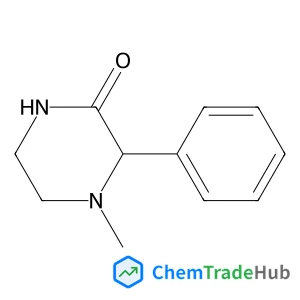

3-Chloro-5-(4,4,5,5-tetramethyl-1,3,2-dioxaborolan-2-yl)-2-pyridinamine
CAS Number:
1032758-99-8
Molecular Formula:
C11H16BClN2O2
Recommended Suppliers




Disclaimer
This page provides academic journal information for reference and research purposes only. We are not affiliated with any journal publishers and do not handle publication submissions. For publication-related inquiries, please contact the respective journal publishers directly.
If you notice any inaccuracies in the information displayed, please contact us at support@chemtradehub.com. We will promptly review and address your concerns.