












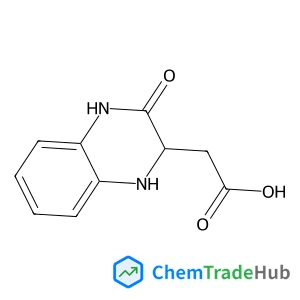
(3-Oxo-1,2,3,4-tetrahydro-2-quinoxalinyl)acetic acid
CAS Number:
136584-14-0
Molecular Formula:
C10H10N2O3
Li Jiang, Chunru Wang
Here we describe a highly porous metal–organic framework MIL-100(Fe), which is initially used as an arsenate adsorbent in water. An appropriate mesoporous size allows AsO43− to enter unrestrained and then be captured successfully, furthermore resulting in the damage of long-range order of uniform mesopores. Moreover, the porous framework could also make AsO43− be reversibly desorbed without structural changes and the long-range order of mesopores be recovered again.
Siming Wang, Ronny William, Kim Kui Georgina Estelle Seah, Xue-Wei Liu
DOI: 10.1039/C3GC41032C
DOI: 10.1039/C3GC41179F
Kang-ming Tian, Dan-dan Niu, Govender Algasan, Suren Singh, Zheng-xiang Wang
DOI: 10.1039/C3GC41769G
Seyed Meysam Baghbanian, Niloufar Rezaei, Hamed Tashakkorian
DOI: 10.1039/C3GC41302K
Yin Ngai Sum, Dingyi Yu, Yugen Zhang
DOI: 10.1039/C3GC41269E
Thanh Binh Nguyen, Ludmila Ermolenko, Ali Al-Mourabit
DOI: 10.1039/C3GC41186A
Rohitkumar G. Gore, Lauren Myles, Marcel Spulak, Ian Beadham, Teresa M. Garcia, Stephen J. Connon, Nicholas Gathergood
DOI: 10.1039/C3GC40992A
Andreas J. Kunov-Kruse, Anders Riisager, Shunmugavel Saravanamurugan, Rolf W. Berg, Steffen B. Kristensen, Rasmus Fehrmann
DOI: 10.1039/C3GC41174E
Svilen P. Simeonov, José M. S. S. Esperança, Luís Paulo N. Rebelo, Carlos A. M. Afonso
DOI: 10.1039/C3GC40930A
DOI: 10.1039/C3GC41376D
This compound is mainly used as an intermediate in the synthesis of antipsychoti...
Waste containing 1-(D-Ribofuranosyl)-1,4-dihydro-3-pyridinecarboxamide (CAS: 191...
2-Methyl-2-propanyl 3-bromo-3-(hydroxymethyl)-1-azetidinecarboxylate (CAS: 20079...
N-(4-Chloro-2-pyridinyl)acetamide (CAS: 245056-66-0) is a chemical compound with...
5-Chloro-2-hydroxybenzoic acid, also known as 5-chlorosalicylic acid, is an arom...
When handling 1,1-Dichloro-1-fluoroethane (CAS: 1717-00-6), it is important to u...
Fmoc-(2S,3R)-3-phenylpyrrolidine-2-carboxylic acid is a white crystalline solid ...
4-Amino-5-bromo-2-pyridinecarboxylic acid is primarily used as a precursor in th...
Handling this compound should be done with personal protective equipment (PPE) i...
When handling 8-bromo-2,2-dimethyl-3,4-dihydro-2H-1,4-benzoxazin-3-one, use prop...

Physical Chemistry Chemical Physics (PCCP) is an international journal co-owned by 19 physical chemistry and physics societies from around the world. This journal publishes original, cutting-edge research in physical chemistry, chemical physics and biophysical chemistry. To be suitable for publication in PCCP, articles must include significant innovation and/or insight into physical chemistry; this is the most important criterion that reviewers and Editors will judge against when evaluating submissions. The journal has a broad scope and welcomes contributions spanning experiment, theory, computation and data science. Topical coverage includes spectroscopy, dynamics, kinetics, statistical mechanics, thermodynamics, electrochemistry, catalysis, surface science, quantum mechanics, quantum computing and machine learning. Interdisciplinary research areas such as polymers and soft matter, materials, nanoscience, energy, surfaces/interfaces, and biophysical chemistry are welcomed if they demonstrate significant innovation and/or insight into physical chemistry. Joined experimental/theoretical studies are particularly appreciated when complementary and based on up-to-date approaches.
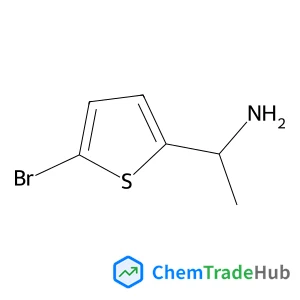
![tert-Butyl N-[(2-chloropyridin-4-yl)methyl]carbamate structure](https://static.chemtradehub.com/structs/916/916210-27-0-9f95.webp "tert-Butyl N-[(2-chloropyridin-4-yl)methyl]carbamate structure")
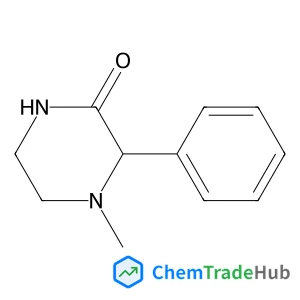
![5-Methyl-4,5,6,7-tetrahydropyrazolo[1,5-a]pyrazin-2-amine structure](https://static.chemtradehub.com/structs/122/1227210-33-4-8d64.webp "5-Methyl-4,5,6,7-tetrahydropyrazolo[1,5-a]pyrazin-2-amine structure")




