


![(3S,4aS,8aS)-2-[(2R,3S)-3-Amino-2-hydroxy-4-phenylbutyl]-N-(2-methyl-2-propanyl)decahydro-3-isoquinolinecarboxamide structure](https://static.chemtradehub.com/structs/136/136522-17-3-4d77.webp "(3S,4aS,8aS)-2-[(2R,3S)-3-Amino-2-hydroxy-4-phenylbutyl]-N-(2-methyl-2-propanyl)decahydro-3-isoquinolinecarboxamide structure")
(3S,4aS,8aS)-2-[(2R,3S)-3-Amino-2-hydroxy-4-phenylbutyl]-N-(2-methyl-2-propanyl)decahydro-3-isoquinolinecarboxamide
CAS Number:
136522-17-3
Molecular Formula:
C24H39N3O2
Jiajing Tan, Binbin Liu, Shuaisong Su
The direct dearomatization reaction of isoquinolines and quinolines with chloroform has been accomplished through in situ electrophilic aryne activation and nucleophile formation. This transition metal-free protocol shows a broad scope of substrates, providing consistently high yields of medicinally-important dihydro(iso)quinoline derivatives. The utility of this method has been further demonstrated in the synthesis of deuterated analogues.

Journal of Catalysis

Kinetics and Catalysis

Science

Israel Journal of Chemistry

Journal of Heterocyclic Chemistry

Pure and Applied Chemistry

Organic Preparations and Procedures International

Journal of Physics and Chemistry of Solids

Fibre Chemistry

Proceedings of the National Academy of Sciences of the United States of America
Hossam M. Nassef, Laia Civit, Alex Fragoso
DOI: 10.1039/B808499H
Yaqiong Wen, Hongyan Yuan, Jianfei Mao, Martin M. F. Choi
DOI: 10.1039/B812750F
Robert C. Triulzi, Miodrag Micic, Jhony Orbulescu, Silvia Giordani, Bill Mueller, Roger M. Leblanc
DOI: 10.1039/B718730K
Emeline Chu-Van, Gaud Pinel, Patrice Garcia, Marie-Agnès Popot, Geneviève André-Fontaine, Yves Bonnaire, Bruno Le Bizec
DOI: 10.1039/B713712E
Dimitrios S. Elenis, Penelope C. Ioannou
DOI: 10.1039/B818516F
Silvija Abele, Fu-Qiang Nie, František Foret, Brett Paull, Mirek Macka
DOI: 10.1039/B802693A
Denis Menshykau, Xing-Jiu Huang, Neil V. Rees, F. Javier del Campo, Francesc Xavier Muñoz, Richard G. Compton
DOI: 10.1039/B816223A
Lynn Dennany, Tia E. Keyes, Robert J. Forster
DOI: 10.1039/B718505G
2-(2-Chloroacetamido)-3-phenylpropanoic acid (CAS: 7765-11-9) is generally consi...
2-(Benzyloxy)-5-bromobenzoic acid can be handled safely if appropriate precautio...
(4-Methyl-1,2,5-oxadiazol-3-yl)methanamine hydrochloride is a chemical compound ...
2-(5-Hexylthiophen-2-yl)-4,4,5,5-tetramethyl-1,3,2-dioxaborolane (CAS: 917985-54...
While 4-(8-Methyl-9H-1,3-dioxolo[4,5-h][2,3]benzodiazepin-5-yl)benzenamine (CAS:...
The market for tert-butyl 3-hydroxy-4,5,7,8-tetrahydro-2H-pyrazolo[3,4-d]azepine...
Waste containing 3,5-Diamino-1H-pyrazole-4-carbonitrile (CAS: 6844-58-2) should ...
(6-Fluoro-3-pyridinyl)boronic acid can be synthesized through the reaction of 6-...
Dibenzyl carbonimidoylbiscarbamate (CAS: 10065-79-9) finds applications in vario...
The market for (beta,beta,2,3,4,5,6-~2~H_7_)Phenylalanine (CAS: 74228-83-4) is g...

Organic Chemistry Frontiers publishes high-quality research from across organic chemistry. Emphases are placed on studies that make significant contributions to the field of organic chemistry by reporting either new or significantly improved protocols or methodologies. Topics include, but are not limited to the following: Organic synthesis Development of synthetic methodologies Catalysis Natural products Functional organic materials Supramolecular and macromolecular chemistry Physical and computational organic chemistry
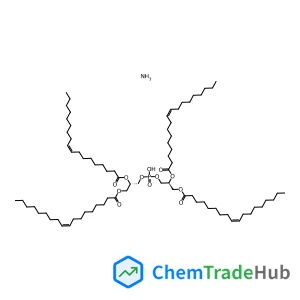
![(1R)-N-((1R)-1-Phenylethyl)-1-[4-(tert-butyldimethylsilyloxymethyl)cyclohexyl]ethan-1-amine structure](https://static.chemtradehub.com/structs/672/672314-45-3-47ef.webp "(1R)-N-((1R)-1-Phenylethyl)-1-[4-(tert-butyldimethylsilyloxymethyl)cyclohexyl]ethan-1-amine structure")
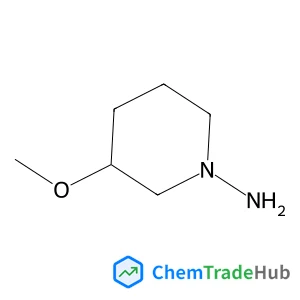
![(1S)-1,5-Anhydro-2-O-alpha-L-arabinopyranosyl-1-[5-hydroxy-7-({6-O-[3-(4-hydroxy-3-methoxyphenyl)propanoyl]-beta-D-glucopyranosyl}oxy)-2-(4-hydroxyphenyl)-4-oxo-4H-chromen-6-yl]-D-glucitol structure](https://static.chemtradehub.com/structs/225/2252345-81-4-bcff.webp "(1S)-1,5-Anhydro-2-O-alpha-L-arabinopyranosyl-1-[5-hydroxy-7-({6-O-[3-(4-hydroxy-3-methoxyphenyl)propanoyl]-beta-D-glucopyranosyl}oxy)-2-(4-hydroxyphenyl)-4-oxo-4H-chromen-6-yl]-D-glucitol structure")




