












Fluctuations of random walks in critical random environments
Literature Information
Publication Date
2018-07-19
DOI
10.1039/C8CP03212B
Impact Factor
3.676
Authors
Yousof Mardoukhi, Ralf Metzler
View Original
Abstract
Percolation networks have been widely used in the description of porous media but are now found to be relevant to understand the motion of particles in cellular membranes or the nucleus of biological cells. Random walks on the infinite cluster at criticality of a percolation network are asymptotically ergodic. On any finite size cluster of the network stationarity is reached at finite times, depending on the cluster's size. Despite of this we here demonstrate by combination of analytical calculations and simulations that at criticality the disorder and cluster size average of the ensemble of clusters leads to a non-vanishing variance of the time averaged mean squared displacement, regardless of the measurement time. Fluctuations of this relevant experimental quantity due to the disorder average of such ensembles are thus persistent and non-negligible. The relevance of our results for single particle tracking analysis in complex and biological systems is discussed.
Related Literature
Charge carrier dynamics of methylammonium lead iodide: from PbI2-rich to low-dimensional broadly emitting perovskites
Johannes R. Klein, Oliver Flender, Mirko Scholz, Kawon Oum, Thomas Lenzer
2016-03-14
Paper
DOI: 10.1039/C5CP07167D
Methanol synthesis via CO2 hydrogenation over a Au/ZnO catalyst: an isotope labelling study on the role of CO in the reaction process
Yeusy Hartadi, Daniel Widmann, R. Jürgen Behm
2016-02-15
Paper
DOI: 10.1039/C5CP06888F
Interaction between copper and carbon nanotubes triggers their mutual role in the enhanced photodegradation of p-chloroaniline
N. F. Khusnun, S. Triwahyono, N. W. C. Jusoh
2016-03-29
Paper
DOI: 10.1039/C5CP08068A
Life of superoxide in aprotic Li–O2 battery electrolytes: simulated solvent and counter-ion effects
J. Scheers, D. Lidberg, Z. Futera
2016-02-24
Paper
DOI: 10.1039/C5CP08056H
Effect of the alkaline cation size on the conductivity in gel polymer electrolytes and their influence on photo electrochemical solar cells
M. Furlani, I. Albinsson, J. L. Ratnasekera, B.-E. Mellander
2016-03-16
Paper
DOI: 10.1039/C6CP00013D
In situ characterization of the decomposition behavior of Mg(BH4)2 by X-ray Raman scattering spectroscopy
Simon Kujawski, Arndt Remhof, Yigang Yan, Nicholas P. Stadie, Ali Al-Zein, Metin Tolan, Simo Huotari, Michael Krisch, Christian Sternemann
2016-01-06
Paper
DOI: 10.1039/C5CP06571B
Kinetics of the ClO + HO2 reaction over the temperature range T = 210–298 K
Michael K. M. Ward, David M. Rowley
2016-02-02
Paper
DOI: 10.1039/C5CP07329D
Robust half-metallic ferromagnetism and curvature dependent magnetic coupling in fluorinated boron nitride nanotubes
Chunsheng Guo, Yu Zhou, Xin-Qiang Shi, Li-Yong Gan, Hong Jiang
2016-04-04
Paper
DOI: 10.1039/C6CP01477A
Molecular simulations of imidazolium-based tricyanomethanide ionic liquids using an optimized classical force field
Niki Vergadou, Jörg-Rüdiger Hill
2016-02-01
Paper
DOI: 10.1039/C5CP05892A
You might also like
Compound Q&A
What are the main uses of 1-(3-Aminophenyl)-3-[(3R)-1-(3,3-dimethyl-2-oxobutyl)-2-oxo-5-(2-pyridinyl)-2,3-dihydro-1H-1,4-benzodiazepin-3-yl]urea (CAS: 155412-88-7)?
This compound is mainly used as an intermediate in the synthesis of antipsychoti...
155412-88-71-(3-Aminophenyl)-3-...
Compound Q&A
How should waste containing 1-(D-Ribofuranosyl)-1,4-dihydro-3-pyridinecarboxamide (CAS: 19132-12-8) be handled?
Waste containing 1-(D-Ribofuranosyl)-1,4-dihydro-3-pyridinecarboxamide (CAS: 191...
19132-12-81-(D-Ribofuranosyl)-...
Compound Q&A
What regulatory guidelines apply to 2-Methyl-2-propanyl 3-bromo-3-(hydroxymethyl)-1-azetidinecarboxylate (CAS: 2007919-81-3)?
2-Methyl-2-propanyl 3-bromo-3-(hydroxymethyl)-1-azetidinecarboxylate (CAS: 20079...
2007919-81-32-Methyl-2-propanyl ...
Compound Q&A
What is N-(4-Chloro-2-pyridinyl)acetamide (CAS: 245056-66-0)?
N-(4-Chloro-2-pyridinyl)acetamide (CAS: 245056-66-0) is a chemical compound with...
245056-66-0N-(4-Chloro-2-pyridi...
Compound Q&A
What is 5-Chloro-2-hydroxybenzoic acid (CAS: 321-14-2)?
5-Chloro-2-hydroxybenzoic acid, also known as 5-chlorosalicylic acid, is an arom...
321-14-25-Chloro-2-hydroxybe...
Compound Q&A
What precautions should be taken when handling 1,1-Dichloro-1-fluoroethane (CAS: 1717-00-6)?
When handling 1,1-Dichloro-1-fluoroethane (CAS: 1717-00-6), it is important to u...
1717-00-61,1-Dichloro-1-fluor...
Compound Q&A
What are the physical and chemical properties of Fmoc-(2S,3R)-3-phenylpyrrolidine-2-carboxylic acid (CAS: 281655-32-1)?
Fmoc-(2S,3R)-3-phenylpyrrolidine-2-carboxylic acid is a white crystalline solid ...
281655-32-1Fmoc-(2S,3R)-3-pheny...
Compound Q&A
What are the main uses of 4-Amino-5-bromo-2-pyridinecarboxylic acid (CAS: 1363381-01-4)?
4-Amino-5-bromo-2-pyridinecarboxylic acid is primarily used as a precursor in th...
1363381-01-44-Amino-5-bromo-2-py...
Compound Q&A
What precautions should be taken when handling (S)-tert-butyl 2-((2-(4-bromophenyl)-2-oxoethyl)carbamoyl)pyrrolidine-1-carboxylate (CAS: 1007881-98-2)?
Handling this compound should be done with personal protective equipment (PPE) i...
1007881-98-2(S)-tert-butyl 2-((2...
Compound Q&A
What precautions should be taken when handling 8-bromo-2,2-dimethyl-3,4-dihydro-2H-1,4-benzoxazin-3-one (CAS: 688363-73-7)?
When handling 8-bromo-2,2-dimethyl-3,4-dihydro-2H-1,4-benzoxazin-3-one, use prop...
688363-73-78-bromo-2,2-dimethyl...
Source Journal
Physical Chemistry Chemical Physics

CiteScore:
5.5
Self-citation Rate:
10.3%
Articles per Year:
3036
Physical Chemistry Chemical Physics (PCCP) is an international journal co-owned by 19 physical chemistry and physics societies from around the world. This journal publishes original, cutting-edge research in physical chemistry, chemical physics and biophysical chemistry. To be suitable for publication in PCCP, articles must include significant innovation and/or insight into physical chemistry; this is the most important criterion that reviewers and Editors will judge against when evaluating submissions. The journal has a broad scope and welcomes contributions spanning experiment, theory, computation and data science. Topical coverage includes spectroscopy, dynamics, kinetics, statistical mechanics, thermodynamics, electrochemistry, catalysis, surface science, quantum mechanics, quantum computing and machine learning. Interdisciplinary research areas such as polymers and soft matter, materials, nanoscience, energy, surfaces/interfaces, and biophysical chemistry are welcomed if they demonstrate significant innovation and/or insight into physical chemistry. Joined experimental/theoretical studies are particularly appreciated when complementary and based on up-to-date approaches.
Recommended Compounds
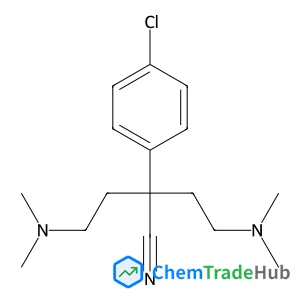
2-(4-Chlorophenyl)-4-(dimethylamino)-2-(2-(dimethylamino)ethyl)butanenitrile
CAS Number:
1246816-57-8
Molecular Formula:
C16H24ClN3

![Methyl 4-({[(2-methyl-2-propanyl)oxy]carbonyl}amino)bicyclo[2.2.2]octane-1-carboxylate structure](https://static.chemtradehub.com/structs/943/943845-74-7-b7e5.webp "Methyl 4-({[(2-methyl-2-propanyl)oxy]carbonyl}amino)bicyclo[2.2.2]octane-1-carboxylate structure")
Methyl 4-({[(2-methyl-2-propanyl)oxy]carbonyl}amino)bicyclo[2.2.2]octane-1-carboxylate
CAS Number:
943845-74-7
Molecular Formula:
C15H25NO4
![Pyrazolo[1,5-a]pyridine-3-carbothioamide structure](https://static.chemtradehub.com/structs/885/885275-44-5-aae0.webp "Pyrazolo[1,5-a]pyridine-3-carbothioamide structure")
Recommended Suppliers






Disclaimer
This page provides academic journal information for reference and research purposes only. We are not affiliated with any journal publishers and do not handle publication submissions. For publication-related inquiries, please contact the respective journal publishers directly.
If you notice any inaccuracies in the information displayed, please contact us at support@chemtradehub.com. We will promptly review and address your concerns.