













[(H2O)Zn(Imidazole)n]2+: the vital roles of coordination number and geometry in Zn–OH2 acidity and catalytic hydrolysis
Literature Information
Publication Date
2018-09-17
DOI
10.1039/C8CP03121E
Impact Factor
3.676
Authors
Douglas P. Linder, Brett E. Baker, Kenton R. Rodgers
View Original
Abstract
The Zn(II)–(Imidazole(ate))n coordination motif occurs in numerous biochemical systems, including carbonic anhydrase and the matrix metalloproteinases (MMPs). Additionally, it has been used in synthetic materials, such as the zinc-based zeolitic imidazolate framework (ZIF) structures. Zinc centers in these systems typically act as Lewis acids that form complexes with small molecules, such as H2O, which is activated catalytically toward a number of important and useful hydrolysis reactions. The results reported herein from density functional theory (M05-2X) and ab initio (MP2 and CCSD(T)) calculations demonstrate that both the coordination number and the molecular geometry have a sizable impact on the binding strength, deprotonation energy, and acidity of the Zn(II) coordinated water. Through a series of quantum mechanical calculations on [(ImH)nZn–OH2]2+ complexes (n = 1–5), both the solution-phase pKa and the gas-phase proton dissociation energy significantly increase as n increases. While this should not be too surprising, the Zn–OH2 bond dissociation energies and bond lengths don’t necessarily undergo a concurrent decrease, and therefore would be of limited use as a prediction tool regarding Zn–OH2 acidity. In an effort to dissect the impacts of coordination number and molecular geometry on these thermodynamic parameters, we performed constrained geometry optimizations on the three- (n = 2) and four-coordinate (n = 3) complexes. These calculations surprisingly reveal a marked impact on the pKa and proton dissociation energy of the coordinated water, upon exclusive changes in the Zn(II) coordination geometry, whether in the gas-phase or in aqueous solution. We discuss the relevance of these results to the catalytic peptide hydrolysis mechanism of the MMPs and possible implications for catalytic activity within or on the surfaces of ZIFs.
Related Literature
A one-step colorimetric acid–base titration sensor using a complementary color changing coordination system
Hui Hun Cho, Si Hyun Kim, Jun Hyuk Heo, Young Eel Moon, Young Hun Choi, Dong Cheol Lim, Kwon-Hoon Han
2016-04-21
Paper
DOI: 10.1039/C6AN00744A
Recent advances in inorganic materials for LDI-MS analysis of small molecules
C. Y. Shi, C. H. Deng
2016-03-18
Minireview
DOI: 10.1039/C6AN00220J
Attenuated total reflection Fourier-transform infrared spectral discrimination in human bodily fluids of oesophageal transformation to adenocarcinoma
Ishaan Maitra, Camilo L. M. Morais, Katherine M. Ashton, Ravindra S. Date, Francis L. Martin
2019-10-31
Paper
DOI: 10.1039/C9AN01749F
DNA tetrahedron and star trigon nanostructures for target recycling detection of nucleic acid
Xifeng Chen, Bidou Wang, Guangxing Liu, Yuguo Tang, Peng Miao
2016-05-04
Communication
DOI: 10.1039/C6AN00762G
pulSED: pulsed sonoelectrodeposition of fractal nanoplatinum for enhancing amperometric biosensor performance
M. Taguchi, N. Schwalb, Y. Rong, N. Garland, M. Tan, H. Yamaguchi, J. C. Claussen, E. S. McLamore
2016-04-20
Paper
DOI: 10.1039/C6AN00069J
Fluorescence array-based sensing of nitroaromatics using conjugated polyelectrolytes
Yu Zong Chen
2016-05-03
Communication
DOI: 10.1039/C6AN00678G
An intramolecular charge transfer and excited state intramolecular proton transfer based fluorescent probe for highly selective detection and imaging of formaldehyde in living cells
Wen Chen, Mei Yang, Na Luo, Fenglin Wang, Ru-Qin Yu, Jian-Hui Jiang
2019-10-03
Paper
DOI: 10.1039/C9AN01778J
Surface-enhanced Raman spectroscopy (SERS) characterisation of abasic sites in DNA duplexes
Luca Guerrini
2019-11-05
Communication
DOI: 10.1039/C9AN02040C
Adaptive use of a personal glucose meter (PGM) for acute biotoxicity assessment based on the glucose consumption of microbes
Yuan Yu, Jie Shen, Jinfang Zhi
2016-03-23
Paper
DOI: 10.1039/C5AN02478A
You might also like
Compound Q&A
What precautions should be taken when handling 4-(2-Furylmethyl)thiomorpholine 1,1-dioxide (CAS: 79206-94-3)?
When handling 4-(2-Furylmethyl)thiomorpholine 1,1-dioxide (CAS: 79206-94-3), it ...
79206-94-34-(2-Furylmethyl)thi...
Compound Q&A
What precautions should be taken when handling 4-Chloro-N-[2-(4-morpholinyl)ethyl]benzamide (CAS: 71320-77-9)?
When handling 4-Chloro-N-[2-(4-morpholinyl)ethyl]benzamide (CAS: 71320-77-9), it...
71320-77-94-Chloro-N-[2-(4-mor...
Compound Q&A
How should waste containing 2-[2-(2-Methoxyethoxy)ethoxy]ethyl 4-methylbenzenesulfonate (CAS: 62921-74-8) be handled?
Waste containing this compound (CAS: 62921-74-8) should be handled according to ...
62921-74-82-[2-(2-Methoxyethox...
Compound Q&A
How should waste containing (S)-Methyl 2-amino-3-cyclohexylpropanoate be handled?
Waste containing (S)-Methyl 2-amino-3-cyclohexylpropanoate should be collected i...
40056-18-6(S)-Methyl 2-amino-3...
Compound Q&A
How is 5-({4-[(2S,4R)-4-Hydroxy-2-methyltetrahydro-2H-pyran-4-yl]-2-thienyl}sulfanyl)-1-methyl-1,3-dihydro-2H-indol-2-one (CAS: 166882-70-8) typically synthesized?
This compound can be synthesized using a multi-step process involving the conjug...
166882-70-85-({4-[(2S,4R)-4-Hyd...
Compound Q&A
Are there alternatives to (2E)-3-(3,4-Dichlorophenyl)acrylic acid (CAS: 7312-27-8) in synthesis?
There are several alternatives to (2E)-3-(3,4-Dichlorophenyl)acrylic acid in syn...
7312-27-8(2E)-3-(3,4-Dichloro...
Compound Q&A
How should Ethyl 6-(2-nitrophenyl)imidazo[2,1-b][1,3]thiazole-3-carboxylate (CAS: 925437-84-9) be stored?
Ethyl 6-(2-nitrophenyl)imidazo[2,1-b][1,3]thiazole-3-carboxylate (CAS: 925437-84...
925437-84-9Ethyl 6-(2-nitrophen...
Compound Q&A
How should waste containing 2-(1,3-Thiazol-2-yl)ethanamine (CAS: 18453-07-1) be handled?
Waste containing 2-(1,3-Thiazol-2-yl)ethanamine (CAS: 18453-07-1) should be coll...
18453-07-12-(1,3-Thiazol-2-yl)...
Compound Q&A
How is Methyl 5-iodo-2-methylbenzoate (CAS: 103440-54-6) typically synthesized?
Methyl 5-iodo-2-methylbenzoate can be synthesized through the iodination of meth...
103440-54-6Methyl 5-iodo-2-meth...
Compound Q&A
How is 5-Chloro[1,2,4]triazolo[1,5-a]pyridine (CAS: 1427399-34-5) typically synthesized?
5-Chloro[1,2,4]triazolo[1,5-a]pyridine is commonly synthesized via the condensat...
1427399-34-55-Chloro[1,2,4]triaz...
Source Journal
Physical Chemistry Chemical Physics

CiteScore:
5.5
Self-citation Rate:
10.3%
Articles per Year:
3036
Physical Chemistry Chemical Physics (PCCP) is an international journal co-owned by 19 physical chemistry and physics societies from around the world. This journal publishes original, cutting-edge research in physical chemistry, chemical physics and biophysical chemistry. To be suitable for publication in PCCP, articles must include significant innovation and/or insight into physical chemistry; this is the most important criterion that reviewers and Editors will judge against when evaluating submissions. The journal has a broad scope and welcomes contributions spanning experiment, theory, computation and data science. Topical coverage includes spectroscopy, dynamics, kinetics, statistical mechanics, thermodynamics, electrochemistry, catalysis, surface science, quantum mechanics, quantum computing and machine learning. Interdisciplinary research areas such as polymers and soft matter, materials, nanoscience, energy, surfaces/interfaces, and biophysical chemistry are welcomed if they demonstrate significant innovation and/or insight into physical chemistry. Joined experimental/theoretical studies are particularly appreciated when complementary and based on up-to-date approaches.
Recommended Compounds
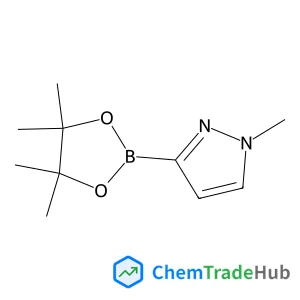
1-Methyl-3-(4,4,5,5-tetramethyl-1,3,2-dioxaborolan-2-yl)-1H-pyrazole
CAS Number:
1020174-04-2
Molecular Formula:
C10H17BN2O2

![N-[(Benzyloxy)carbonyl]serine structure](https://static.chemtradehub.com/structs/276/2768-56-1-77f7.webp "N-[(Benzyloxy)carbonyl]serine structure")
Recommended Suppliers



Disclaimer
This page provides academic journal information for reference and research purposes only. We are not affiliated with any journal publishers and do not handle publication submissions. For publication-related inquiries, please contact the respective journal publishers directly.
If you notice any inaccuracies in the information displayed, please contact us at support@chemtradehub.com. We will promptly review and address your concerns.