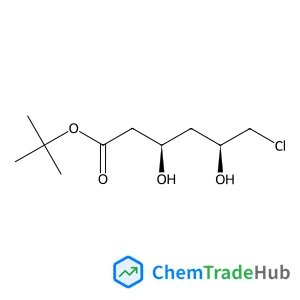
2-Methyl-2-propanyl (3R,5S)-6-chloro-3,5-dihydroxyhexanoate
CAS Number:
154026-93-4
Molecular Formula:
C10H19ClO4
Pei Zhao, Hao Jin, Xingshuai Lv, Baibiao Huang, Yandong Ma, Ying Dai
The development of MoS2-based electronic devices is dependent on finding electrode materials suitable for forming Ohmic contacts with MoS2. For this purpose, we carried out density functional theory and nonequilibrium Green's function calculations to investigate the possibility of using pristine and modified MXene (Ta2C/Ta2CF2/Ta2C(OH)2) monolayers as the electrode materials in such devices. These calculations indicated the formation of chemical bonds at the MoS2/Ta2C interface, and resulting strong orbital hybridization between the MoS2 and Ta2C components, but relatively weak interactions for MoS2/Ta2CF2 and MoS2/Ta2C(OH)2. Ohmic contacts were observed in all three cases. Transport properties were further simulated by modeling two-probe field effect transistors (FETs) with Ta2C/Ta2CF2/Ta2C(OH)2 as electrodes. Interestingly, these simulations indicated the formation of Ohmic contacts between Ta2CF2/Ta2C(OH)2 electrodes and the channel, but an n-type Schottky barrier for the Ta2C electrode. Furthermore, we found the resistance of the FET based on MoS2/Ta2C(OH)2 to be half of that based on MoS2/Ta2CF2. The results of our study not only revealed promising electrode materials for forming full Ohmic contacts with MoS2 monolayers in FET devices, but also validated the effective role of a small-molecule fragment as a buffer layer in realizing Ohmic contacts between metal and semiconductor.
Ming Wang, Yu-Hua Shi, Jun-Fei Luo, Wenting Du, Xiao-Xin Shi, Wei-Ping Deng
DOI: 10.1039/C0CY00001A
Sital M. Patel, Maria de la Fuente, Song Ke, Andreia M. R. Guimarães, Adeola O. Oliyide, Xiaoyun Ji, Paul Stapleton, Anne Osbourn, Yi Pan, Dianna J. Bowles, Benjamin G. Davis, Andreas Schatzlein, Min Yang
DOI: 10.1039/C1CC13552J
Ma.-Angeles Cano-Herrera, Luis D. Miranda
DOI: 10.1039/C1CC10759C
Jian Zhi, Depeng Song, Zhiwen Li, Xia Lei, Aiguo Hu
DOI: 10.1039/C1CC14169D
Yi He, Danqing Liu, Xinyuan He, Hua Cui
DOI: 10.1039/C1CC14389A
Toyonobu Usuki, Nanae Yasuda, Masahiro Yoshizawa-Fujita, Masahiro Rikukawa
DOI: 10.1039/C1CC13306C
Swarupananda Maiti, J. Carlos Menéndez
DOI: 10.1039/C1CC11246E
Nelma Gomes, José A. Teixeira, Isabel Belo
DOI: 10.1039/C0CY00017E
(1R,3S)-1,3-Cyclopentanediol finds applications in various industries. In the ph...
When handling N'-[4-(Dimethylamino)phenyl]-N,N-dimethyl-1,4-benzenediamine, it i...
There are several alternatives to 5-(2,4-Difluorophenyl)-2-methoxypyrimidine in ...
1-(3-Methoxyphenoxy)propan-2-ol (CAS: 382141-68-6) must comply with the Globally...
Tetrodotoxin Citrate is extremely dangerous and should be handled with extreme c...
2-Methyl-2-propanyl [(1R,3S)-3-hydroxycyclopentyl]carbamate (CAS: 225641-84-9) i...
Waste containing 4-(2-Hydroxyhexafluoroisopropyl)Benzoic Acid (CAS: 16261-80-6) ...
2-Methyl-2-proanyl {(2S)-1-[(benzyloxy)amino]-3-hydroxy-3-methyl-1-oxo-2-butanyl...
Benzeneethanamine, α-ethyl-, hydrochloride (1:1) is an organic compound with the...
In the synthesis of compounds similar to 3-{(E)-[4-(Dimethylamino)phenyl]diazeny...

Physical Chemistry Chemical Physics (PCCP) is an international journal co-owned by 19 physical chemistry and physics societies from around the world. This journal publishes original, cutting-edge research in physical chemistry, chemical physics and biophysical chemistry. To be suitable for publication in PCCP, articles must include significant innovation and/or insight into physical chemistry; this is the most important criterion that reviewers and Editors will judge against when evaluating submissions. The journal has a broad scope and welcomes contributions spanning experiment, theory, computation and data science. Topical coverage includes spectroscopy, dynamics, kinetics, statistical mechanics, thermodynamics, electrochemistry, catalysis, surface science, quantum mechanics, quantum computing and machine learning. Interdisciplinary research areas such as polymers and soft matter, materials, nanoscience, energy, surfaces/interfaces, and biophysical chemistry are welcomed if they demonstrate significant innovation and/or insight into physical chemistry. Joined experimental/theoretical studies are particularly appreciated when complementary and based on up-to-date approaches.